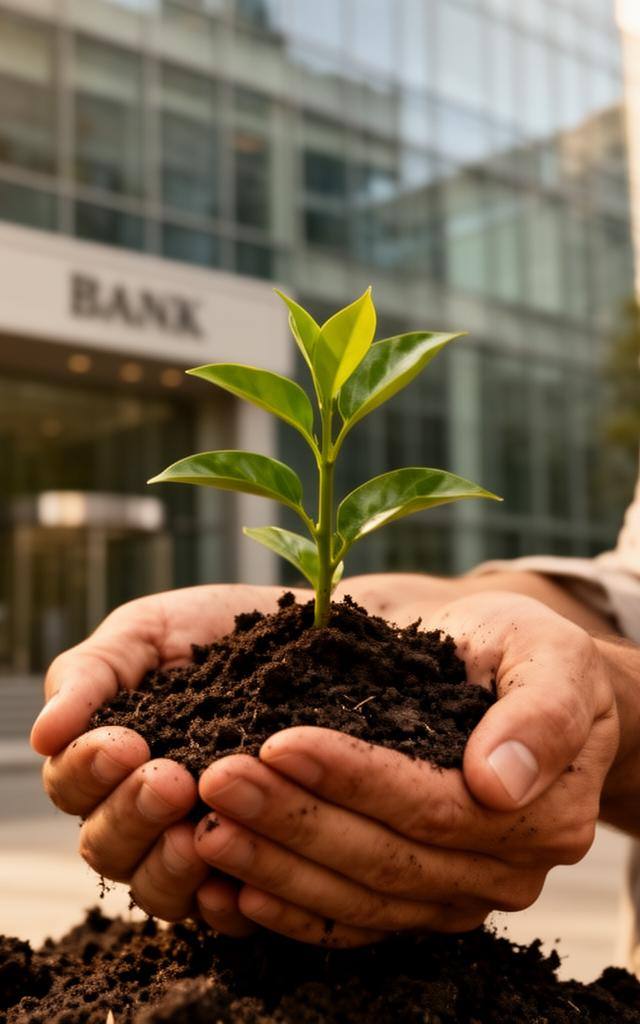
The Root Revolution: Why Soil Health is the Next Vegan Frontier
True plant-based nutrition begins beneath the tilled earth, where a microscopic ecosystem dictates the nutrient density of our food.

The Silent Crisis Beneath Our Feet
Imagine a world where a peach contains only a fraction of the Vitamin C it did fifty years ago, or where a bowl of spinach delivers less iron than your grandmother’s portion. This isn't dystopian fiction; it is the current reality of industrial agriculture. For the conscientious vegan, the ethics of the plate have long focused on the absence of harm—no sentient beings slaughtered, no cages, no exploitation. But as we look toward a future of nine billion people, the conversation is shifting from what we don't eat to how what we do eat is grown.
The next frontier of plant-based living is not found in a laboratory-grown burger, but in the dark, crumbly, life-teeming substrate known as healthy soil. For decades, mono-cropping and heavy synthetic inputs have turned our once-fertile plains into biological deserts. To truly nourish ourselves without harm, we must embrace a "Soil-to-Soul" philosophy that recognizes the mycorrhizal fungi and nitrogen-fixing bacteria as the invisible livestock of the vegan world.
The Extraction Economy vs. The Regenerative Cycle
Modern industrial farming treats soil like a hydroponic medium—a dead sponge used merely to hold plants upright while chemicals are pumped in. This "extraction economy" relies on the Haber-Bosch process to create synthetic nitrogen, a method that accounts for roughly 1.4% of global CO2 emissions.
In contrast, regenerative plant-based farming views the soil as a living organism. By utilizing cover crops, diverse rotations, and no-till methods, farmers can foster a symbiotic relationship between plant roots and soil microbes. This isn't just about environmentalism; it’s about the very molecular structure of our food.
"We have ignored the fact that the health of soil, plant, animal, and man is one and indivisible." — Sir Albert Howard, Founder of the Organic Movement.
Comparing Agricultural Paradigms
| Feature | Industrial Monoculture | Regenerative Plant-Based |
|---|---|---|
| Primary Goal | Yield per acre | Carbon sequestration & health |
| Soil Biology | Sterilized by fungicides/pesticides | Cultivated fungal networks |
| Nutrient Inputs | Synthetic NPK (Petroleum-based) | Green manure & compost |
| Water Retention | Low (High runoff/erosion) | High (Spongelike structure) |
Why Soil Matters for Plant-Based Nutrition
Soil health is the linchpin of nutritional quality in plant foods; degraded soil directly translates to nutrient-poor produce. Many critics of veganism point to nutrient deficiencies as a pitfall, but a deeper look suggests the problem isn't the plants—it's the soil. A landmark study by the University of Texas at Austin monitored nutritional data from the USDA for 43 different garden crops between 1950 and 1999. They found statistically significant declines in the amount of protein, calcium, phosphorus, iron, riboflavin (vitamin B2), and vitamin C—with some nutrients dropping by as much as 38% (Davis, 2004).
When we kill the mycorrhizal fungi in the soil with tilling and chemicals, we sever the plant's plumbing system. These fungi extend far beyond the roots, mining minerals from deep in the earth and exchanging them for sugars produced by the plant via photosynthesis. Without these fungal networks, plants are "empty calories"—large and fast-growing, but nutritionally hollow.
Nutrient Density Comparison
| Nutrient | High-Health Soil (Organic/Regen) | Depleted Soil (Industrial) |
|---|---|---|
| Polyphenols | High (Natural defense boost) | Low (Dependent on pesticides) |
| Magnesium | Essential for 300+ enzymes | Often deficient due to NPK bias |
| Antioxidants | Significant concentrations | Trace amounts |
The Carbon Sequestration Superpower
For the climate-motivated vegan, soil health is the ultimate lever. According to the Rodale Institute, if we converted all global croplands and pastures to regenerative organic systems, we could sequester more than 100% of current annual CO2 emissions. Plants are, essentially, carbon pumps. They inhale CO2 and pump carbon-based sugars into the soil to feed microbes.
However, the standard vegan argument often stops at "avoiding meat." While moving away from livestock is the single most effective way to reduce land pressure—as livestock occupies 77% of agricultural land but provides only 18% of calories, according to Our World in Data (2021)—how we manage that freed-up land is crucial. If we replace cattle ranches with chemical-heavy soy monocultures, we miss the opportunity to heal the planet. We need Forest Gardens, perennial cropping systems, and vegan-organic (veganic) methods that mimic natural ecosystems.
How Veganic Farming Works in Practice
Veganic farming is the practice of growing crops without any animal inputs—no manure, bone meal, blood meal, or fish emulsion—and with a focus on building soil fertility through plants themselves. In practice, this involves a suite of techniques that mimic natural ecosystems, rather than the linear "input-output" of industrial agriculture.
Here’s how veganic farmers build soil without animal byproducts:
- Green manures: Legumes like clover, alfalfa, and vetch are grown and then tilled in (or left as mulch) to fix nitrogen from the atmosphere into the soil.
- Compost and plant-based mulches: Kitchen scraps, leaves, grass clippings, and crop residues are composted to create nutrient-rich humus, applied as a top dressing.
- Crop rotation and polycultures: Diverse planting schedules disrupt pest cycles and enhance nutrient cycling, reducing the need for external inputs.
- No-till and minimal tillage: Avoiding plowing preserves soil structure and fungal networks, which are essential for nutrient uptake.
- Perennialism: Incorporating perennial crops like hazelnuts, asparagus, and berry bushes that keep roots in the ground year-round, protecting soil from erosion.

The Evidence and Numbers Behind Soil Decline
The evidence for soil degradation is stark. According to FAO (2020), one-third of the world’s soils are degraded, and if current trends continue, the topsoil necessary for food production could be gone within 60 years. Moreover, the UN Convention to Combat Desertification reports that soil erosion causes up to $8 billion in losses to the global GDP each year, and that it reduces productivity on 23 hectares of land per minute (UNCCD, 2019).
For vegans, these numbers are a clarion call. A plant-based diet has a significantly lower environmental footprint—Poore & Nemecek (2018) found that plant-based diets reduce food-related greenhouse gas emissions by up to 50% compared to the average Western diet. But the quality of that plant food is at risk when soil is treated as a mere substrate. The nutritional decline in crops is a silent crisis: a 2023 meta-analysis in Nature Food found that rising CO2 levels could reduce protein, iron, and zinc in staple crops by up to 17%, a direct threat to global nutrition.
Costs and Trade-Offs of Soil-Focused Farming
Transitioning to soil-focused farming is not without costs, both financial and transitional. For farmers, the shift from industrial to regenerative methods often involves a period of lower yields—typically 3-5 years—while soil biology rebuilds. During this time, farmers may face income losses, and the cost of certification for labels like ROC (Regenerative Organic Certified) can be prohibitive for smallholders.
For consumers, products grown with soil health in mind often carry a price premium of 10-30% compared to conventional produce, reflecting the true cost of farming in harmony with nature. However, this premium is a societal investment: if we factor in the hidden costs of industrial agriculture—water pollution, greenhouse gas emissions, and biodiversity loss—regenerative systems are actually cheaper in the long run, as documented by the UN FAO (2023) and the Natural Capital Coalition.
Addressing Common Objections
Some may argue that organic or regenerative farming cannot feed a growing global population. Yet research by the UN (2021) shows that agroecological methods can increase yields by up to 30% in smallholder systems in Africa, while also improving food security. Others worry that veganic farming is impossible at large scale, but projects like the Veganic Agricultural Network in the UK and the Rock Hill Community Farm in the US demonstrate successful commercial production.
"Key stat: According to the Rodale Institute's 2022 review, regenerative organic systems produce yields comparable to conventional within 4-5 years, while sequestering carbon and building resilience to drought."
Regional Angles: Soil Challenges and Victories
Soil health is a global issue with regional nuances. In California, prolonged drought has exposed how degraded soils fail to retain water, leading to groundwater depletion. Regenerative practices like cover cropping and compost application are helping some vineyards and almond orchards restore soil sponge-like capacity.
In Sub-Saharan Africa, soil degradation is acute, with nutrient mining—extracting more nutrients than are returned—affecting 85% of agricultural land, according to IPNI (2020). Farmers are using agroforestry and intercropping with nitrogen-fixing trees like Gliricidia septum to restore fertility.
In Europe, the EU's Common Agricultural Policy is beginning to reward farmers for adopting soil health practices, but critics say subsidies still favor intensive farming. The 4 per 1000 initiative, launched at COP21, aims to increase soil carbon by 0.4% annually, which would halt CO2 emissions—a goal embraced by many vegan and regenerative farmers.
What the Reader Can Do Next
You don’t need to dig into the dirt to support the soil revolution—small, mindful choices in your daily life can tip the balance.
- Prioritize "Regenerative Organic" Labels: Look for the ROC (Regenerative Organic Certified) seal, which ensures soil health, animal welfare, and social fairness.
- Choose support: Support brands and farmers who publicly commit to veganic or regenerative practices, and write to your representatives to ask for policy that funds soil restoration.
- Grow your own soil: Start a compost bin at home, even if you have no garden—vermicomposting under the sink is an option.
- Educate yourself: Watch documentaries like Kiss the Ground (2020), which showcases how soil regeneration can reverse climate change.
Conclusion: The New Vegan Ethic
The first wave of veganism was about awareness—knowing what was on our plate. The second wave was about accessibility—making plant-based options available everywhere. The third wave, the Soil Revolution, is about quality and regeneration. As we move forward, our compassion must extend into the very dirt we stand upon. By demanding food grown in living soil, we aren't just saving animals; we are restoring the biological heartbeat of the planet.
Frequently Asked Questions
Is all organic food good for the soil?
Not necessarily. "Organic" prevents the use of synthetic chemicals, but some large-scale organic farms still practice intensive tilling, which can damage soil structure and release carbon. Look for "No-Till" or "Regenerative Organic" for the best results.
Does vegan food use animal manure?
Unfortunately, a large percentage of both conventional and organic produce uses manure from factory farms as fertilizer. "Veganic" farming is the specific practice of growing food without any animal inputs.
Can soil health really fix climate change?
While it isn't a silver bullet to solve all emissions, soil is the largest terrestrial carbon sink on the planet. Improving soil health is one of the most cost-effective and immediate ways to draw down atmospheric carbon.
How can I tell if a product is veganic?
Look for third-party certifications like the "Veganic Standard" or "ROC" which explicitly prohibit animal inputs. Familiarize yourself with local farmers at markets—ask them directly about their practices.
costs and trade-offs: what the transition actually demands
Transitioning to soil-first vegan agriculture entails real costs and trade-offs, and honest vegans must weigh them clearly: the immediate price tag of training, equipment, and reduced yields during the conversion period, alongside the long-term gains in soil resilience, nutritional density, and carbon drawdown. The question is not whether the shift is urgent—it is—but who absorbs the transition burden and how we make it bearable for farmers, consumers, and ecosystems alike.
The most immediate cost is yield dip. According to the Rodale Institute's 30-year Farming Systems Trial (as reported in 2023), organic regenerative systems can match conventional yields after a multi-year soil recovery window, but the first two to five years often see 10–30% lower productivity—a critical barrier for farmers with thin margins or lease agreements that penalize reduced output. This dip is not a failure of the method; it is the soil paying back decades of depletion. Yet without bridge financing, certification subsidies, or guaranteed markets, many growers cannot absorb the shock.
Equipment and labor also shift. No-till drills, roller-crimpers for terminating cover crops, and compost infrastructure carry upfront capital costs that can range from tens to hundreds of thousands of dollars depending on scale. On the labor side, regenerative systems are knowledge-intensive: managing diverse rotations, choosing the right cover crop cocktail for your climate, and monitoring soil biology requires new skills beyond conventional agronomic training. Smallholders may find this easier to adopt than large industrial operations, but even they face a learning curve measured in seasons, not weeks.
There is also a nutritional and culinary trade-off at the consumer level. Crops grown in biologically active soil often have lower water content and higher phytochemical density—meaning they may be smaller, less visually uniform, and sometimes less sweet than their conventionally grown counterparts, which are bred and irrigated for size and sugar. Shoppers accustomed to perfect apples and year-round strawberries may need to accept seasonal, varied, and occasionally blemished produce. That is not a sacrifice of nutrition—often the opposite—but it is a shift in expectation and food culture that must be addressed alongside farming practices.
Finally, the opportunity cost of land matters. While regenerative agriculture sequesters carbon, the rates vary widely by region, crop, and management. A review in Nature Sustainability (2020) emphasized that soil carbon sequestration is finite, reversible with tillage, and cannot offset continued fossil fuel emissions. So the trade-off is not "regenerative agriculture replaces the need to divest from oil"—it is a complementary lever that must sit alongside renewable energy, dietary change, and ecosystem restoration. Conveniently, the vegan package already includes dietary change; regenerative soil management simply deepens that commitment.
"Key stat: a 2021 study by the Soil Health Institute estimated that over 60% of farms in the US are currently losing soil at rates that erode future productivity—yet only about 5% have adopted significant regenerative practices. The trade-off is not between profit and planet; it is between short-term ledger and long-term survival."
common objections answered: from "where will the nitrogen come from?" to "isn't this less efficient?"
The most frequent objections to soil-first vegan farming—synthetic nitrogen is necessary, veganic methods are untested at scale, and regenerative agriculture is a Trojan horse for greenwashing—all deserve direct, evidence-led replies. Each concern contains a kernel of truth, but that kernel is often the starting point for transformation, not the justification for inertia.
Objection 1: "Without synthetic NPK, we cannot feed nine billion people."
This objection conflates current yields with potential yields. Synthetic nitrogen bypasses soil biology, but it does not build it—in fact, according to a meta-analysis in Global Change Biology (2018), synthetic fertilizer use is associated with a 20–30% reduction in soil organic carbon stocks in croplands. Meanwhile, green manures and legumes fix atmospheric nitrogen through rhizobial bacteria, a process that requires no fossil fuel input and simultaneously feeds soil organic matter. A review by the UN Food and Agriculture Organization (FAO, 2021) noted that integrated soil fertility management, which combines organic and mineral sources, can increase yields by 10–30% in smallholder African farms—often because the organic fraction improves water and nutrient retention. The question is not "either/or" but "how fast can we rebuild the system."
Objection 2: "Veganic farming is a niche luxury for wealthy Westerners."
Veganic methods—growing crops without animal inputs—are not a global standard, but neither are they a boutique experiment. Europe's network of veganic farms, while small, has operated for decades (Ecovitis in Germany has been producing wine since the 1990s), and organizations like the Vegan Organic Network (UK) document practitioners across five continents, from India to Kenya. The misconception arises because "certified organic" often still allows animal manure, which is cheap and available near livestock operations—but that does not make it necessary. Research by the Research Institute of Organic Agriculture (FiBL, 2020) compared veganic and conventional-organic systems in Switzerland and found no significant yield penalty after a five-year conversion period, with lower nitrate leaching in the veganic plots. The key is that veganic relies on legumes, compost, and crop diversity—all of which are knowledge-based, not capital-intensive.
Objection 3: "Regenerative agriculture is a marketing buzzword with no teeth."
It can be, and it often is greenwashed. But the existence of weak labels does not invalidate the practice. The distinction lies in measured outcomes: carbon sequestration rates must be verified, biodiversity must be censused, and water infiltration must be tested—not simply claimed. Regenerative certifications like the Soil Carbon Initiative (SCI) and Regenerative Organic Certification (ROC) require measurable data, third-party audits, and continuous improvement. A producer who plants cover crops once and stops is not regenerative; a system that builds soil organic matter year over year is. The vegan community can push for stricter standards rather than dismissing the term outright.
Objection 4: "No-till only works with herbicides, which contradict vegan values."
This is a practical tension. Conventional no-till agriculture often relies on glyphosate to kill cover crops before planting the cash crop, avoiding mechanical disturbance. Veganic farmers address this in two ways: first, by using roller-crimpers that physically flatten and terminate cover crops without chemicals; second, by accepting that a small degree of mechanical disturbance, done correctly, may be preferable to persistent herbicide exposure. Research by the Rodale Institute (2023) has shown that organic no-till with roller-crimpers can achieve comparable yields to herbicide-based no-till for certain crops, especially corn and soy, after initial adaptation. The choice is not purity versus pragmatism—it is informed, context-specific decision-making that respects soil biology, farm economics, and worker safety.
Objection 5: "Plants are alive too—why not value soil microbes?"
This objection is less about feasibility and more about philosophical framing. Veganism is typically grounded in the capacity to suffer, which plants and microbes do not possess in the same way as sentient animals. But soil organisms do matter—mycorrhizal fungi form ancient partnerships with roots, and earthworms aerate, and protozoa cycle nutrients. A soil-first vegan ethic extends compassion to these relational networks, not because they are sentient individuals, but because they constitute living systems worthy of respect. This is not anthropomorphism; it is an ecological ethic that aligns with veganism's core rejection of domination. It also answers the charge that veganism is "too human-centered"—it embeds human food choices within planetary health.
the regional angle for english-speaking readers
For readers in the UK, the US, Australia, and Canada, the soil revolution takes distinct regional forms shaped by climate, policy, and historical land use—and each region offers entry points for vegans to push for systemic change.
In the United States, the conversation is dominated by the climate crisis agenda and the USDA's $20 billion investment in climate-smart farming (announced under the 2022 Inflation Reduction Act), which includes cover cropping, no-till, and controlled grazing. Veganic principles are beginning to penetrate this space through organizations like the Climate Action Now to Regenerative Agriculture (CAN-RA) coalition, which explicitly advocates for livestock-free regenerative models. Yet the political reality is polarization: some conservative farm groups support soil health for productivity reasons, while progressive food movements tie it to racial and economic justice. Vegans can find common ground with both camps by framing soil health as a win-win for farmer profitability and environmental quality, without insisting on the animal-free label in every coalition meeting.
The United Kingdom brings a unique pressure: post-Brexit agricultural policy is being rewritten, with the Agriculture Act 2020 creating a framework for "public money for public goods," including soil organic matter and carbon. This is a historic opening for veganic farmers, who can apply for environmental land management schemes (ELMS) that reward practices like cover crops and reduced tillage. However, the UK also has a massive land use debate: the National Food Strategy (Henry Dimbleby, 2021) recommends shifting land from livestock to horticulture and planting new forests, but it stops short of prescribing a fully vegan system. Vegan campaigners can engage with the ELMS consultation process, support organizations like the Vegan Society's Grow Green initiative, and demand that future policy explicitly favors crop-based regenerative systems over grazing-reliant models.
Australia offers a stark contrast: a continent with extreme drought and fire risk, where conventional farming has degraded vast tracts of soil. Here, regenerative agriculture has become a powerful cultural movement, popularized by figures like Charles Massy and the Soils for Life network—but it often includes livestock, with multi-paddock grazing framed as a soil-restoration tool. For vegans, this creates an ethical tension: do you accept grazing as a necessary evil, or advocate for veganic cropping systems that can sequester carbon through perennial grasses and agroforestry alone? Evidence from the Australian CSIRO (2022) suggests crop-based regenerative systems can yield comparable carbon sequestration to well-managed grazing, with lower water use, making a strong case for livestock-free methods. The pragmatic path is to collaborate with livestock-based regenerative farmers on common goals (soil carbon, biodiversity) while pushing research and subsidies toward the veganic option.
Canada, with its vast prairies and expanding carbon cattle regimes, mirrors the US but with distinct policy levers. The Canadian federal government's climate plan includes "nature-based solutions" programs that fund wetlands, forests, and soil carbon—yet agricultural policy still heavily subsidizes livestock through programs like the AgriInsurance and the Canadian Agricultural Partnership. Veganic agriculture is embryonic, with only a handful of commercial producers, but cold climates offer an advantage: shorter seasons reduce pest pressures, and the demand for local food in cities like Toronto and Vancouver creates premium markets for soil-grown produce. Organizations like the Ecological Farmers Association of Ontario (EFAO) host workshops on veganic methods, and the Organic Canada network is beginning to include animal-free pathways in its certification discussions.
For every English-speaking region, the common thread is this: the political openings exist, but they require vegan voices in the room—at consultations, in research advisory boards, and in consumer messaging that ties soil health to plant-based values. We cannot delegate this to farmers alone; policy shapes what farmers can grow.
"Bottom line: whether you are in the corn belt of Nebraska, the sheep hills of Cumbria, the red dust of Western Australia, or the frosty Ontario fields, soil health is not a generic idea—it is a localized practice, and your regional advocacy matters."
practical next steps: what you can do starting this week
The fastest way to contribute to soil health as a vegan is not to buy compost—it is to change your purchasing patterns, your advocacy, and the way you talk about food. You do not need to own a farm to accelerate the transition; you need to use your wallet, your vote, and your voice.
Here is a concrete, graded action list:
- This week: Start reading labels beyond "organic"—seek out certifications like Regenerative Organic Certified (ROC) or labels that explicitly state "veganic" or "plant-based fertility." When your local farmers' market doesn't have them, ask the vendors: "How do you build soil fertility? Do you use animal manure or compost?" You will signal demand and start a conversation.
- This month: Learn the difference between a cover crop and a cash crop by watching 30 minutes of farmer interviews—start with Gabe Brown or Finian Makepeace's Kiss the Ground resources—and then share one key fact with your network. Misinformation is a barrier; you can be an informal educator.
- This season: Donate or volunteer with organizations that research veganic systems, such as the Vegetable System Trial (a joint effort between North Carolina State and organic farming groups) or the Vegan Organic Network (UK). Even a small recurring gift can fund long-term trial plots.
- This year: Engage politically. In the US, write to your state's agricultural department about including veganic practices in cost-share programs under the Inflation Reduction Act. In the UK, respond to ELMS consultations with model comments about soil-building crops. In Australia and Canada, contact your local Soil Health or Climate Ministry offices to request reports that disaggregate soil carbon data by livestock versus crop systems.
- Continuously: Demand transparency from plant-based food brands. They proudly market "plant-based," but may source from farms that use animal manure—a hidden animal input. Write to your favorite vegan cheese or protein company and ask about their sourcing; pressure them to support certified veganic supply chains.
myth vs. fact: setting the record straight on soil and veganism
| Myth | Fact |
|---|---|
| "Veganic farming is impossible at scale." | Multiple research trials (FiBL, 2020; Rodale, 2023) show veganic systems can match conventional organic yields after conversion, and scaling is a matter of training and policy, not biology. |
| "Soil carbon storage is a proven, permanent solution." | Carbon storage is real but finite and can be reversed by tillage; it must accompany—not replace—direct emissions cuts (Nature Sustainability, 2020). |
| "No-till farming requires glyphosate." | Mechanical roller-crimpers and organic no-till systems achieve comparable results for several crops, as demonstrated by long-term trials (Rodale Institute, 2023). |
| "Vegans don't harm soils because we don't eat animals." | Conventional crop production degrades soil through chemical inputs and erosive tillage; a vegan diet can still be part of the soil destruction problem. The solution is method, not just food choice. |
| "Manure is a natural, waste-based fertilizer—what's the harm?" | Factory-farmed animal manure often contains antibiotics, hormones, and concentrated nitrogen that can leach into waterways and kill soil microbes. Veganic compost avoids these contaminants while rebuilding soil life. |
| "Soil health only matters for farmers; consumers can't influence it." | Consumer demand drives certification and policy; the growth of organic and fair-trade markets proves that spending choices shape production systems. |
the call to embed soil in vegan advocacy
If veganism is a movement to end the exploitation of animals, it must also refuse the exploitation of the very systems that sustain all life—soil being the deepest root. The next time you hear a speaker list the benefits of a plant-based diet—lower emissions, reduced water use, better human health—notice the absence of soil. It is the missing pillar. We hold diet as the center, but soil is the vessel in which the entire plant-based plate is grown. A vegan meal is meaningless if its ingredients choke the earth.
We have an opportunity to redefine veganism not as a personal identity or perishable consumer choice, but as an ecological practice. That practice begins with a fork, but it extends to the seed, the root, the microbiome, and the global carbon cycle. The vision of a vegan world is not a grid of empty monocultures; it is a mosaic of polycultures, food forests, and vast prairies of perennial grains where soil bacteria are as essential as any person at the table.
So, take this article as both a primer and a call to action. Visit a local regenerative farm, even if it is not veganic—ask how you can support its transition. Advocate for research funding that tests livestock-free systems as equal partners. And in every dietary choice, ask not just "was an animal harmed?" but "was the soil nourished?"—because the future of veganism, and the future of the planet, is rooted in the moment we decide that the dirt under our feet deserves as much reverence as the life that walks on it.

Read next
“The health of soil, plant, animal, and man is one and indivisible.”
Frequently asked questions
- What is veganic farming?
- Veganic farming is a method of growing crops without any animal-derived inputs like manure, bone meal, or blood meal. Instead, it relies on plant-based techniques such as green manures, compost, crop rotation, and no-till practices to build soil fertility. This approach aligns with vegan ethics by avoiding animal exploitation and promotes soil health, biodiversity, and sustainable food production.
- How does soil health affect the nutritional value of plant foods?
- Soil health directly impacts nutrient uptake by plants. Healthy soils contain diverse microbial life, including mycorrhizal fungi, which help plant roots absorb minerals. Degraded soils lack these organisms, leading to crops with lower levels of protein, vitamins, and minerals. Studies have shown significant declines in nutrients like calcium, iron, and vitamin C in produce grown in industrial soils, underlining the importance of soil regeneration for nutrition.
- Can regenerative agriculture feed the global population?
- Research indicates that regenerative and agroecological methods can feed the global population while improving environmental outcomes. The UN reports that agroecological practices can increase yields by up to 30% in smallholder systems in Africa. While transitional yield dips may occur, long-term productivity and resilience improve. Diverse cropping systems and soil restoration can sustainably support a growing population without harming the planet.
- What are the environmental benefits of regenerative plant-based farming?
- Regenerative farming enhances carbon sequestration, improves water retention, and reduces soil erosion. By using cover crops, diverse rotations, and no-till methods, it fosters healthy soil ecosystems that store carbon and support biodiversity. This approach contrasts sharply with industrial monoculture, which degrades soil and emits greenhouse gases. Adopting regenerative practices on global croplands could sequester over 100% of annual CO2 emissions.
- Why is soil considered the next frontier for vegans?
- For vegans focused on ethics and sustainability, soil health represents a crucial yet overlooked aspect. While avoiding animal products reduces harm, the way plant foods are grown also matters. Industrial farming degrades soil, harming ecosystems and reducing nutrient quality. By supporting regenerative and veganic farming, vegans can ensure their diet not only avoids animal exploitation but also nurtures the earth, making soil health a natural extension of vegan ethics.
- What is the Haber-Bosch process and why is it relevant to agriculture?
- The Haber-Bosch process is an industrial method for synthesizing ammonia from nitrogen and hydrogen, used to make synthetic fertilizers. It is highly energy-intensive and accounts for about 1.4% of global CO2 emissions. In agriculture, it enables intensive monoculture but leads to soil degradation over time. Moving away from synthetic fertilizers toward organic and regenerative practices can reduce emissions and restore soil health.
- How does veganic farming differ from organic farming?
- Veganic farming is distinct from organic farming because it excludes all animal-derived inputs, such as manure and bone meal, which are often permitted in organic systems. Instead, veganic farmers rely solely on plant-based compost, green manures, and crop rotations to maintain soil fertility. This ensures that no animal exploitation occurs in the production process, aligning more strictly with vegan ethical principles.
- What are the costs associated with transitioning to regenerative farming?
- Transitioning to regenerative farming can involve a period of lower yields, typically 3-5 years, as soil biology rebuilds. Farmers may face income losses during this time. Certification for labels like Regenerative Organic Certified can be costly for smallholders. Consumers may also see a price premium of 10-30% on regenerative produce. However, these costs reflect the true environmental and social benefits, which are often cheaper in the long run when accounting for avoided pollution and emissions.
Sources
How did this piece land?
Knowledge hubs
- AnswersWhat is the difference between vegan and vegetarian?Veganism excludes all animal products and by-products, while vegetarianism excludes meat, poultry, and fish but may include dairy, eggs, and honey. Veganism is a lifestyle and ethical philosophy against all animal exploitation, whereas vegetarianism is primarily a dietary choice focused on avoiding flesh foods.Browse all
- ComparisonsAlmond Milk vs. Soy Milk: A Comprehensive ComparisonAlmond milk is lower in calories and carbohydrates but has a large water footprint, while soy milk provides more protein and a smaller environmental impact. Choose almond for light, nutty taste and low calories, or soy for creamier texture and higher protein. Both are better for the planet than dairy.Browse all
- AnswersIs cheese addictive?No, cheese is not clinically addictive, but it can be craved due to casomorphins, opioid-like peptides from casein, which mildy activate brain reward centers. Combined with fat and salt, cheese is hyper-palatable, and studies using the Yale Food Addiction Scale rank it among foods linked to addictive-like eating, though effects vary by individual.Browse all
- ComparisonsVegan vs. Vegetarian: A Comprehensive ComparisonVegan diets exclude all animal products, including dairy, eggs, and honey, while vegetarian diets omit meat, poultry, and fish but may include these items. Veganism often extends beyond diet to avoid all animal exploitation, making it a broader ethical stance. Both diets can be healthy and environmentally beneficial, but vegans typically have a smaller carbon footprint and lower land use.Browse all
What you can do right now
Three concrete actions that match this story.
- Take our plant-based pledgeSmall choices, kind planet.
- Subscribe to our weekly briefingOne kind email per week. Unsubscribe anytime.
- Share this storyWord-of-mouth outperforms every algorithm.