conservation
How to Address Habitat Loss in Florida: A Guide
A step-by-step guide to understanding and combating habitat loss in Florida, with actionable solutions for individuals, communities, and conservation professionals.
19 min read
For each other
A third of the world's grain is grown to feed farmed animals. Redirected to humans, it could nourish billions more people. Plant-based food systems are simply more efficient — and a fairer way to share a finite planet.

The moral case for plants is not only about animals or the environment; it is about people. Slaughterhouse workers have some of the highest injury rates of any occupation. Communities near industrial livestock operations bear the health costs of the manure lagoons no one else wants next door. Fishing fleets are among the most exploitative labor environments on Earth.
And then there's food itself. Feeding grain through animals loses roughly 80% of the calories. In a world where a billion people are undernourished, the geography of that inefficiency is not neutral — it is a policy choice we make every day.
Key evidence
The food system touches labour, hunger, biodiversity and community. These figures show why the plate is also a social justice question.
Redirected to humans, this could feed billions more.
Source: Cassidy et al., ERL 2013
In a system where most calories from feed crops never reach a human plate.
Source: FAO SOFI 2023
Meatpacking remains one of the most dangerous industries in most countries.
Source: US GAO / HRW reports
Workers, farmers and communities inside the food system.
Continue ConservationHow land use shapes what lives — and what disappears.
Continue ActionLocal food policy, plant-based defaults and school meals.
ContinueCurated films
Documentaries, investigations and short films from advocacy groups and independent filmmakers.
 Documentary trailer
The documentary that made the plant-based case to millions.
Source: Forks Over Knives
 Short film
If slaughterhouses had glass walls, McCartney once said, everyone would be vegetarian. This is what he meant.
Source: PETA
 Documentary trailer
The environmental case against industrial animal agriculture, in 90 seconds.
Source: Cowspiracy
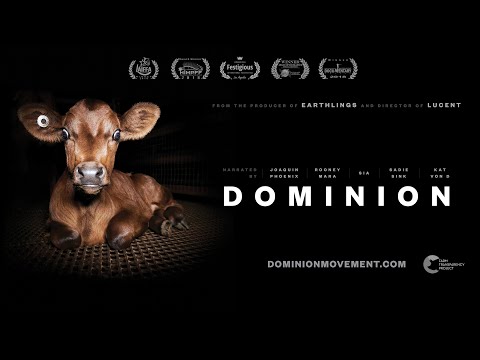 Documentary trailer
An unflinching look at how humans exploit non-human animals across every industry.
Source: Dominion Movement
 Explainer
A calm, data-rich explainer on the environmental math of eating meat.
Source: Kurzgesagt
 Investigation
What the milk carton doesn't show.
Source: Mercy For Animals
The common questions
The best reporting on food justice and shared futures, plus one action worth taking. Nothing else.
The four pillars
People come to plant-based living from very different doors. The reasons differ; the destination converges.
More than 80 billion land animals — and trillions of aquatic ones — are killed for food each year. Most never see the sun.
Read more →A 2018 Oxford study of 38,700 farms in 119 countries found plant-based eating is the single biggest thing one person can do.
Read more →Adventist Health, EPIC-Oxford, PREDIMED, EAT-Lancet: plant-eaters live longer, with less heart disease and diabetes.
Read more →A third of the world's grain is grown to feed farmed animals. Redirected to humans, it could nourish billions more.
Read more →