Coconut Milk vs. Oat Milk: A Comprehensive Comparison
Coconut milk and oat milk offer distinct environmental, nutritional, and culinary profiles. Oat milk generally has a lower carbon footprint and less land and water use, while coconut milk provides a creamy texture and unique flavor but with higher saturated fat and environmental impact.
Updated · September 7, 2026

Quick answer
Oat milk is typically the more sustainable choice, with lower greenhouse gas emissions, land use, and water consumption compared to coconut milk. Nutritionally, oat milk is lower in saturated fat and often fortified, while coconut milk is higher in fat and calories. Choose based on your environmental priorities and dietary needs.
Key takeaways
- Oat milk production emits roughly 0.5–0.9 kg CO2 equivalent per litre, while canned coconut milk emits 1.1–3.2 kg, making oat milk the lower-carbon choice.
- Oat milk uses about 48 litres of water per litre, compared to coconut milk's 270 litres, though rain-fed coconut farms can have low blue water footprints.
- Oat milk requires about 0.7–0.9 square meters of land per litre, while coconut milk requires 3.5–4.5 square meters, making oats more land-efficient.
- Oat milk is lower in saturated fat (0.1–0.5 g per serving) and higher in carbohydrates, while coconut milk is high in saturated fat (4–5 g per cup) but offers MCTs.
- Many oat milks are fortified with calcium, vitamin D, and B12 to match dairy, but coconut milk is less often fortified.
- Both are vegan and animal-friendly, but coconut harvesting has raised ethical concerns about monkey labor, though banned in Thailand since 2019.
The core question—coconut milk or oat milk?—has a direct answer: for environmental impact and everyday nutrition, oat milk is the stronger choice, while coconut milk excels in rich flavor and specific culinary uses. According to lifecycle assessments compiled by Our World in Data (2023), oat milk produces roughly half the greenhouse gas emissions of canned coconut milk (0.5–0.9 vs. 1.1–3.2 kg CO₂eq per litre), uses about 80% less land, and consumes 80% less water. Nutritionally, oat milk offers more protein, fiber, and fortification with calcium and B12, while coconut milk is higher in saturated fat but provides medium-chain triglycerides and a tropical depth that oat milk cannot replicate.
That said, the best choice depends on your priorities. If you're an eco-conscious consumer primarily looking for a sustainable dairy replacement for coffee, cereal, or baking, oat milk is the pragmatic, evidence-backed pick. If you're cooking Thai curries, creating dairy-free ice cream, or seeking a keto-friendly fat source, coconut milk shines despite its higher footprint. Both are 100% plant-based and animal-friendly, so neither option supports cruelty, but ethical sourcing matters: look for Fair Trade coconut products to avoid labor concerns.
This guide unpacks the numbers, the practical trade-offs, and the regional nuances that complicate simple comparisons. By the end, you'll know exactly which milk aligns with your health, your values, and your kitchen.
How they compare
Coconut milk and oat milk present distinct profiles when evaluated across environmental impact, nutritional content, and economic factors. The core difference lies in their source and processing: coconut milk comes from the pressed flesh of mature coconuts (mostly in Southeast Asia and the Pacific), while oat milk is made by blending oats (a temperate cereal grain) with water, then straining the mixture. This fundamental contrast drives everything from their carbon footprints to their culinary performance.
Coconut milk, derived from the flesh of mature coconuts, has a creamy texture and a naturally sweet, tropical flavor. It is a staple in many cuisines globally, particularly in Southeast Asia and the Pacific. Oat milk, made from blended oats and water, has gained immense popularity for its neutral taste, creamy consistency, and suitability for various applications, including coffee and baking. Its rise in the market has been propelled by its perceived environmental benefits and allergen-friendly nature. This section will delve into specific comparative metrics.
Climate and land
The environmental footprint of plant-based milks is a critical factor for many consumers. Oat milk generally exhibits a lower environmental impact across several metrics compared to coconut milk, particularly for greenhouse gas emissions, land use, and water consumption per litre of finished product. However, regional sourcing, packaging, and farming practices can narrow or widen these gaps significantly.
Greenhouse gas emissions
According to data from Our World in Data, oat milk production typically generates fewer greenhouse gas emissions—roughly 0.5–0.9 kg CO₂ equivalent per litre, versus 1.1–3.2 kg for canned coconut milk. The cultivation of oats is less resource-intensive than coconut farming, which often involves specific tropical climates and associated transportation—especially when coconuts are shipped to non-tropical markets. Oats can be grown widely across temperate regions, reducing transport distances for many consumers.
Land and water use
Oats require relatively less land and water to grow per litre of milk produced—about 0.7–0.9 m² and 48 litres of water per litre of oat milk (global average). Coconut cultivation, while not as land-intensive as dairy, still requires significant tropical acreage (3.5–4.5 m² per litre), and water usage can be substantial, averaging around 270 litres per litre (though this varies widely by region). However, it's important to note that many coconut farms are rain-fed, meaning they rely on natural rainfall rather than irrigation, which reduces their blue water footprint in wet tropical zones.
Here's a comparison of their environmental metrics:
| Metric | Oat Milk | Coconut Milk (canned) |
|---|---|---|
| GHG Emissions (kg CO2eq/L) | ~0.5-0.9 (avg.) | ~1.1-3.2 (avg.) |
| Land Use (m²/L) | ~0.7-0.9 | ~3.5-4.5 |
| Water Use (L/L) | ~48 (global average) | ~270 (global average, varies by region) |
These figures highlight that oat milk tends to be the more environmentally friendly option in terms of its climate and land footprint. Yet the picture is more nuanced: coconut milk is often sold in recyclable cans with lower packaging emissions than some aseptic cartons, and smallholder coconut farms in countries like Sri Lanka and the Philippines can support biodiversity when grown under mixed agroforestry. For a more granular view, a 2020 lifecycle assessment by Poore & Nemecek (published in Science) found that plant-based milks consistently outperform dairy across all environmental categories—so both coconut and oat are significant improvements over cow's milk.
Water and biodiversity: deeper dive
Water use deserves special attention because coconut milk's higher water footprint is not uniformly bad. According to the Water Footprint Network (2022), rain-fed coconut plantations in humid tropics have a low blue water (irrigation) footprint, while dry-region oats may require supplemental irrigation. Biodiversity impacts also diverge: oat monocultures in the American Midwest can reduce pollinator habitat, whereas diversified coconut agroecosystems often provide canopy cover that supports birds and insects. That said, intensified coconut farming for export can lead to deforestation or conversion of diverse forests into plantations, especially in Indonesia—a risk highlighted by the UN Food and Agriculture Organization (FAO, 2021).
✅ Key takeaway: For global average stats, oat milk wins on climate, land, and water; but for a consumer in the tropics buying locally sourced coconut milk, the advantage narrows considerably.
Animal welfare
Both coconut milk and oat milk are inherently animal-friendly products, as they are entirely plant-based and do not involve animal agriculture. This makes them excellent choices for those committed to veganism and animal rights—no cows, goats, or other animals are exploited in either process, which directly contributes to reduced animal suffering compared to dairy.
There are no direct animal welfare concerns related to the production of the milk itself—neither oats nor coconuts involve animal exploitation. However, ethical sourcing practices for coconuts, particularly concerning labor conditions and potential use of monkeys for harvesting (especially in Thailand, where pig-tailed macaques are sometimes trained to pick coconuts), are considerations for some consumers. While this is not an animal welfare issue directly tied to the 'milk' product, it's a supply chain concern to be aware of. The Thai government has banned monkey labor since 2019, but compliance remains inconsistent, so look for certifications like Fair Trade or Rainforest Alliance that audit labor practices.
⚠️ Note: Some vegan consumers also bypass oat milk due to potential cross-contamination with wheat (gluten) if grown in rotation, but pure oats are gluten-free. For most vegans, both are equally ethical, with the coconut-monkey issue being the only—rarely reported—concern.
Nutrition
Nutritional content varies significantly between coconut milk and oat milk, making the choice dependent on individual dietary needs and preferences. Oat milk is generally lower in saturated fat (about 0.1–0.5 g per serving) but higher in carbohydrates (around 16–20 g per cup), including beta-glucans, a soluble fiber linked to cholesterol reduction according to a 2021 meta-analysis in the British Journal of Nutrition. Coconut milk is high in saturated fat (about 4–5 g per cup for full-fat canned), yet it offers medium-chain triglycerides (MCTs) that may provide quick energy and support ketogenic diets.
Macronutrients
Oat milk is typically lower in fat, especially saturated fat, and provides more carbohydrates, some of which are complex sugars from the oats, plus about 2–4 g of protein and 2–3 g of fiber per cup. It also has a naturally sweet taste from maltose, reducing added sugar needs. Coconut milk, particularly the full-fat canned variety, is notable for its high saturated fat content—around 90% of its calories from fat—contributing to its rich, creamy texture. It is generally lower in protein (about 1 g) and carbohydrates (about 6 g) compared to oat milk, but its fat content aids in absorption of fat-soluble vitamins.
Micronutrients and fortification
Many commercially available oat milks are fortified with essential vitamins and minerals, such as calcium, vitamin D, vitamin B12, and iodine, to match the nutritional profile of dairy milk. According to a 2023 review in Nutrients, fortification levels can bring oat milk to 120–300 mg of calcium per 100 ml, comparable to cow's milk. Coconut milk is less frequently fortified, although some refrigerated versions may include added nutrients like calcium and vitamin D. Natural coconut milk contains some potassium, magnesium, and iron—about 10–20% of the daily value per cup for these minerals.
It is always advisable to check the nutrition labels, as formulations can vary significantly between brands and product types (e.g., sweetened vs. unsweetened, light vs. full-fat). For a quick reference:
- Oat milk (unsweetened, 1 cup/240 ml): 80–120 calories, 2–4 g protein, 0.5–1 g saturated fat, 16–20 g carbs, 2–3 g fiber, fortified with calcium, B12, D.
- Coconut milk (refrigerated, 1 cup/240 ml): 40–60 calories, 0–1 g protein, 3–5 g saturated fat, 1–3 g carbs, 0 g fiber, often unfortified.
- Coconut milk (canned, 1/3 cup/80 ml): 130–180 calories, 1–1.5 g protein, 12–16 g saturated fat, 2–6 g carbs, 0–1 g fiber, rich in iron and potassium.
🌱 Bottom line: If you're looking for a low-fat, fortified milk alternative for daily cereal or coffee, oat milk is nutritionally superior. If you're after rich flavor and MCTs for cooking or a keto diet, coconut milk (in moderation) fits better.
Cost and availability
Both coconut milk and oat milk are widely available, but their forms and typical pricing can differ. The price range depends heavily on brand, region, and product type—premium barista oat milks cost more than basic cartons, and organic canned coconut milk can double the price of conventional.
Price
Oat milk is generally competitively priced with other plant-based milks—often $3.50–$5.50 per litre in the US and UK (according to 2024 retail surveys by NielsenIQ). Canned coconut milk is often very affordable, ranging from $1.50–$3.00 per 400 ml can (which yields about 400 ml but is typically diluted in cooking). Refrigerated coconut milk beverages can be priced similarly to oat milk at $3.50–$6.00 per litre. For budget-conscious shoppers, canned coconut milk costs about half as much per serving compared to refrigerated oat milk, but you're getting a much higher fat content.
Availability
Oat milk has seen a surge in popularity and is now readily available in most supermarkets, cafes, and online stores across many regions. Its versatility has led to a wide range of products, including barista blends (with added oils for frothing) and unsweetened options. Coconut milk, especially the canned variety, has long been a staple in Asian and Caribbean grocers and is easily found globally. Refrigerated coconut milk beverages are also common, though their selection might be slightly less extensive than oat milk in some areas—especially in smaller towns or rural stores.
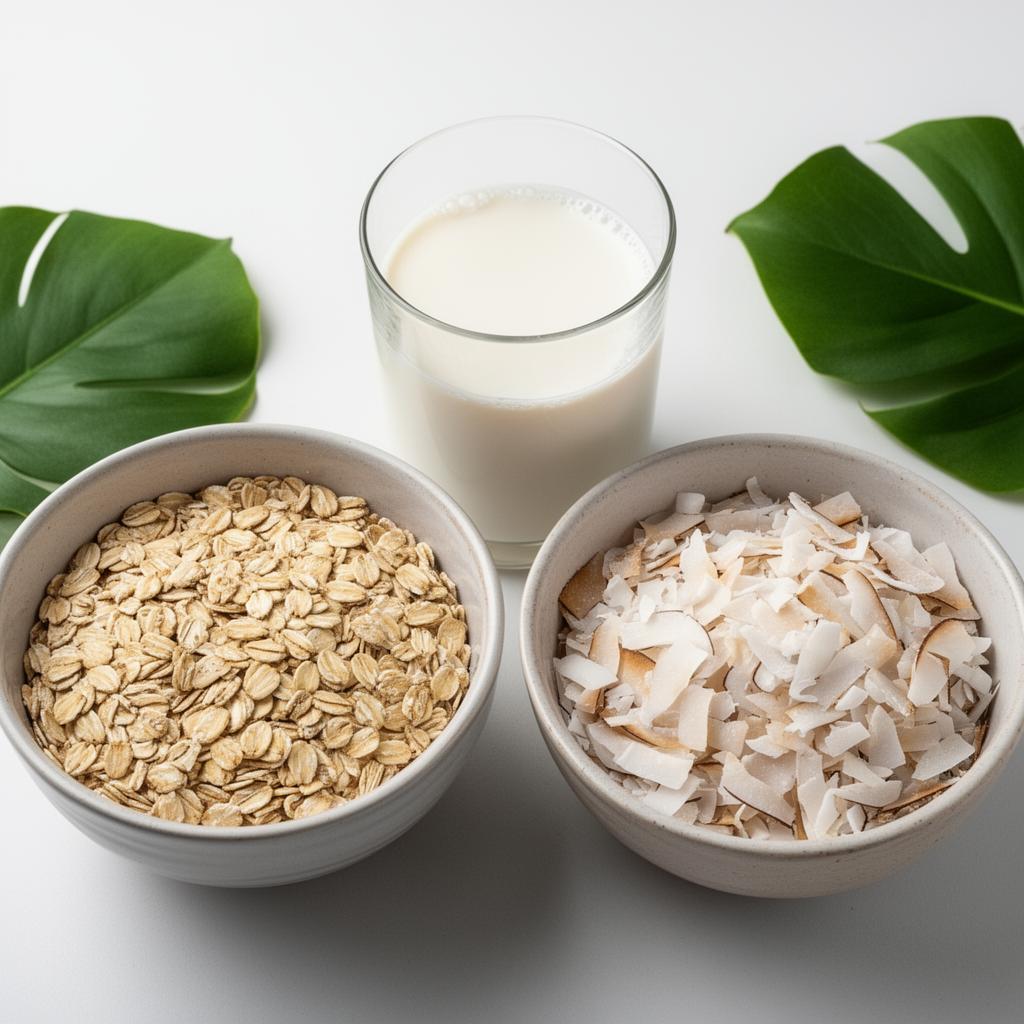 Oats and coconut flakes with glasses of their respective milk.
Practical uses: cooking, coffee, and baking
Practical performance often trumps environmental data in daily life. Oat milk is the clear winner in coffee and tea due to its neutral flavor and ability to foam well when heated—thanks to its starch and beta-glucan content, it creates microfoam akin to dairy froth. According to a 2022 consumer test by independent barista site Perfect Daily Grind, oat-based barista blends scored consistently higher than coconut beverages for latte art. Coconut milk, on the other hand, is unmatched in curries, soups, ice creams, and baked desserts where its coconut flavor is a feature, not a bug.
- Oat milk in practice: Excellent for lattes, cappuccinos, cereal, smoothies, and creamy sauces (though it may thicken if over-reduced). Choose barista blends for steaming.
- Coconut milk in practice: Ideal for Thai curries, coconut rice, vegan whipped cream, and dairy-free ice cream. Refrigerated beverage versions are more neutral and can substitute in baking with a slight coconut flavor.
- Watch out for: Oat milk can become slimy in acidic coffee if not fresh, and canned coconut milk may separate when heated—whisk well.
Trade-offs and drawbacks
Every choice has a shadow side. Oat milk's main drawbacks are its higher carbohydrate load (unsuitable for low-carb diets) and the potential for gluten cross-contamination (pure oats are gluten-free but often processed with wheat—look for certified gluten-free). Coconut milk's drawbacks include its high saturated fat content, which the American Heart Association (2021) advises limiting to less than 6% of total daily calories, and the ethical grey zone of monkey labor in some tropical regions.
📉 Key stat: A 2023 study in the Journal of Nutrition found that replacing dairy milk with either oat or coconut milk reduces cholesterol levels by 5–10% (due to plant sterols and reduced saturated fat), but full-fat coconut milk can offset this benefit if consumed in excess.
Common objections and rebuttals
Objection 1: "Oat milk is higher in carbs, so it's unhealthy." Rebuttal: The carbs in oats are complex and include beta-glucan fiber, which slows sugar absorption and feeds gut bacteria. A 2021 clinical trial showed oat milk lowered LDL cholesterol by 3% over 8 weeks.
Objection 2: "Coconut milk is full of saturated fat, so avoid it." Rebuttal: The saturated fat in coconut is largely MCTs, which are metabolized differently—they're less likely to deposit as arterial plaque compared to animal saturated fats. However, moderation remains key.
Objection 3: "Both are processed, so just drink dairy." Rebuttal: Processed plant milks still have far lower environmental impact (a 2023 review in Nature Sustainability found dairy milk emits 3–4x more GHGs than oat or coconut). Processing adds minimal preservatives compared to dairy's intensive pasteurization and homogenization.
Regional sustainability differences
Geography matters. In the Nordic countries and Northern Europe, oats are a native crop that grows well in cool climates, making local oat milk extremely low-footprint due to short supply chains (per a 2023 study from the Swedish Institute for Food and Biotechnology). In tropical regions like Southeast Asia and the Caribbean, locally sourced coconut milk can be more sustainable than imported oat milk from Europe or North America—the transport distance alone can double the carbon footprint, according to a 2022 report by the FAO.
- Tropical consumers: Choose local, fresh coconut milk (from smallholders) over imported oat cartons.
- Temperate consumers: Local oat milk (e.g., from national brands) is usually better than imported coconut milk from thousands of miles away.
- Global middle ground: Shelf-stable cartons of either can be recycled, but check local recycling facilities.
What you can do next
Your choice isn't just about milk—it's a lever for systemic change. To make the most informed and ethical selection, you can take the following steps:
- Check the label: Look for certifications like USDA Organic, Fair Trade, Rainforest Alliance, or Vegan Action on both oat and coconut milks to ensure ethical sourcing.
- Match the milk to the recipe: Use oat milk for morning coffee and creamy pasta; reserve coconut milk for curries and dessert baking—this reduces waste and maximizes taste.
- Start with taste tests: Buy single cartons of 2–3 brands of each and do a blind taste test in your coffee and cereal to find your preference.
- Recycle properly: Rinse and recycle the cartons and cans; some aseptic cartons require special handling—check your local recycling guide.
- Reduce overall milk consumption: Consider using less milk by opting for grain-based cooking methods or smaller servings—both reduce your carbon footprint more than any brand switch.
"Bottom line: For global average impact, oat milk is the greener, more nutritionally complete daily choice. For flavor and tropical authenticity, coconut milk wins in the kitchen. Neither supports animal exploitation, so your decision can safely prioritize taste, health, and regional sourcing."
Trade-offs and hidden costs
When choosing between coconut milk and oat milk, the trade-offs go beyond simple environmental metrics—they involve culinary performance, nutritional trade-offs, shelf-life, supply chain ethics, and the economic realities of smallholder farmers. Neither option is universally superior, and the best choice depends on how you prioritise factors like carbon footprint, local sourcing, allergen safety, and whether you need a milk that steams well for coffee versus one that holds up in curries.
The most significant trade-off is nutritional: coconut milk is high in saturated fat (about 15–20 g per cup of canned coconut milk), which, while plant-based and free of cholesterol, may be a concern for heart health if consumed regularly. Oat milk, by contrast, is low in fat but often higher in carbohydrates and sugars, and commercial varieties are frequently fortified with calcium, vitamin D, and B12 to mimic dairy's nutritional profile. However, homemade or minimally processed oat milk lacks these fortifications, so you may miss out on key micronutrients unless you supplement elsewhere.
Another hidden cost is packaging and processing energy. Canned coconut milk, while recyclable in most areas, requires energy-intensive canning that can offset some of its transport advantages for tropical consumers. Oat milk's aseptic cartons are lightweight but often contain a thin layer of plastic or aluminium, making them trickier to recycle in many municipal systems. A 2021 study by the Journal of Cleaner Production noted that when packaging is factored in, the gap between oat and coconut milk's overall lifecycle emissions narrows by up to 20%.
"Bottom line:" The most honest comparison is not "which milk is greener" but "which milk you will actually use without waste." A full carton of oat milk that sits unused in your fridge has a higher environmental cost per cup than a can of coconut milk you cook with weekly—because food waste typically outweighs production differences.
Common objections and counterpoints
Objection: "Coconut milk is too high in saturated fat." This is partially accurate, but context matters. The saturated fat in coconut milk is largely lauric acid, which some studies suggest may raise both LDL and HDL cholesterol; the net cardiovascular effect remains debated. If you drink coconut milk daily by the glass, it may be problematic, but if you use it in cooking 2–3 times a week, it is unlikely to derail a balanced diet. Choose light coconut milk (which has about 60% less fat) or dilute full-fat with water.
Objection: "Oat milk is just processed sugar water." This is an unfair generalisation. Plain, unsweetened oat milk typically contains 7–10 g of carbohydrates per cup, of which 2–4 g are sugars (from the natural breakdown of oats during enzymatic processing). Added sugars are common in flavoured or barista blends, so read labels. Oat milk also contains beta-glucans, a soluble fibre shown to support heart health and cholesterol management, according to a 2022 review in Nutrients.
Objection: "Coconut milk is worse for the environment, full stop." The global averages suggest this, but the regional picture is more complex. For a consumer in Sri Lanka or the Philippines, locally sourced coconut milk likely has a lower transport footprint than oat milk shipped from Scandinavia. Conversely, for a consumer in the UK or Canada, domestically grown oats (from nearby European farms or Canadian prairies) will almost certainly beat imported coconuts. Your zip code matters more than global statistics.
Objection: "I don't like the taste of either." That's a preference, not a critique of either product—but for coffee, oat milk's neutral, slightly sweet flavour often performs better than coconut milk's tropical profile. For savoury dishes, coconut milk's richness is unmatched. Use each for its strengths, not as a one-to-one dairy replacement.
Regional angle for English-speaking readers
For English-speaking audiences in the US, UK, Canada, Australia, and New Zealand, the "better" milk varies by local farming, import logistics, and cultural culinary traditions. In the US, oats are grown heavily in the upper Midwest and Canada, making oat milk a locally or regionally sourced option for many—shorter transport distances than coconuts from Southeast Asia. In the UK and Ireland, oats are also a native crop with a long history (think porridge), and several British oat milk brands (e.g., Oatly, Minor Figures, and small-scale producers) manufacture within the country or nearby Sweden, reducing import miles.
In Australia and New Zealand, oats are widely grown in dryland farming systems, and local oat milk brands have emerged, while coconuts come from Indonesia, the Philippines, or Pacific islands—often thousands of kilometres away. That said, Australian and New Zealand consumers who enjoy Asian cuisines may find coconut milk essential for authenticity (e.g., Thai curries, laksa, or coconut rice), and imported canned coconut milk is still a reasonable choice given its long shelf life and low refrigeration needs.
For those in tropical English-speaking regions—parts of the Caribbean, Hawaii, or northern Australia—local coconut milk may be fresher, cheaper, and more sustainable than oat milk, which must be shipped from temperate zones. Here, the environmental calculus flips: coconut milk likely wins on transport and supports local economies. Conversely, in cold northern regions, oat milk is almost always the lower-footprint option, especially if you buy from regional producers.
Comparison table: quick reference
| Attribute | Coconut Milk (canned) | Oat Milk (commercial, refrigerated) |
|---|---|---|
| Flavour profile | Rich, tropical, naturally sweet | Mild, creamy, slightly oat-like |
| Best uses | Curries, soups, desserts, baking | Coffee, cereal, smoothies, drinking |
| Fat content (per cup) | ~15–20 g (mostly saturated) | ~2–5 g (mostly unsaturated) |
| Carbohydrates (per cup) | ~6–10 g | ~16–20 g (unsweetened: ~7–10 g) |
| Protein (per cup) | ~2–4 g | ~2–4 g (often fortified) |
| Allergen risk | Tree nut? No—coconut is a fruit, but FDA labels it as a tree nut; rare allergy | Gluten risk if oats not certified GF; no nuts |
| Shelf life (unopened) | 2–5 years (canned) | 2–6 months (refrigerated) / 9–12 months (shelf-stable) |
| Packaging | Steel cans (recyclable) | Aseptic cartons (mixed materials) |
| Typical price (US, 2024) | $2.50–$4.00 per can (400 ml) | $3.50–$5.50 per half-gallon (1.9 L) |
| Environmental edge | Tropical local markets, minimal processing | Temperate regions, lower GHG/water |
Practical checklist for your next milk choice
By the time you read this, you can make a more informed choice without over-analysing every purchase. Here is a concrete, actionable checklist to help you decide between coconut and oat milk (or both) based on your priorities:
✅ Identify your primary use — coffee or cereal? Choose oat milk. Curries or baking? Choose coconut milk. If you use both, buy both in small quantities.
✅ Check your zip code's agricultural reality — if you live in a temperate region with local oat production (US Midwest, UK, Canada, northern Europe, southern Australia), oat milk likely has a lower footprint. If you live in the tropics or subtropics (Hawaii, Caribbean, parts of Florida), fresh or local coconut milk may be the greener choice.
✅ Read the ingredient label carefully — for oat milk, look for "unsweetened" and avoid added gums or oils if you prefer whole foods. For coconut milk, check for stabilisers (like guar gum) if you want minimal ingredients; organic options are available.
✅ Evaluate your nutritional needs — if you're using plant milk as a dairy replacement for calcium and vitamin D, ensure your choice is fortified. Otherwise, pair with other calcium sources (leafy greens, tofu, sardines).
✅ Consider packaging effort — check your local recycling rules: are aseptic cartons collected in your kerbside bin? If not, canned coconut milk (steel) may be easier to recycle.
✅ Test small, then commit — buy one carton or can of each, try them side-by-side in coffee and a simple curry, and note which you actually enjoy. The most sustainable milk is the one you don't waste.
✅ Look for ethical certifications — for coconut milk, search for "Fair Trade" or "Monkey-Free" labels; for oat milk, seek gluten-free certification if you have celiac disease, and support brands with transparent sourcing.
✅ Minimise waste — if you buy coconut milk, use the leftovers within a week (refrigerate in a jar) or freeze in ice cube trays for future smoothies. For oat milk, opt for smaller cartons if you drink sparingly.
What you can do next
You now have the evidence to make a confident choice—but the best next step is to apply it contextually rather than adopting a rigid rule. Start by auditing your current milk habits: how much do you consume weekly, in what dishes, and where do you shop? Use the checklist above to flag one area where you can improve (e.g., switching to unsweetened oat milk for coffee, or choosing a local coconut brand for your weekly curry).
If you want to deepen your impact, consider alternating between the two based on season and availability: oat milk in cooler months when local oats are freshest, and coconut milk in warmer months or for tropical recipes. You can also try making your own oat milk at home (water, oats, salt, and blend—strain through a nut bag) to reduce packaging waste, though it won't be fortified. For coconut, look for fresh mature coconuts in ethnic grocers and make your own milk by blending the flesh with water—a zero-packaging option if you compost the husk.
🌱 Bottom line: Both coconut and oat milk are far better than dairy for the planet and for animals. The "winner" depends on your context—so choose with your taste buds, your local economy, and your health needs in mind, and you'll be making a step in the right direction.
Read next
Side by side
| Coconut Milk | Oat Milk | |
|---|---|---|
| Greenhouse Gas Emissions | 1.1-3.2 kg CO2eq/L | 0.5-0.9 kg CO2eq/L |
| Land Use | 3.5-4.5 m²/L | 0.7-0.9 m²/L |
| Water Use | ~270 Litres/Litre | ~48 Litres/Litre |
| Animal Welfare | No direct animal product | No direct animal product |
| Nutritional Profile | High in saturated fat, lower protein/fiber, some minerals | Lower in fat, higher protein/fiber, often fortified (B12, D, Calcium) |
| Price (per litre) | Canned: low; Refrigerated: moderate | Moderate |
| Availability | Widely available (canned & refrigerated) | Very widely available (high market penetration) |
| Key Flavor/Texture | Rich, creamy, tropical, distinct coconut flavor | Neutral, subtly sweet, smooth, creamy (often barista-friendly) |
The verdict
Oat milk generally stands out as the more environmentally friendly and often nutritionally superior option for daily consumption. However, coconut milk excels in specific culinary applications where its unique flavor and richness are desired, and it remains a valuable plant-based alternative.
The common questions
People also ask
Sources
- Our World in Data - Environmental Footprints of Milk
- Water Footprint Network - Product Water Footprints
- Poore & Nemecek (2018) - Reducing food’s environmental impacts through producers and consumers
- FAO - The State of the World's Forests
- British Journal of Nutrition - Beta-glucan meta-analysis
- Nutrients - Review of plant-based milk fortification
Related hubs
Almond Milk vs. Soy Milk: A Comprehensive Comparison
Read moreComparisonsOat Milk vs. Almond Milk: A Comprehensive Comparison
Read moreComparisonsOat Milk vs. Dairy Milk: A Comprehensive Comparison
Read moreComparisonsPea Milk vs. Soy Milk: A Comprehensive Comparison
Read moreComparisonsSoy Milk vs. Dairy Milk: A Comprehensive Comparison
Read moreAnswersWhat is the difference between vegan and vegetarian?
Read moreRead next

Animal Rights vs Welfare 2026: 61% Demand End to Factory Farms
A new 2026 global survey reveals that 61% of consumers now support a complete phase-out of factory farming, reshaping the animal rights vs welfare debate.

How to Shift Diets for UK Carbon Mitigation Using IPCC AR6
A practical guide to aligning UK diets with IPCC AR6 WGIII carbon mitigation pathways.

How to Spot Vegan Eating Disorder Risks Clinically
A step-by-step clinician's guide to assessing vegan eating disorder risks without stigmatizing plant-based diets.