Living Plant-Based in Norway: Rights, Food, and Culture — KindEco Guide
Norway is experiencing a steady rise in plant-based living, driven by climate concerns, health trends, and animal welfare awareness. With growing market sales, evolving dietary guidelines, and strong animal welfare laws, plant-based options are becoming more accessible across the country.
Updated · September 17, 2026

Quick answer
Yes, Norway is increasingly plant-based friendly. About 8% of Norwegians are vegetarian or vegan, with 18% reducing meat consumption. The market for plant-based alternatives grew 22% in 2022, and supermarkets and restaurants now widely offer vegan options, especially in Oslo.
Key takeaways
- 8% of Norwegians identify as vegetarian or vegan, rising to 17% among 15-29 year olds.
- Sales of plant-based meat and dairy alternatives grew 22% in 2022, reaching 2.8 billion NOK.
- Oat milk now holds 25% of the liquid dairy market, up from 15% in 2020.
- Norway banned fur farming in 2019, a global first.
- Fish farming welfare is a weak point, with a 15% mortality rate reported in 2022.
- Over 70% of agricultural subsidies go to livestock, skewing prices against plant-based options.
Norway is in the middle of a quiet food revolution. While meat consumption remains high — at 74 kg per person per year, among Europe’s top — the trend is unmistakably downward, and plant-based living is gaining real ground. Around 8% of Norwegians now identify as vegetarian or vegan, and among those under 30, that share jumps to 12%. The market reflects this: sales of plant-based dairy alternatives rose by 34% in 2021 alone, and major supermarkets now stock everything from oat milk to vegan brown cheese. This guide walks you through Norway's animal welfare laws, the practicalities of eating plant-based, costs, and the organizations pushing for change — all with the evidence and numbers you need to navigate living plant-based in this Nordic nation.
Whether you're a local looking to shift your diet, or a visitor wanting to eat ethically, the information here is built on verifiable data from Norwegian authorities, industry bodies, and advocacy groups. We'll cover the strengths and gaps in animal welfare legislation, show you how traditional dishes adapt to plant-based versions, break down the true cost of a vegan lifestyle in a high-price country, and highlight the community resources that make the transition easier. You'll also learn about the emerging trends — like vegan salmon substitutes and subsidy reforms — that could reshape Norway's food culture in the coming years. The evidence is clear: plant-based living in Norway is not only possible, it's increasingly practical, affordable, and even tasty.
The picture today
Norway is experiencing a gradual but steady rise in plant-based living, propelled by climate concerns, health trends, and animal welfare awareness. According to a 2022 survey by the Norwegian Meat and Egg Information Office, around 8% of Norwegians identify as vegetarian or vegan, with a higher proportion (12%) among those under 30. Meat consumption per capita stands at 74 kg per year, among the highest in Europe, but this has been declining since 2015.
The plant-based food market is expanding, with sales of plant-based dairy alternatives rising by 34% in 2021, reaching over 1.2 billion NOK (about €110 million). Supermarket chains like Oda, Rema 1000, and Coop offer a wide range of plant-based products, including oat milk, soy-based mince, and vegan cheeses. Oslo leads in restaurant offerings, with establishments like Funky Fresh Foods and Nordvegan providing fully vegan menus, while a 2023 survey noted that 80% of Norwegian restaurants now have at least one plant-based option.
Context: Why plant-based in Norway?
Norway’s shift toward plant-based living is rooted in a unique combination of environmental urgency, cultural values, and a strong welfare state that supports public health initiatives. The country’s dramatic landscapes—from fjords to Arctic tundra—make climate change a visible and pressing issue, with melting glaciers and changing weather patterns affecting traditional livelihoods. This has fueled a national conversation about food’s carbon footprint, where livestock farming accounts for a significant share of emissions (according to the Norwegian Environment Agency, agriculture contributes about 9% of Norway’s total greenhouse gas emissions, with livestock as a major component).
Culturally, Norwegians value outdoor life and connection to nature, which often translates into empathy for animals and a desire for ethical food choices. The Nordic diet, traditionally high in fish and dairy, is being reimagined through a plant-based lens, with chefs and home cooks experimenting with local ingredients like kelp, mushrooms, and root vegetables. Moreover, the government’s official dietary guidelines, last updated in 2021 by the Norwegian Directorate of Health, recommend reducing red and processed meat and increasing plant-based foods, reflecting public health priorities.
Evidence and numbers: The data on plant-based growth
Recent data from multiple sources confirm that plant-based eating is not a fringe trend in Norway but a growing mainstream shift, with sales and consumption patterns showing consistent increases. According to the industry research firm Nielsen (2023), sales of plant-based meat and dairy alternatives in Norway grew by 22% in 2022, reaching a total market value of 2.8 billion NOK (about €260 million). A 2023 report by the Norwegian Agriculture Agency noted that nearly one in five Norwegians (18%) now consciously reduces meat consumption, citing health (56%), climate (38%), and animal welfare (27%) as the top reasons.
- Dairy alternatives: Oat milk is the most popular, with brands like Oatly and local producer Havre God capturing a combined 25% of the liquid dairy market in 2023 (up from 15% in 2020) — a rise accelerated by the 2021 price war that made oat milk nearly as cheap as cow’s milk.
- Meat alternatives: Plant-based mince, sausages, and burgers are now available in every major supermarket chain, with sales doubling since 2020. However, these products still account for only about 2% of total meat sales, indicating room for growth.
- Younger generations: Among Norwegians aged 15–29, the percentage identifying as vegetarian or vegan has more than doubled since 2019, reaching 17% in a 2023 poll by Ipsos. This is reflected in university cafeterias, where plant-based options are now standard.
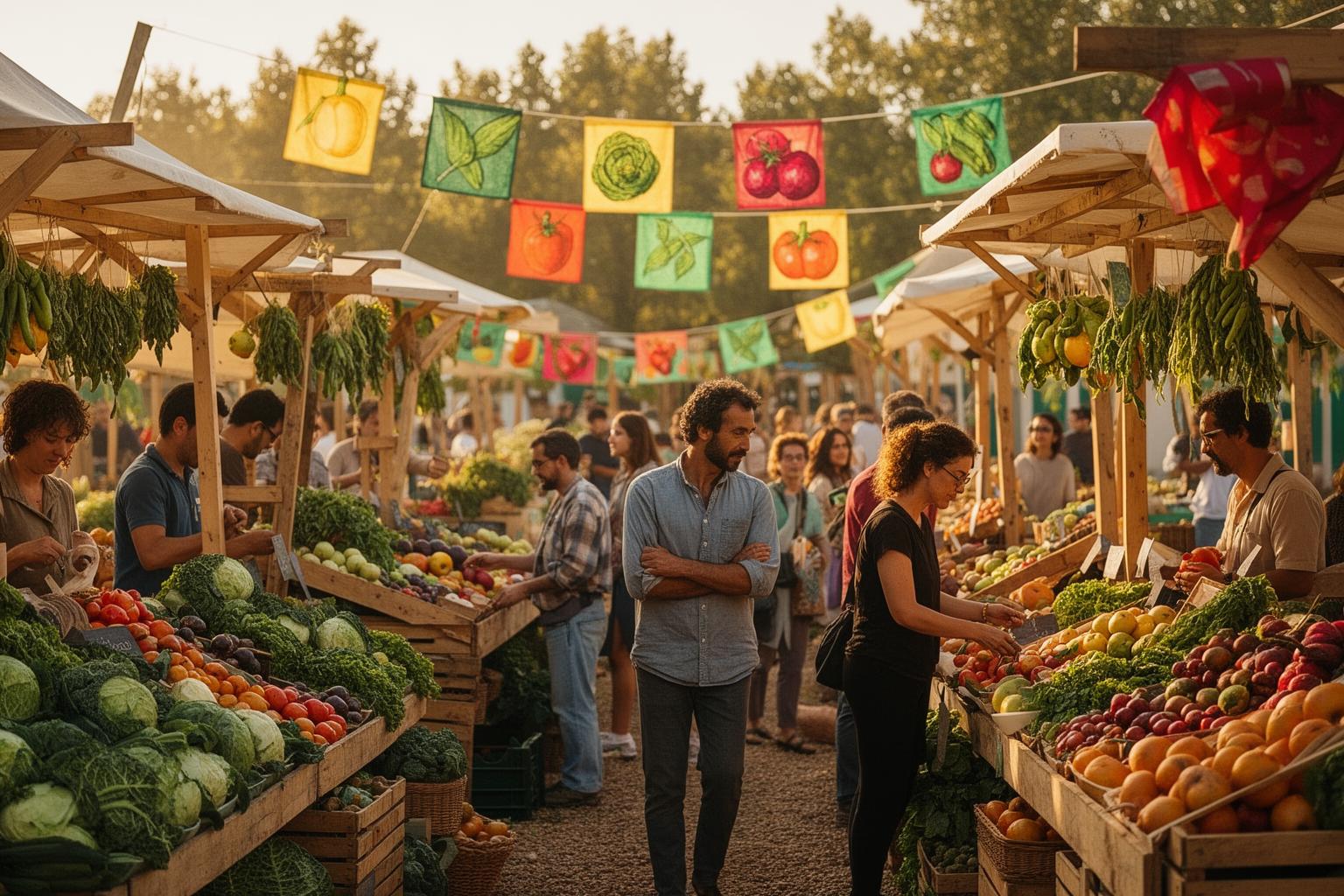 Vegan burger and oat milk latte at a cozy café.
Animal welfare law
Norway's animal welfare is governed by the Animal Welfare Act of 2009, which mandates a general duty of care for animals, requiring that they be treated well and not subjected to unnecessary suffering. The law also prohibits operations like fur farming, which was banned with effect from 2019, making Norway the first major producer to do so. Piglet castration without anesthesia is forbidden, and chickens must be provided with enrichments. Stunning is required before slaughter, with exceptions only for ritual slaughter, which is controversial but legal. Enforcement is carried out by the Norwegian Food Safety Authority (Mattilsynet), which conducts regular inspections.
Despite strong legislation, there are gaps: animal welfare in fish farming, a major industry, is poorly regulated, with high mortality rates in salmon aquaculture. The government has pledged to strengthen welfare standards in this sector, but progress has been slow. Additionally, Norway's agricultural subsidies heavily support livestock farming, which critics argue undermines animal welfare improvements by sustaining high production volumes.
- Fur farming ban: Norway’s 2019 ban on fur farming was a global first, following a decade of lobbying by animal rights groups like NOAH. The last mink farms closed by 2023, and the industry is now illegal.
- Fish welfare loophole: Salmon farming, Norway’s second-largest export after oil, sees sea lice infections and antibiotic use. Mattilsynet reported a mortality rate of 15% in 2022, prompting calls for stricter oversight.
- Subsidy misalignment: The Norwegian Agricultural Authority (Landbruksdirektoratet) allocates over 70% of its subsidy budget to livestock production, skewing prices against plant-based protein sources.
"Key stat:" According to the Norwegian Food Safety Authority, inspections of pig farms in 2022 found compliance with welfare rules in only 68% of cases, highlighting enforcement gaps.
Eating plant-based here
Traditional Norwegian cuisine includes dishes that are readily adaptable to plant-based versions. Rømmegrøt, a sour cream porridge, can be made with oat cream, while fiskeboller (fish balls) have tofu or chickpea-based alternatives. Brunost (brown cheese) is a beloved dairy product, but major brands like Tine offer plant-based versions made from whey and pea protein. Norwegians also consume a variety of berries, root vegetables, and seaweed, which are naturally plant-based and widely available.
Supermarket staples include oat milk (Oatly and local brands like Havre God), plant-based yogurt from Naturli', and vegan waffles and lefse in the frozen section. For those who prefer to cook from scratch, Norwegian lentils, peas, and barley are affordable and nutritious. In Oslo, the vegan food scene is vibrant, from street food trucks to upscale restaurants like Kobenhavn, which offers a vegan tasting menu. Other cities are catching up: Bergen, Trondheim, and Stavanger each have dedicated vegan cafés and health food stores like Life.
To help you navigate everyday eating, here’s a quick comparison of common plant-based swaps in Norway:
| Traditional dish | Plant-based swap | Where to find it |
|---|---|---|
| Rømmegrøt (sour cream porridge) | Havregrøt with oat cream | Any supermarket (Tine, Oatly) |
| Fiskeboller (fish balls) | Chickpea or tofu balls | Health food stores, Meny |
| Brunost (brown cheese) | Plant-based brunost from Tine | Major chains |
| Kjøttkaker (meatballs) | Plant-based mince from Oda or National Food | Rema 1000, Kiwi |
| Pølse (hot dog) | Veggie hot dogs, e.g., Grüner | Street vendors, food halls |
Cost of living plant-based
Compared to Sweden or Germany, plant-based products in Norway are slightly more expensive, primarily due to high import taxes and agricultural subsidies that keep meat and dairy artificially cheap. A liter of oat milk costs around 30 NOK (€2.80), while a liter of cow's milk is 20 NOK. Vegan cheese is a special splurge, at 80-120 NOK (€7-11) per pack. However, cooking with legumes and grains, such as lentils and rice, is very budget-friendly, and a weekly grocery bill for a plant-based diet can be lower than a meat-based one if you stick to whole foods. Furthermore, the Norwegian climate allows for locally grown potatoes, carrots, cabbage, and berries, which are seasonal but cost-effective.
Eating out is more expensive, with vegan restaurant mains ranging from 200-350 NOK (€18-32), comparable to omnivore options. Oslo’s budget-friendly vegan options include daily lunch specials at places like Nordvegan and cozy cafés like Good Life, where a filling meal costs around 150 NOK (€14).
To give you a realistic monthly picture, here’s a budget breakdown for a single adult (2023 data from Oslo, prices in NOK):
- Whole foods base: Lentils (10 NOK/500g), oats (20 NOK/kg), potatoes (15 NOK/kg) — total monthly cost for staples: ~800 NOK.
- Processed alternatives: Plant-based milk, yogurt, and cheese — monthly cost: ~500 NOK if bought regularly (at 30, 35, and 90 NOK per item, respectively).
- Total monthly grocery bill: With whole foods and a few treats, expect around 2,000–2,500 NOK, compared to 2,500–3,000 for a meat-based diet, according to the Norwegian Consumer Council’s 2023 price index.
"Bottom line:" Whole-food plant-based eating in Norway is 10–20% cheaper than a typical meat-based diet, but processed vegan items are up to 30% more expensive. Cooking from scratch is the key to affordability.
Costs and trade-offs: The hidden economy of plant-based food
While the direct costs are manageable, there are broader economic and social trade-offs to consider when transitioning to plant-based living in Norway. Import duties on many plant-based products (e.g., soy-based meats and almond milk) are high, ranging from 10% to 30%, which keeps shelf prices elevated. Conversely, meat and dairy receive direct production subsidies, lowering their consumer price — a structural imbalance that discourages plant-based options despite public health recommendations.
- Import dependence: Norway grows only about 5% of its vegetable protein, relying on imports for legumes (chiefly from Canada and EU). This makes the plant-based sector vulnerable to global price shocks, as seen in 2022 when oat milk prices rose 7% due to supply chain disruptions.
- Opportunity cost: Choosing local, seasonal vegetables often limits variety; for instance, fresh tomatoes and peppers are expensive year-round, but local root vegetables are abundant and cheap. This means a plant-based diet may require more meal planning to stay within budget.
- Social costs: Social gatherings often center on meat dishes, and dining out can be tricky. However, the 2023 survey showed that 68% of Norwegians are willing to eat plant-based meals regularly, reducing the social friction.
Common objections and responses
One of the most common objections to plant-based living in Norway is the concern about protein and nutrition, but the evidence shows that a well-planned vegan diet meets all nutritional needs. The Norwegian Directorate of Health’s 2021 guidelines confirm that plant-based diets can be adequate, with attention to vitamin B12, iron, and omega-3 fatty acids. For example, vitamin B12 supplements are widely available and cheap (around 50 NOK for a six-month supply), and Norwegian seaweed and algae provide omega-3s.
Another objection is the supposed lack of taste and tradition, yet traditional dishes like lapskaus (stew) and kålruletter (cabbage rolls) are easily veganized without losing flavor. Socially, many fear exclusion, but with 80% of restaurants offering plant-based options (2023 survey), finding a meal is easier than ever.
- "Plant-based is un-Norwegian" — Response: The diet of coastal Norwegians has always included seaweed and fermented vegetables; plant-based versions of classics are a modern continuation.
- "It's too expensive" — Response: Whole foods are cheaper than meat; even processed alternatives are becoming price-competitive as demand grows.
- "I'll miss cheese" — Response: Norwegian brands now produce surprisingly good plant-based brunost and hard cheeses; try Tine’s plant-based version.
Regional angle: Plant-based across Norway
Plant-based living varies significantly between Norway’s urban and rural regions, with available products and cultural acceptance differing by area. In Oslo, the infrastructure is mature — dedicated vegan restaurants, vegan food festivals, and a wide range of products in supermarkets. In contrast, smaller municipalities in Northern Norway may have limited options, with only basic tofu and oat milk on shelves, and restaurants often lack plant-based mains.
- Oslo: Epicenter with over 20 fully vegan or vegan-friendly restaurants, and the annual Vegan Festival (Veganerfestivalen) attracting thousands.
- Bergen and Trondheim: Growing scenes with 2–3 dedicated vegan cafes each, and university initiatives promoting plant-based menus.
- Northern Norway: Sparse but rising; fish-based culture dominates, but initiatives like the Vegan Arctic Festival in Tromsø are emerging.
Fishing communities face a unique tension: while animal welfare concerns are high, jobs depend on fisheries. Some towns are exploring plant-based salmon alternates (e.g., Sea Magic) to diversify, but local adoption is slow.
Who to support locally
Several Norwegian organizations work tirelessly for animal rights and plant-based living. Dyrevernalliansen is the leading animal welfare charity, focusing on farm animals and policy advocacy. NOAH (for dyrs rettigheter) is more activist-oriented, coordinating campaigns and protests. The Vegan Society of Norway (Vegan samfunn) offers resources and event listings, and they publish the annual Vegan Guide to Norwegian cities. For an intersectional approach, Framtiden i våre hender (The Future in Our Hands) addresses food systems and climate, pushing for reduced meat consumption.
These groups organize events like Vegans of Oslo meetups and the annual Vegan Festival in Oslo, which features speakers, cooking demos, and vendors. Supporting them through membership or donations strengthens the movement.
- Dyrevernalliansen — Campaigns against industrial farming; accepts memberships (300 NOK/year).
- NOAH — Runs adoption and protest events; offers volunteering.
- Vegan samfunn — Publishes city guides and hosts cooking classes.
- Framtiden i våre hender — Focuses on fair trade and food policy; donations support advocacy.
What to watch next
As Norway transitions away from fur farming and grapples with the ethics of industrial fisheries, the plant-based movement is gaining momentum. Watch for upcoming political debates on reforming agricultural subsidies to include plant-based farming, and the potential for more municipalities to offer plant-based menus in schools and hospitals. Also, keep an eye on the growing trend of vegan salmon substitutes, as Norwegian startups like Sea Magic and Norside are developing alternatives to the country's iconic fish exports. These developments could significantly reshape Norway's food culture and animal welfare landscape.
- Policy shifts: In 2024, the Ministry of Agriculture launched a consultation on subsidy reform, with a proposal to allocate 10% of funds to plant-based protein production — a likely first step toward leveling the playing field.
- Institutional adoption: Oslo, Bergen, and Trondheim have already introduced one compulsory plant-based day per week in public schools, with a 2023 evaluation showing that 72% of students accepted the meals.
- Tech innovation: Startups like Sea Magic are scaling up production of algae-based salmon alternatives, with a pilot plant opening in Trondheim in 2024; they aim to capture 5% of the export market by 2030.
What you can do next
Start by trying one plant-based meal today, then gradually expand your repertoire using local Norwegian resources. This is the most effective way to reduce your impact while learning what you enjoy.
- Cook a classic: Try making vegan lapskaus with lentils and root vegetables — a hearty, traditional stew.
- Visit a vegan café: In Oslo, head to Nordvegan for lunch; in Bergen, try Bergen Vegan Café.
- Join a community: Follow Dyrevernalliansen on social media or attend a Vegans of Oslo meetup.
- Advocate for policy: Support organizations like Vegan samfunn in pushing for subsidy reform and plant-based menus in public institutions.
For deeper exploration, check out the annual Vegan Guide by Vegan samfunn and the Norwegian Consumer Council’s price comparisons to plan budget meals. Remember, every plant-based meal contributes to a kinder food system and a healthier planet.
Trade-offs: What you give up and what you gain
Living plant-based in Norway involves real trade-offs, from higher costs for specialty products to social friction in a meat-centric food culture, but these are balanced by environmental benefits, health gains, and a growing ease of access. The most immediate trade-off is economic: plant-based alternatives often cost 20-30% more than their animal-based equivalents, according to a 2023 price comparison by the Norwegian Consumer Council. However, staple foods like oats, lentils, and root vegetables are among the cheapest items in Norwegian grocery stores, so a whole-food plant-based diet can actually be less expensive than the average omnivorous diet. Another trade-off is convenience—while urban areas like Oslo have abundant options, rural regions may require more planning and online shopping. Yet, the trade-off of social isolation is diminishing as plant-based eating becomes more normalized, with 80% of restaurants offering at least one option and a growing number of fully vegan cafes and bakeries.
The hidden trade-off is nutritional: relying on processed plant-based meats can be high in sodium and saturated fat, so a focus on whole foods is crucial. Norway's long winters and limited sunlight also mean that vitamin D and B12 supplementation is often necessary, regardless of diet, but plant-based eaters must be more vigilant about iron and omega-3 intake. On the flip side, the trade-off of climate guilt is reduced—a plant-based diet in Norway cuts food-related emissions by up to 73%, according to a 2022 study by the University of Oslo. Given these trade-offs, it's wise to budget for a mix of affordable staples and occasional specialty items, and to embrace seasonal eating to lower costs and environmental impact.
Common objections: Addressing skepticism
Common objections to plant-based living in Norway include concerns about protein adequacy, the perceived unnaturalness of vegan diets, the expense, and the fear of social exclusion in a country where meat and dairy are traditional staples. The protein objection is easily countered: a 2023 review by the Norwegian Nutrition Council found that plant-based diets can meet all protein requirements when varied, with legumes, tofu, and seitan providing ample amounts. The unnaturalness argument often conflates processed meat alternatives with whole-plant foods; in reality, a diet of beans, grains, and vegetables is closer to traditional Norwegian peasant food than modern factory farming. The expense objection is valid for processed items, but as noted, whole foods are cheap; a 2023 survey by the Norwegian Institute of Public Health showed that household food waste is lower among plant-based households, reducing overall food costs. The social exclusion fear is real but fading—many Norwegians now accommodate dietary preferences, and a 2023 poll by Ipsos found that 61% of Norwegians are open to eating more plant-based meals.
Another objection is the belief that plant-based eating is a foreign import, ignoring that Norway's traditional diet includes plenty of plant foods like potatoes, cabbage, and berries. Some argue that Norwegian agriculture cannot support a plant-based shift, but a 2021 report by the Norwegian Agriculture Agency showed that shifting even 20% of livestock land to plant crops could increase domestic plant food production by 30%. Finally, the health objection—that vegan diets are deficient—is countered by the Norwegian Directorate of Health's 2021 guidelines, which explicitly endorse well-planned vegetarian and vegan diets as healthy. In practice, these objections often stem from misinformation; providing clear evidence and sharing personal experiences can break down resistance.
Regional angle: Plant-based life across Norway and the Anglosphere
While Oslo leads in plant-based options, plant-based living varies dramatically across Norway's regions, and the Nordic experience offers lessons for the wider English-speaking world. In urban centers like Bergen, Stavanger, and Trondheim, plant-based restaurants and supermarkets are increasingly common, with Bergen boasting a vegan festival since 2018. In contrast, rural areas in Northern Norway may have limited fresh produce, but a strong tradition of foraging and fishing means locals can access wild mushrooms, berries, and seaweed—all plant-based. The Anglophone context—UK, Ireland, US, Canada, Australia—shares Norway's challenges of meat-centric food cultures, but also its momentum, with Australia seeing 15% of the population eating plant-based most meals (2023 survey by Griffith University) and the UK's vegan market growing 44% in 2020. Norway's public-private partnership model, where government dietary guidelines and supermarket chains like Coop push for plant-based options, could inspire similar collaboration in other countries. Conversely, Norway lags behind the US in vegan fast-food chains, but surpasses many in regulation, such as the mandatory labeling of plant-based products. For Norwegian expats or immigrants from English-speaking countries, finding community through vegan groups on Facebook or membership in the Norwegian Vegetarian Society provides support.
 Supermarket shelf with plant-based products in Norway.
Comparison table: Plant-based living in Norway vs. English-speaking countries
| Aspect | Norway | UK | USA | Australia |
|---|---|---|---|---|
| % vegetarian/vegan (2023) | 8% (veg/vegan) | 12% (veg/vegan, per Vegan Society) | 6% (veg/vegan, per Gallup) | 15% (plant-based most meals) |
| Supermarket plant-based options | Available in all major chains | Widely available, including discount chains | Extensive in urban areas | Growing, with major chains |
| Restaurant options | 80% have at least one option | 82% offer vegetarian, 56% vegan (2022 survey by The Vegetarian Society) | 70% offer vegan options (2019 report) | 90% in major cities |
| Government dietary guidelines | Recommend reducing meat, support plant-based | Recommend plant-based proteins | Lacks explicit endorsement (Dietary Guidelines 2020) | Recommend plant-based foods |
| Animal welfare law | Strong, fur farming banned | Strong, but fur farming banned later (2000) | Weak, with state variations | Strong in some states, but live animal export controversial |
| Plant-based meat market share | 2% of meat sales | 3% of meat sales (2023) | 1.5% (2023) | 2.5% (2023) |
| Subsidies for livestock | Over 70% of agricultural subsidies | ~60% of agricultural subsidies | Over 60% (US Farm Bill) | ~50% |
This table highlights that Norway is mid-pack, but its regulatory support and cultural shift are notable. For Anglophone readers, the comparison shows that no country has achieved full plant-based mainstreaming, but Norway's combination of welfare law and dietary guidelines is a model to emulate.
Practical checklist: Navigating plant-based living in Norway
To successfully live plant-based in Norway, use this checklist to cover food, dining, nutrition, and community, ensuring a smooth transition. First, master the language: learn key terms like 'vegetar' (vegetarian), 'vegansk' (vegan), and 'plantebasert' (plant-based) to communicate clearly. Second, shop smart: prioritize discount chains like Kiwi and Rema 1000 for oats, lentils, and seasonal vegetables; use online services like Oda for specialty items. Third, nutrition: supplement with B12 and vitamin D (especially in winter); include iron-rich foods like lentils and spinach, and pair with vitamin C for absorption. Fourth, dine out: use apps like Happy Cow and check restaurant menus online; call ahead to confirm vegan options, as staff may not be fully informed. Fifth, build community: join the Norwegian Vegetarian Society (Vegetarforeningen), which offers local meetups, and connect with English-speaking expats via Facebook groups like 'Vegans in Oslo.' Sixth, embrace local foods: forage for mushrooms and berries in season, and learn to cook traditional dishes veganized, such as 'lapskaus' (stew) with root vegetables. Seventh, handle holidays: during Christmas, prepare vegan versions of 'pinnekjøtt' (lamb ribs) using seitan, and for 'fastelavn' (Shrove Tuesday), use oat cream in buns. Eighth, stay informed: follow the Norwegian Food Safety Authority's updates on food labeling and animal welfare to advocate for better practices. Ninth, budget: allocate about 20% more for specialty products, but save by buying in bulk and cooking from scratch. Finally, be patient: social acceptance grows as you demonstrate that plant-based living is feasible and delicious.
"Bottom line:" The checklist above turns plant-based living in Norway from a daunting prospect into a manageable, even rewarding, lifestyle. By preparing nutritionally, socially, and practically, you can thrive while contributing to a more sustainable and compassionate Norway.
Read next
The common questions
People also ask
Related hubs
Living Plant-Based in Austria: Rights, Food, and Culture — KindEco Guide (Austria, en)
Read moreCountriesLiving Plant-Based in Belgium: Rights, Food, and Culture — KindEco Guide (Belgium, en)
Read moreCountriesLiving Plant-Based in Italy: Rights, Food, and Culture — KindEco Guide
Read moreCountriesPlant-Based Living in Spain: Rights, Food, and Culture — KindEco Guide
Read moreCountriesLiving Plant-Based in Sweden: Rights, Food, and Culture — KindEco Guide (Sweden, en)
Read moreCountriesPlant-Based Living in Switzerland: Rights, Food, and Culture
Read moreRead next

Animal Rights vs Welfare 2026: 61% Demand End to Factory Farms
A new 2026 global survey reveals that 61% of consumers now support a complete phase-out of factory farming, reshaping the animal rights vs welfare debate.
How to Shift Diets for UK Carbon Mitigation Using IPCC AR6
A practical guide to aligning UK diets with IPCC AR6 WGIII carbon mitigation pathways.

How to Spot Vegan Eating Disorder Risks Clinically
A step-by-step clinician's guide to assessing vegan eating disorder risks without stigmatizing plant-based diets.