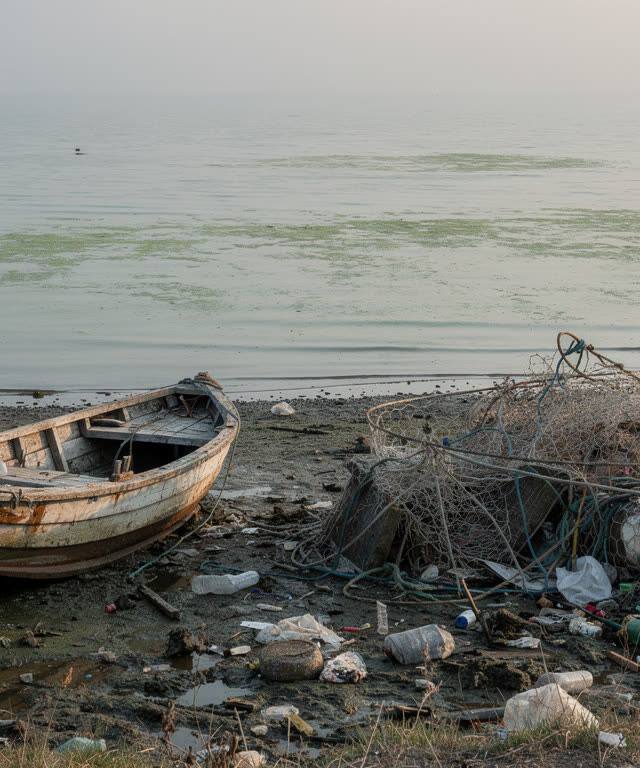
Overfishing and Ocean Collapse: Your Seafood Choices Explained
Overfishing is pushing marine ecosystems toward collapse—here is how industrial fishing works, what seafood labels really mean, and how shoppers in the US, UK, Canada, Ireland, Australia and NZ can choose lower-impact options.

TL;DR: Overfishing is the removal of fish faster than populations can reproduce, and it has pushed roughly a third of assessed stocks beyond sustainable limits. Industrial fleets, bottom trawling and bycatch are emptying the oceans. Shoppers in the US, UK, Canada, Ireland, Australia and NZ can push back through labelling, seafood guides and plant-based alternatives.
What Is Overfishing and How Close Are Major Fish Stocks to Collapse?
Overfishing is the harvesting of fish at a rate faster than the population can replenish itself. When fishing pressure exceeds a stock's reproductive capacity, the population declines, age structures collapse, and the fishery can crash—a state scientists call "stock collapse." According to the FAO's State of World Fisheries and Aquaculture, the share of marine fish stocks fished within biologically sustainable levels fell from 90% in 1974 to 64.6% in 2019, meaning roughly 35% of assessed stocks are now overfished. The UN's 2021 Food Systems Summit briefing and the FAO both warn that without reform, climate change and overfishing could combine to reduce fish biomass in many regions by double digits by mid-century.
Not every stock is in freefall. Some—like Alaskan pollock and certain Northeast Atlantic cod—have recovered under strict quotas. But the trend is unmistakable: industrial capacity has outgrown the ocean's ability to regenerate. The collapse of the Newfoundland cod fishery off Canada in 1992, which put tens of thousands out of work and has still not fully recovered, remains the cautionary tale. As marine ecologist Dr. Daniel Pauly of the University of British Columbia has said, "We are fishing down the food web"—removing top predators first, then working our way down to smaller species.

Which Supermarket Seafood Is Most Linked to Overfishing?
In the US, UK, Canada, Ireland, Australia and NZ, the seafood most tied to overfishing and ecosystem damage includes imported wild shrimp, Atlantic cod, bluefin tuna, swordfish, orange roughy, Chilean sea bass (Patagonian toothfish), and warm-water shrimp from poorly managed tropical fisheries. Farmed salmon can also be problematic when fed wild-caught forage fish, though certification schemes have improved some supply chains.
Here is a snapshot of high-risk seafood commonly found in supermarkets across these markets:
| Seafood | Main Overfishing/Habitat Concern | Common Supermarket Sources |
|---|---|---|
| Imported wild shrimp | Bottom trawling, bycatch of sea turtles | US, UK, Canada, Ireland, Australia, NZ |
| Atlantic cod | Stock depletion, illegal fishing | US, UK, Canada, Ireland |
| Bluefin tuna | Severe stock decline, ranching | US, UK, Canada, Australia |
| Orange roughy | Deep-sea trawling, slow reproduction | US, UK, Australia, NZ |
| Chilean sea bass | Illegal, unreported fishing | US, UK, Canada |
| Farmed salmon | Forage fish dependence, escapes, parasites | US, UK, Canada, Ireland, Australia, NZ |
A 2021 Marine Policy study found that roughly 20–32% of wild-caught seafood imported into the US is illegal or unreported. Similar estimates apply to the UK and EU. That means even well-intentioned shoppers may be buying fish that was caught outside any legal framework.
How Does Bottom Trawling Damage Ocean Habitats Compared with Line-Caught or Farmed Alternatives?
Bottom trawling—dragging weighted nets across the seafloor—is the most destructive widely used fishing method. It flattens coral gardens, sponge fields and seamounts that took centuries to grow, releasing stored carbon and destroying nursery grounds for countless species. A 2021 Nature study estimated that bottom trawling releases up to 1.47 billion tonnes of CO₂ annually—comparable to the entire aviation industry.
Line-caught fish (pole-and-line, handline) generally have far lower bycatch and habitat impact, though they can still target vulnerable species. Farmed alternatives vary widely: filter feeders like mussels and oysters are among the lowest-impact animal proteins; seaweed is even better; but carnivorous farmed fish like salmon and shrimp often depend on wild-caught fishmeal and fish oil, perpetuating overfishing pressure.
- ✅ Lowest impact: farmed mussels, oysters, clams, seaweed
- ⚠️ Moderate: line-caught mackerel, pole-and-line tuna (if certified)
- 🚫 Highest impact: bottom-trawled shrimp, orange roughy, bluefin tuna
What Do MSC, ASC and Other Seafood Labels Actually Guarantee?
The Marine Stewardship Council (MSC) blue fish label certifies wild-capture fisheries that meet its standard for sustainable stock levels, minimal environmental impact and effective management. The Aquaculture Stewardship Council (ASC) label covers responsibly farmed seafood. Other labels include Friend of the Sea, GlobalG.A.P. and the RSPCA Assured scheme in the UK.
But certification is not a guarantee of perfection. Investigations by The Guardian, Nature and others have found that MSC-certified fisheries sometimes still catch vulnerable species, and that audit weaknesses allow questionable practices. ASC certification has been criticised for allowing continued use of wild-caught fishmeal and for failing to address animal welfare in farming. A 2022 Marine Policy analysis found that only about 15% of global fisheries are MSC-certified, and many certified stocks are not the ones under most pressure.
Bottom line: Labels are a useful starting point, but they do not replace reading the fine print or choosing lower-impact proteins.
How Can I Use a Local Seafood Guide in My Country?
Seafood guides translate complex science into simple colour-coded advice: green (best choice), amber (okay), red (avoid). They are maintained by NGOs and government agencies and tailored to local fisheries, seasons and regulations.
- 🇺🇸 US: Monterey Bay Aquarium Seafood Watch (seafoodwatch.org) and NOAA FishWatch
- 🇬🇧 UK: Marine Conservation Society Good Fish Guide (goodfishguide.org)
- 🇨🇦 Canada: SeaChoice (seachoice.org) and Ocean Wise
- 🇮🇪 Ireland: Bord Iascaigh Mhara (BIM) sustainability guides; Irish Whale and Dolphin Group species advice
- 🇦🇺 Australia: Australian Marine Conservation Society Sustainable Seafood Guide (sustainableseafood.org.au)
- 🇳🇿 NZ: Forest & Bird Best Fish Guide (forestandbird.org.nz)
Use them like this:
- Check the guide before you shop—save it to your phone
- Look for green-rated species that are local and in season
- Ask your supermarket fish counter where the fish was caught and how
- If unsure, choose plant-based protein instead
- Avoid red-rated species entirely, especially bluefin tuna, orange roughy and imported wild shrimp
Why Do Governments Still Subsidise Industrial Fishing Fleets That Deplete Stocks?
Governments subsidise fishing fleets for a mix of economic, political and historical reasons: coastal employment, food security narratives, and powerful industry lobbies. According to a 2019 Marine Policy study by Sumaila et al., global fisheries subsidies reached $35.4 billion annually, with $22.2 billion going to capacity-enhancing subsidies—fuel tax breaks, vessel construction and buyback schemes—that directly contribute to overfishing. The WTO reached a partial agreement in 2022 to curb some harmful subsidies, but enforcement remains weak.
In the US, the Magnuson-Stevens Act sets catch limits, yet NOAA Fisheries still reports overfished stocks. The UK's post-Brexit Fisheries Act has been criticised for allowing continued overfishing. Canada's Fisheries Act was strengthened in 2019, but slow implementation persists. Ireland's seafood sector relies heavily on EU subsidies, some of which still support bottom trawling. Australia and NZ have stricter quotas in some areas, but both still subsidise fuel and infrastructure.
Key stat: $22.2 billion in annual capacity-enhancing subsidies—nearly two-thirds of all fisheries subsidies—directly fuels overfishing, according to Sumaila et al., Marine Policy, 2019.
What Can Shoppers Do Right Now?
You do not need to memorise stock assessments. Small, consistent choices add up.
- Choose plant-based proteins first. Beans, lentils, tofu and tempeh are widely available in US, UK, Canadian, Irish, Australian and NZ supermarkets. They require no fishing, no bycatch and minimal habitat damage. A 2021 Nature Food study found that replacing even a portion of animal protein with plant-based alternatives cuts diet-related emissions and biodiversity loss significantly.
- Use a seafood guide app. Monterey Bay Aquarium Seafood Watch (US), MCS Good Fish Guide (UK), SeaChoice (Canada), BIM guides (Ireland), AMCS Sustainable Seafood Guide (Australia), Forest & Bird (NZ).
- Read labels sceptically. MSC and ASC are better than nothing, but check the species, origin and catch method—not just the logo.
- Ask your supermarket to do better. Retailers respond to customer pressure. In the UK, Waitrose and Marks & Spencer have removed some red-rated species; in the US, Whole Foods and Costco have policies on sustainable sourcing.
- Avoid the worst offenders. Bluefin tuna, orange roughy, Chilean sea bass and imported wild shrimp are high-risk in every market listed here.
- Swap one fish meal per week for beans or tofu
- Download your country's seafood guide
- Check the label for species and origin
- Write to your supermarket asking for sustainable sourcing
The Bottom Line
Overfishing and ocean collapse are not abstract threats—they are the direct result of industrial fishing, subsidised fleets and consumer demand. But the same market forces that drive depletion can drive recovery. By choosing plant-based proteins, using local seafood guides and demanding better labelling, shoppers in the US, UK, Canada, Ireland, Australia and NZ can help turn the tide.
Bottom line: The ocean can recover if we stop treating it as infinite. Every meal is a vote.
Read next
“The ocean can recover if we stop treating it as infinite. Every meal is a vote.”
Frequently asked questions
- What is overfishing and why is it a problem?
- Overfishing is catching fish faster than they can reproduce. It depletes stocks, disrupts food webs and can cause ecosystem collapse. According to the FAO, about 35% of assessed marine stocks are overfished. This threatens food security, livelihoods and marine biodiversity, and once a stock collapses it can take decades to recover—if it recovers at all.
- Which seafood should I avoid to prevent ocean collapse?
- Avoid bluefin tuna, orange roughy, Chilean sea bass, imported wild shrimp and bottom-trawled species. In the US, UK, Canada, Ireland, Australia and NZ, these are commonly sold in supermarkets and linked to overfishing, bycatch and habitat destruction. Check your country's seafood guide for red-rated species and choose plant-based proteins instead.
- What does the MSC label actually mean?
- The Marine Stewardship Council (MSC) blue label means a wild-capture fishery meets its standard for sustainable stock levels, minimal environmental impact and effective management. However, investigations have found weaknesses in audits and occasional bycatch of vulnerable species. It is a useful starting point, not a guarantee.
- How does bottom trawling compare to line-caught fishing?
- Bottom trawling drags weighted nets across the seafloor, destroying coral, sponges and nursery habitats and releasing stored carbon. A 2021 Nature study estimated it releases up to 1.47 billion tonnes of CO₂ annually. Line-caught methods like pole-and-line have far lower bycatch and habitat impact, though they can still target vulnerable species.
- Are there sustainable seafood options in supermarkets?
- Yes. Farmed mussels, oysters, clams and seaweed are among the lowest-impact animal proteins. Some line-caught mackerel and pole-and-line tuna carry MSC certification. However, plant-based proteins like beans, lentils and tofu remain the lowest-impact choice and are widely available in all six markets.
- Why do governments subsidise overfishing?
- Governments subsidise fishing fleets for coastal employment, food security narratives and industry lobbying. A 2019 Marine Policy study found $22.2 billion in annual capacity-enhancing subsidies—fuel tax breaks, vessel construction—that directly contribute to overfishing. WTO talks have produced a partial agreement, but enforcement remains weak.
- How can I use a seafood guide in my country?
- Download your national guide: Seafood Watch (US), MCS Good Fish Guide (UK), SeaChoice (Canada), BIM guides (Ireland), AMCS Sustainable Seafood Guide (Australia), Forest & Bird (NZ). Check the colour rating before you shop, ask your fish counter for origin and catch method, and choose green-rated species or plant-based alternatives.
Sources
How did this piece land?
Knowledge hubs
- AnswersIs fish farming better than wild fishing?Neither method is universally better; each has significant trade-offs. Wild fishing risks overfishing (34% of stocks), bycatch (up to 40% of catch), and seabed damage from trawling. Fish farming can reduce wild pressure but causes pollution, disease spread, and relies on wild fish for feed (70% of fishmeal). Sustainability hinges on species, practices, and certifications like MSC and ASC.Browse all
- MythsMyth: Lobsters can't sufferNo, lobsters can feel pain. Scientific reviews, including a 2021 UK government assessment of over 300 studies, conclude that decapod crustaceans are sentient. They exhibit nociceptors, protective reflexes, avoidance learning, and stress responses, indicating suffering. The precautionary principle supports treating them as capable of pain, prompting ethical choices like avoiding lobster consumption.Browse all
- CountriesLiving Plant-Based in Norway: Rights, Food, and Culture — KindEco GuideYes, Norway is increasingly plant-based friendly. About 8% of Norwegians are vegetarian or vegan, with 18% reducing meat consumption. The market for plant-based alternatives grew 22% in 2022, and supermarkets and restaurants now widely offer vegan options, especially in Oslo.Browse all
- TopicsFishing Bycatch: An OverviewFishing bycatch refers to the capture of unintended species like turtles, dolphins, and seabirds in fishing gear, often leading to their death. It accounts for roughly 40% of global marine catches, driving species like the vaquita to the brink. Reducing bycatch requires gear reforms, enforcement, and consumer pressure.Browse all
What you can do right now
Three concrete actions that match this story.
- Donate to a habitat charityEven small monthly gifts compound.
- Plant one pollinator patchWindowsills count.
- Share this pieceOne share informs 5-10 people on average.