Animal rights
Animal rights is the philosophy that animals are entitled to possess their own lives and should not be used by humans for any purpose. It contrasts with animal welfare, which improves conditions of use, and underpins debates on food, research, entertainment, and law.
Updated · September 7, 2026

Quick answer
Animal rights is the belief that animals, as sentient beings, have inherent value and should not be used by humans for food, clothing, entertainment, or experimentation. It differs from animal welfare, which accepts use but seeks better conditions. This philosophy drives advocacy for abolition of animal exploitation and legal recognition of animal personhood.
Key takeaways
- Animal rights asserts that animals are not property but persons with inherent value.
- The distinction from animal welfare: welfare improves conditions of use, rights seeks abolition.
- Over 80 billion land animals are slaughtered for food annually (FAO, 2023).
- The Cambridge Declaration on Consciousness (2012) confirmed non-human animals have neural substrates for consciousness.
- Animal rights impacts consumer choices, legislation, and corporate practices, from cruelty-free products to fur bans.
- Critics cite anthropocentrism, economic disruption, and practical enforcement challenges.
Do animals have rights? The short answer is yes—in the ethical sense, they have the right not to be treated as property, tools, or resources. Animal rights is a philosophy that grants non-human animals moral and legal protection based on their capacity for sentience, meaning they can feel pain and experience their own lives. Unlike animal welfare, which aims to improve conditions within animal use, animal rights challenges the use itself, advocating for animals as legal 'persons' rather than property.
This page explores the core definition, the evidence of animal suffering, the numbers behind industrial exploitation, and how rights translate into practice—from veganism to legal personhood. It also addresses common objections, regional differences, and the practical costs of change. Whether you are new to the idea or already active in animal advocacy, this guide offers a compassionate, evidence-led overview of why animal rights matter and what you can do to support them.
Animal rights is not a single idea but a spectrum of positions, from the simple recognition of sentience to the demand for full legal personhood. The evidence is clear: animals are conscious beings with interests of their own, and the global systems that use them for food, fashion, science, and entertainment inflict immense suffering. The shift toward animal rights is already underway, and your actions can accelerate it.
Definition
Animal rights refers to the idea that animals are entitled to the possession of their own lives and should not be used by humans for food, clothing, entertainment, experimentation, or any other purpose. This philosophy stands in contrast to animal welfare, which seeks to improve the conditions under which animals are kept and used, rather than challenging their use altogether. The core tenet of animal rights is that, due to their capacity for sentience – the ability to feel, perceive, or be conscious – animals possess inherent value and deserve moral and legal protection, irrespective of their utility to humans. This perspective argues for a radical re-evaluation of human-animal interactions, advocating for the recognition of animals as 'persons' rather than 'property'.
At its heart, animal rights is not about being kind to animals, though kindness often follows; it is about justice. The rights-based approach insists that sentient beings have interests that should be respected, and those interests cannot be overridden simply because doing so benefits humans. This is why the philosophy rejects framing animals as resources, commodities, or tools, and instead demands that we consider their perspective, their experiences, and their capacity to suffer.
The distinction from animal welfare is crucial. Welfare reformers ask "how can we treat animals more humanely?" while rights advocates ask "should we treat them as ours to use at all?" For example, a welfare campaign might push for bigger cages for hens; a rights campaign would push for the abolition of egg production altogether. The two approaches often overlap in practice, but their philosophical goals are distinct.
 Mouse reaching toward glass in laboratory setting.
Where you'll see it
Discussions and applications of animal rights are prevalent across various domains, influencing consumer choices, policy debates, and social activism. You will encounter the concept in advocacy campaigns against factory farming, where activists highlight the immense suffering of animals raised for meat, dairy, and eggs. For instance, organisations may campaign against the use of battery cages for hens or gestation crates for pigs, pushing for their complete abolition rather than just larger cage sizes. It also underpins protests against animal testing in the cosmetics and pharmaceutical industries, advocating for alternative research methods that do not involve animal harm. Moreover, animal rights principles inform movements to end the use of animals in circuses, zoos, rodeos, and marine parks, arguing that confining and exploiting animals for human entertainment is unethical. The What is Veganism? page on KindEco provides further context on how these principles translate into dietary and lifestyle choices. Legislatively, you might see animal rights influencing debates on stricter animal protection laws, the recognition of animal personhood in certain contexts, and even the criminalisation of specific acts of animal cruelty, extending beyond mere neglect to proactive harm.
Beyond the obvious arenas, animal rights appears in the courtroom, in boardrooms, and on your smartphone. Legal cases have asked whether animals can be plaintiffs in their own right; companies market "cruelty-free" products; and apps help you scan barcodes to avoid animal-derived ingredients. The idea has moved from fringe pamphlets to mainstream policy discussions, with some countries banning fur farming or restricting animal testing outright. What was once considered radical is now a standard ethical lens for many consumers.
Examples of Animal Rights Advocacy in Practice
| Area of Advocacy | Description | Key Demands/Focus |
|---|---|---|
| Food Production | Challenging the use of animals in industrial agriculture. | Abolition of factory farms, promotion of plant-based diets. |
| Scientific Research | Opposing the use of animals in experiments. | Development of non-animal testing methods, end to animal vivisection. |
| Entertainment | Protesting the use of animals in performances and displays. | Banning animal circuses, closing unethical zoos and marine parks. |
| Fashion | Campaigning against materials derived from animals. | Promotion of vegan leather, fur-free fashion. |
| Law & Policy | Pushing for legal recognition of animal personhood or rights. | Animal welfare statutes, constitutional amendments for animals. |
Why it's contested
The concept of animal rights faces significant opposition and scrutiny, largely due to its profound implications for human society and economy. One primary reason for contestation is the deeply ingrained anthropocentric worldview, which places humans at the centre of moral consideration and views animals as resources. Critics often argue that animals lack the cognitive capacity, self-awareness, or ability to enter into social contracts that would qualify them for rights typically afforded to humans. They might point to the absence of language or complex reasoning in many species as a justification for treating them differently. Furthermore, the economic impact of fully implementing animal rights is a major concern. Industries such as agriculture, pharmaceuticals, and entertainment, which heavily rely on animal use, would face immense disruption, potentially leading to job losses and economic restructuring. Some also raise practical objections, questioning how a legal framework for animal rights would be enforced, especially concerning wild animals or those that naturally predate others. The debate also extends to differing interpretations of sentience and consciousness, with some arguing that while animals can feel pain, this does not automatically confer the same rights as humans. Finally, religious and cultural traditions often hold specific views on the human-animal relationship, sometimes endorsing the dominion of humans over animals, which conflicts with animal rights principles.
The contestation is not merely academic; it reflects deep-seated tensions between ethical ideals and economic realities. For every argument about animal suffering, there is a counterpoint about jobs, cultural heritage, or food security. For example, Indigenous communities may rely on hunting for subsistence, while farmers worry about their livelihoods in a plant-based future. The challenge for the animal rights movement is to acknowledge these concerns without abandoning the core principle that animals deserve moral consideration.
Common Objections and Replies
- "Animals aren't rational, so they can't have rights" — Rights are often based on capacity to suffer, not intellectual sophistication. Humans with intellectual disabilities or infants still deserve protection.
- "Rights would destroy the economy" — Transition costs exist, but new industries (plant-based protein, alternatives to animal testing) are already creating jobs; the shift is gradual, not overnight.
- "What about predators? They kill animals anyway" — Rights apply to human conduct, not nature. We do not punish lions for eating gazelles; we hold humans to higher standards because we have moral agency.
- "Cultures have always used animals" — Cultural practices change; slavery and child labour were once cultural, too. Ethics evolve to include previously excluded beings.
- "Animals don't know their rights" — Rights are a human legal construct; they are based on moral status, not on the bearer's awareness of them.
The Evidence and Numbers
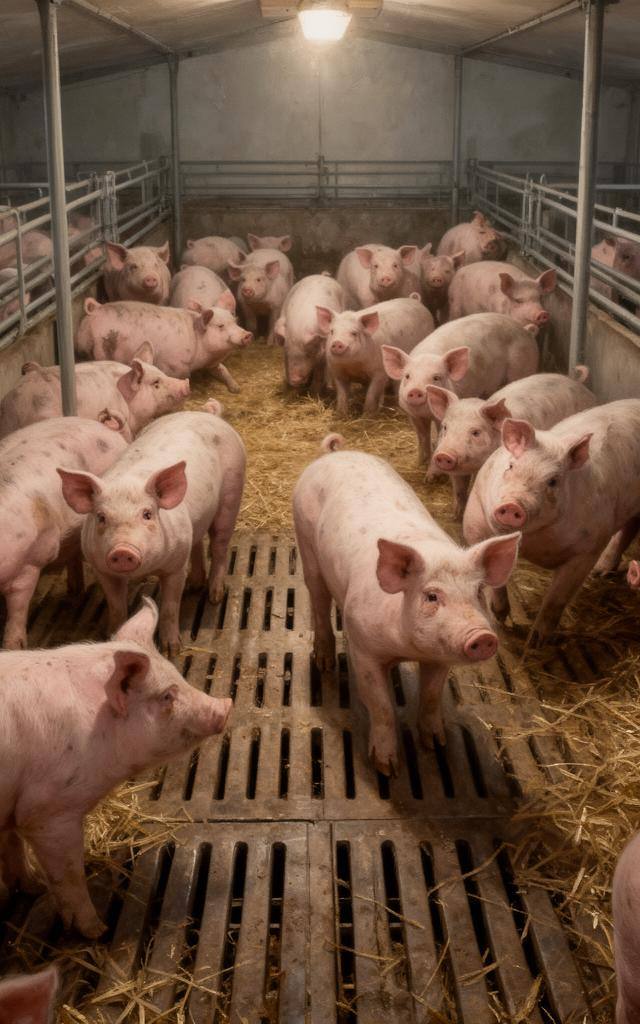
The evidence for animal suffering in industrial systems is overwhelming, and the numbers are stark. According to the Food and Agriculture Organization (FAO, 2023), over 80 billion land animals are slaughtered for food each year worldwide, not counting aquatic animals, which adds tens of billions more. The vast majority of these animals are raised in confined animal feeding operations (CAFOs) where they experience cramped conditions, painful procedures without anaesthesia (like debeaking or tail docking), and high rates of disease. For example, a 2022 report from the Humane Society International notes that over 90% of pigs in the US are raised in gestation crates for at least part of their lives, though some states have banned them.
On the scientific side, the Cambridge Declaration on Consciousness (2012) affirmed that non-human animals, including all mammals and birds, possess the neurological substrates for consciousness. This means the debate is no longer about whether animals can feel pain, but about how we respond to that fact. Research compiled by the non-profit Faunalytics (2019) shows that consumer demand for animal-free products is rising, with plant-based meat sales growing by 17% in some regions.
"Key stat: Over 80 billion land animals are slaughtered for food every year (FAO, 2023). That's over 2,500 animals per second, each with a capacity for pain."
Economically, animal industries are massive but vulnerable. A 2021 analysis by the Boston Consulting Group estimated that the alternative-protein market could reach $290 billion by 2035, while traditional animal agriculture faces pressure from regulation and consumer shifts. The evidence is not just about numbers; it is about the quality of life and death for sentient beings. Studies of pig intelligence show they can play video games, and chickens exhibit empathy, complicating the notion that they are "dumb animals" without moral standing.
How It Works in Practice
Animal rights in practice operates on multiple levels: individual lifestyle, political advocacy, legal reform, and institutional policy. For individuals, the most direct application is veganism—avoiding animal products as far as possible. This reduces demand for animal exploitation, but it is just one step. On a political level, animal rights groups lobby for laws that ban specific practices, such as the EU's ban on conventional battery cages for hens (which took full effect in 2012) or the UK's Animal Welfare (Sentience) Act 2022, which legally recognises animal sentience in policy-making.
Legally, the framework varies by country. Some jurisdictions, like India and Argentina, have granted some animals legal personhood in specific court cases, such as the Indian courts declaring animals as legal entities with rights. Others, like Switzerland, have mandatory legal representation for animal protection in court cases. On a consumer level, certification schemes like "Certified Vegan" or "Leaping Bunny" for cosmetics provide assurances to buyers. In short, animal rights is not an all-or-nothing ideal; it is a spectrum of changes, each disrupting the status quo in meaningful ways.
Steps You Can Take Today
- 🌱 Adopt a plant-based diet — even one day a week reduces your animal footprint.
- ♻️ Choose cruelty-free products — look for leaping bunny or vegan labels.
- 📉 Divest your money — banks and pension funds often invest in animal agriculture; ask about ethical options.
- ⚖️ Vote and lobby — support politicians who champion animal welfare laws.
- 📚 Educate yourself and others — share evidence, not just emotional arguments.
Costs and Trade-offs
Implementing animal rights involves real costs—both financial and social—so it is important to be transparent. For consumers, plant-based alternatives can be more expensive than conventional meat in some regions, though prices are declining. For workers in animal agriculture, the transition may displace jobs, necessitating retraining programs. A 2020 study in Nature Food estimated that a global shift to plant-based diets could free up 76 billion hectares of land (though this figure is debated), but it also requires upfront investment in new infrastructure.
There are also ethical trade-offs within the animal rights framework. For example, if animals have rights, what happens to feral cats that predate native birds? Some rights advocates argue for intervention, while others accept natural predation as outside human responsibility. The trade-off is between reducing suffering and respecting ecosystem dynamics. No solution is perfect, but the goal is to minimize unnecessary harm while acknowledging the complexity of real-world decisions.
Regional Angle
Animal rights progress varies dramatically by region, shaped by cultural, economic, and political factors. In the European Union, laws are among the most protective: the EU banned animal testing for cosmetics in 2013 and has phased out battery cages. In the US, the Animal Welfare Act is weaker, and states have patchwork legislation; California passed Proposition 12 in 2018, setting space requirements for farm animals, but it faces legal challenges. In Asia, countries like China are increasing animal welfare standards slowly, while India's laws reflect its cultural respect for cows, but animal testing remains common. Meanwhile, parts of Africa and South America struggle with enforcement due to resource constraints. The common thread is that animal rights are being discussed everywhere, even if the pace of change differs.
What You Can Do Next
Moving beyond awareness, the next step is to integrate animal rights into your daily choices and community involvement. Start by auditing your purchases—food, clothing, cosmetics, cleaning products—to see where you can eliminate animal exploitation. Then, consider donating to or volunteering with organisations that align with your values, such as those working on farm animal protection or legal advocacy. You can also engage politically: sign petitions, write to your representatives, and support local initiatives like banning rodeos or encouraging plant-based school lunches. Lastly, have conversations with friends and family, not to convert them, but to normalise the idea that animal suffering matters. Change happens when enough people act individually and collectively.
Trade-offs and Practical Challenges
Adopting a full animal rights framework involves meaningful trade-offs that go beyond personal diet and touch on economics, culture, and global food security. The most immediate trade-off is economic: according to the Food and Agriculture Organization (FAO, 2023), livestock production contributes around 40% of global agricultural GDP, and shifting away from animal agriculture would require massive reinvestment in plant-based infrastructure and worker retraining. A second trade-off involves nutrition, as animal products are concentrated sources of protein, vitamin B12, and iron, particularly critical in low-income regions where supplementation is not always available. A third trade-off is cultural, as livestock rearing is intertwined with religious festivals, pastoral identities, and traditional cuisines in many English-speaking and other societies, meaning that rights-based reforms must be sensitive to these contexts to avoid backlash. Practically, enforcing animal rights for wild animals—such as preventing predation or managing invasive species—raises dilemmas that rights theorists themselves debate, with some arguing that we have a duty to intervene and others cautioning against hubris.
✅ Practical trade-off: Transitioning to a rights-based system is less about an overnight ban and more about phased shifts, such as subsidising plant-based alternatives and supporting farmers to diversify. The key is to recognise that trade-offs are not evenly distributed—wealthier consumers can more easily choose cruelty-free options, while low-income families may face higher costs. According to an analysis by the University of Oxford (2023), a plant-based diet in high-income countries reduces food costs by up to one-third, but this finding only holds when plant proteins are accessible and culturally acceptable. Therefore, a compassionate approach to trade-offs must pair rights advocacy with food justice initiatives, such as community gardens and protein fortification programmes.
"Bottom line: Animal rights is not a zero-sum game—it demands that we measure progress not only by the animals we spare but by the humans we support in the transition."
Common Objections and How to Engage
A recurring objection to animal rights is the claim that "plants feel pain too," which conflates nociception with sentience—according to botanical scientists (2022), plants lack a central nervous system and the capacity for conscious suffering, a distinction that rights advocates can calmly clarify. Another common pushback is the "predation argument," which asks why we should prevent animals from eating each other if we value animal lives; the standard rights response, articulated by philosopher Tom Regan, is that rights apply to moral agents and patients, not to non-human predators who lack moral reasoning, so we are not obligated to police nature. A third objection, "animals can't respect our rights, so they don't deserve theirs," misunderstands rights theory—human infants, the severely disabled, and the elderly also cannot reciprocate rights, yet we grant them full protections. Engaging with these objections requires empathy, not defensiveness: acknowledge the kernel of concern, provide evidence, and pivot to shared values, such as a common desire to reduce suffering.
How to respond when the debate heats up:
- Stay concrete: Ask the person if they have ever seen a pig's tail biting or a hen's feather pecking in a cramped shed; emotional testimony often bridges gaps that abstract philosophy cannot.
- Offer a small shift: Suggest trying one vegan meal a week or watching a short exposé video—change rarely comes from a single argument.
- Respect cultural baggage: Acknowledge that many people grow up with animals as food, and their identity is tied to that; don't shame, just present a kind alternative.
⚠️ Potential pitfall: Avoid getting stuck in unproductive debates about edge cases, such as oysters or insects, when the vast majority of animal suffering occurs in factory farms—focus on the clear-cut areas where consensus is easier. Ultimately, the goal is not to win an argument but to widen the circle of compassion, one conversation at a time. The best approach mirrors the kind (and uncompromising) tone of KindEco: honour the opponent's humanity while refusing to soften the truth of animal vulnerability.
The Regional Angle for English-Speaking Readers
Across the English-speaking world, animal rights legislation and public sentiment differ markedly, shaped by history, economy, and activism. In the United States, rights are largely absent—animal protections are state-level and welfare-based, with no federal ban on factory farming, but ballot measures in states like California and Massachusetts have outlawed barren battery cages and barren veal crates, representing incremental wins that stop short of rights. The United Kingdom presents a contrasting case: it was the first country to pass animal welfare legislation in 1822 (the Cruel Treatment of Cattle Act), and in 2021, it recognised animals as sentient beings in law, although this has yet to translate into a rights framework in courtrooms. Canada and Australia both have declining but still significant animal use industries—Canada's fur trade and Australia's live export of sheep—and both have seen major public campaigns that have shifted opinion, with New Zealand notably banning live animal exports by sea in 2023 after a tragic shipping disaster. Across these nations, the common thread is that rights discourse is growing, but welfare is the operative legal reality; thus, English-speaking advocates often push for change through consumer pressure and municipal policies, such as meat-free Mondays in city councils or fur bans in cities like Los Angeles and Melbourne.
🌱 Regional difference to remember: In the UK and Australia, the term "animal rights" is often used interchangeably with "animal welfare" by the public, which can dilute the broader abolitionist message; in contrast, US activists are more strictly split between old-school welfare reformers and rights abolitionists. The practical implication is that KindEco readers should adapt their language to their region—using "higher welfare" frames in the UK might be more persuasive, while in the US, "rights" can energise a base. For concrete action, readers can check if their state or region has a ban on battery cages, gestation crates, or mulesing, and if not, they can support local campaigns via organisations like the RSPCA, Mercy for Animals, or the Humane Society International, which have regional offices in all these countries.
 Protestors with blank signs outside circus tent.
Comparison Table: Animal Rights vs. Animal Welfare vs. Planetary Health
To understand where animal rights sits in the broader movement, a quick comparison helps. This table outlines not only the ethical differences but also how each approach relates to environmental sustainability, which is a key angle for eco-conscious KindEco readers.
| Dimension | Animal Rights (Abolitionist) | Animal Welfare (Reformist) | Planetary Health (Environmental Lens) |
|---|---|---|---|
| Primary goal | End all use of animals as property; recognise animal personhood. | Reduce suffering in current systems; better conditions for animals used. | Reduce environmental harm of food systems, often prioritising climate and biodiversity. |
| View on eating animals | Wrong in principle, regardless of conditions. | Acceptable if raised in higher-welfare conditions. | Can be acceptable for regenerative grazing; often supports reducing red meat but not necessarily all meat. |
| Key metric | Number of animals left untouched. | Quality of life per animal. | Carbon footprint, water use, biodiversity impact. |
| Typical policies | Ban animal agriculture, end animal experimentation, free all captive animals. | Enrichment toys, larger cages, stun-before-slaughter rules, welfare audits. | Carbon taxes on livestock, promotion of plant-rich diets, agroecology. |
| Critiques faced | Too radical, economically disruptive, ignores ecological complexities. | Can be seen as "green-washing" that legitimises ongoing exploitation. | May sideline animal suffering in favour of carbon numbers; risks technocratic fixes. |
| Overlaps | Strong: all three reject factory farming. | Moderate: welfare can be a stepping stone to rights, but also can entrench use. | Strong with veganism for sustainable diets, but divergences around grazing animals. |
The table shows that animal rights is distinct from but complementary to the other two; a rights advocate will often support welfare improvements as an interim step, but will not stop there. For instance, a #MeatlessMonday campaign is a welfare-ish or planetary-health action, whereas pushing for a ban on all livestock farming is a rights action. Understanding these distinctions helps readers navigate different advocacy opportunities and avoid conflicts among allies.
"Key stat: According to a 2023 survey by the International Food Information Council, 63% of American consumers say they are reducing or avoiding meat, but only 5% identify as vegan or vegetarian—showing that most of the shift is environmental or health-motivated, not rights-based, yet still creating an opening for rights dialogue."
A Practical Checklist for Advancing Animal Rights in Your Life and Community
Whether you are fully convinced or just curious, turning concern into impact is easier with a clear roadmap. This checklist offers a prioritised set of actions, from the most individual to the most collective, that align with a rights-based ethos without demanding perfection.
Personal choices:
- ✅ Go plant-based, gradually: If you are not vegan, aim to replace animal products with plant options—start with breakfast, then lunch, then dinner; every meal matters.
- ✅ Track your spending: Use apps like Bunny Free or Barnivore to avoid animal-tested products and to find vegan brands; consumer dollars are a quiet but powerful vote.
- ✅ Educate yourself: Read a foundational text like Peter Singer's Animal Liberation or watch the documentary Dominion to deepen your motivation.
Community and civic action:
- 📉 Support legislation: Sign petitions or write to your local MP or representative about introducing animal personhood bills or stronger cruelty statutes.
- ✅ Volunteer: Spend time at a sanctuary, wildlife rescue, or with a rescue organisation that supports farm animals—a hands-on connection is motivating.
- 🌱 Host a “plant-based dinner”: Invite friends with a theme—"One Day, No Animal Suffering"—to normalise vegan food without preaching.
Long-term advocacy:
- ♻️ Push for a local ban: Campaign for your city or university to introduce a fur-free policy or to phase out animal events like rodeos or animal circuses.
- ✅ Vote with your vote: Examine party manifestos for animal policy, and vote for candidates who pledge to support rights-based reforms.
- 📉 Donate strategically: Give to grassroots organisations like Direct Action Everywhere or local sanctuaries that push beyond corporate welfare standards.
"Bottom line: This checklist is not about moral purity—it is about momentum. Each action, however small, contributes to a cultural shift that makes rights a live possibility."
What You Can Do Next: A Gentle Call to Action
Read this far? The most impactful next step is to reflect on the one change that feels manageable and do it this week—nothing heroic, just a small commitment that honours your own values. If you are not vegan, try replacing two meals with plant-based options; if you are already plant-based, start a conversation with a friend or family member who is curious, sharing the KindEco pages on veganism or sustainable diets as a resource. For those in the English-speaking regions, check your local laws for banned practices or gaps—like the absence of a fur ban in your city—and sign a petition or write to a policymaker. Finally, remember that animal rights is a journey, not a destination; every person who pauses to consider a chicken's perspective or a pig's curiosity is already shifting the world, one thought at a time. The animals are counting on us, not for pity, but for justice, and each small step is a step in the right direction.
Read next
The common questions
People also ask
Sources
- Food and Agriculture Organization (FAO) - Livestock Production
- Cambridge Declaration on Consciousness (2012)
- Humane Society International - Farm Animal Welfare
- Faunalytics - Consumer Attitudes Towards Plant-Based Foods
- The People for the Ethical Treatment of Animals (PETA) - Animal Rights vs. Animal Welfare
- The Animal Legal Defense Fund - Animal Rights and the Law
- HSI - The Case Against Gestation Crates
Read next

Animal Rights vs Welfare 2026: 61% Demand End to Factory Farms
A new 2026 global survey reveals that 61% of consumers now support a complete phase-out of factory farming, reshaping the animal rights vs welfare debate.
Estrellita Monkey Ecuador: Rights of Nature 2026 Landmark
Ecuador's Estrellita monkey ruling reshapes animal rights and wildlife conservation—here's why it matters globally.
How to Shift Diets for UK Carbon Mitigation Using IPCC AR6
A practical guide to aligning UK diets with IPCC AR6 WGIII carbon mitigation pathways.