Speciesism: Unpacking the Bias Against Non-Human Animals
Speciesism is the assignment of different moral worth based on species membership, coined in the 1970s and popularized by Peter Singer. It pervades food, fashion, science, and entertainment, and is contested on ethical, psychological, and environmental grounds.
Updated · September 6, 2026

Quick answer
Speciesism is a bias that assigns greater moral value to humans purely based on species, ignoring sentience or suffering. It manifests in factory farming, animal testing, and entertainment. Critics argue that any being capable of suffering deserves equal moral consideration, making speciesism an arbitrary prejudice comparable to racism or sexism.
Key takeaways
- Speciesism assigns moral value based on species membership alone, not on sentience or capacity to suffer.
- Coined by Richard Ryder in 1970 and popularized by Peter Singer in 1975 through 'Animal Liberation'.
- Over 80 billion land animals are slaughtered for food annually, according to the UN's FAO.
- Speciesism is institutionally embedded, as the U.S. Animal Welfare Act excludes farmed animals from legal protection.
- Psychological research links speciesism to social dominance orientation, a preference for group hierarchies.
- Confronting speciesism may involve dietary shifts, but plant-based diets are proven nutritionally adequate.
Speciesism is the unjustified bias that grants humans greater moral consideration than non-human animals, simply because we belong to a different species. This bias pervades our food systems, clothing, entertainment, and research, leading to immense suffering that we would never tolerate if the victims were human. Understanding speciesism is crucial because it exposes the inconsistency in our moral reasoning — we cherish our dogs, yet we slaughter pigs of equal intelligence — and it forms the foundation for animal rights, veganism, and more compassionate living.
The term was coined by psychologist Richard Ryder in 1970 and popularized by philosopher Peter Singer, who argued that discrimination based on species is as arbitrary as discrimination based on race or gender. If a being can suffer, its suffering deserves equal consideration, regardless of its species. This page unpacks the evidence, the history, and the practical ways to challenge speciesism, offering both the philosophical case and the real-world numbers that make the argument compelling.
Definition
Speciesism refers to the assignment of different values, rights, or moral considerations to beings based solely on their species membership. Coined by British psychologist Richard D. Ryder in the 1970s and popularized by philosopher Peter Singer, it draws a direct parallel to other forms of discrimination such as racism and sexism. At its core, speciesism suggests that being human is a sufficient reason for possessing superior moral status or rights, irrespective of other characteristics like intelligence, sentience, or capacity for suffering.
This prejudice often manifests in the belief that human interests inherently outweigh the interests of any other species. For instance, while most people would condemn causing pain to a human, they might not extend the same moral gravity to causing pain to an animal, even if the animal's suffering is demonstrably comparable. The argument against speciesism posits that if a being can suffer, its suffering should be given equal consideration to that of any other being, regardless of its species.
Where you'll see it
Speciesism is deeply embedded in many societal norms and practices across various cultures and industries. It is particularly evident in our food systems, the clothing industry, scientific research, and entertainment.
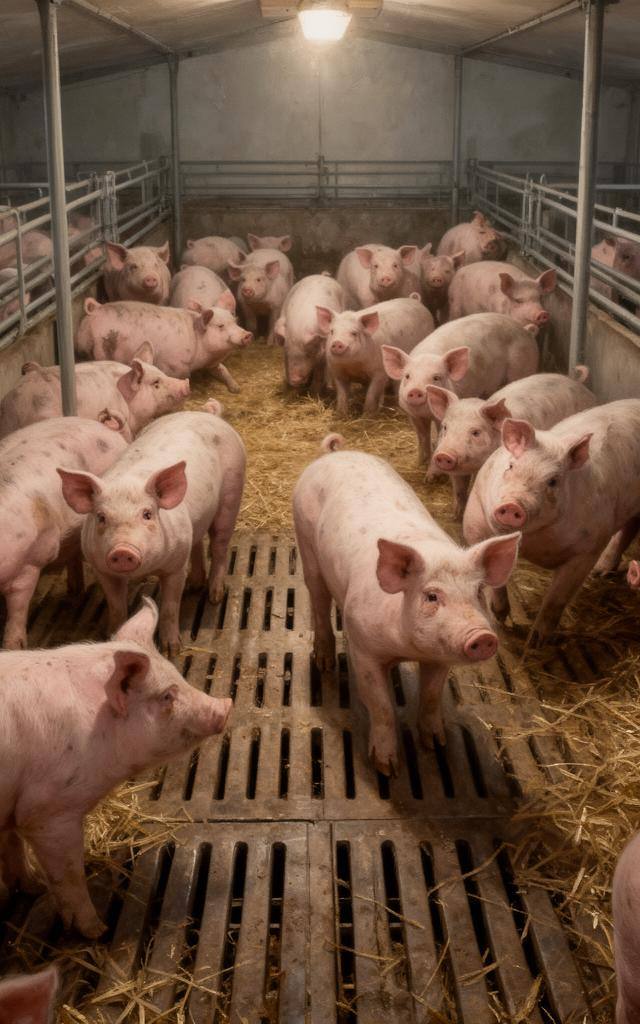
In food production, billions of animals are raised and slaughtered annually for human consumption. This practice is often justified by the belief that animals exist for human use and that their lives are less valuable than human lives. The conditions in which many of these animals live, particularly in industrial farming operations, would be considered unacceptable for humans due to their inherent cruelty and neglect of basic needs.
| Industry/Context | Manifestation of Speciesism |
|---|---|
| Food Production | Consumption of meat, dairy, eggs; factory farming practices; denial of natural behaviours |
| Clothing | Use of animal skins (leather, fur), wool, silk for fashion and utility |
| Science/Research | Animal testing for cosmetics, pharmaceuticals, and other products, often involving pain and confinement |
| Entertainment | Zoos, circuses, marine parks, rodeos, hunting, and fishing that use or exploit animals for human amusement |
| Pet Industry | Breeding practices that prioritise aesthetics over health; abandonment of 'unwanted' animals |
These examples highlight a pervasive human-centric worldview where non-human animals are often treated as commodities rather than individuals with inherent worth. Even in companion animal relationships, subtle forms of speciesism can emerge, such as prioritizing the perceived needs of a specific breed over animal welfare generally.
Why it's contested
The concept of speciesism is contested primarily because it challenges long-held anthropocentric views and practices that benefit humans. Critics of speciesism argue that it is an arbitrary distinction, much like racial or gender discrimination, lacking a consistent moral foundation.
One of the main arguments against speciesism is the concept of sentience. Many philosophers and scientists contend that the capacity to feel pain and pleasure, rather than species membership or intellectual capacity, should be the basis for moral consideration. If an animal can suffer, then its suffering matters and should be taken into account. Denying moral consideration based on species alone is seen as an unjustified bias.
Furthermore, the environmental impact of speciesist practices, particularly industrial animal agriculture, contributes significantly to climate change, deforestation, and biodiversity loss. This broader ecological perspective adds another layer of contestation, as continued speciesist exploitation jeopardizes the well-being of the planet, which ultimately affects humans too. The ethical questions raised by speciesism are central to the discourse on What is Animal Welfare?, pushing for a re-evaluation of our responsibilities towards other living beings.
Historical and philosophical origins
Speciesism as a formal concept emerged in the 1970s, but its philosophical roots go back centuries. Enlightenment thinkers like Jeremy Bentham argued in 1789 that the key question is not "Can they reason?" or "Can they talk?" but "Can they suffer?" — a direct challenge to the speciesist assumption that human intelligence alone confers moral worth. Richard Ryder, who coined the term in 1970, used it to describe the discrimination he observed in laboratory animal testing, drawing an explicit parallel to racism and sexism. Peter Singer's 1975 book Animal Liberation popularized the idea, framing speciesism as a prejudice that rational, compassionate people should reject, much as they reject other arbitrary biases.
Since then, the concept has been refined by philosophers such as Tom Regan, who argued for animal rights based on inherent value rather than utilitarian suffering, and by feminist theorists like Carol Adams, who linked speciesism to broader systems of oppression. This intellectual history shows that speciesism is not a fringe idea but a robust framework for examining moral consistency.
Evidence and numbers
Empirical evidence consistently shows that speciesism influences human attitudes, behaviors, and even legal systems. According to the Food and Agriculture Organization (FAO) of the United Nations, over 80 billion land animals are slaughtered for food each year globally, with the vast majority raised in intensive confinement systems that prioritize productivity over welfare. These numbers translate to roughly 2.5 billion animals killed per second — a scale that would be unthinkable if applied to humans, yet it is normalized by speciesist thinking.
The psychological evidence is equally revealing. Studies in moral psychology, such as those by psychologist Steve Loughnan, show that people often engage in "moral disengagement" when consuming meat — they downplay the animal's capacity for suffering to reduce guilt. For example, a 2010 study in the Journal of Personality and Social Psychology found that participants who believed a cow had a high capacity for pain were less likely to eat beef, demonstrating that speciesist assumptions (like "cows don't really suffer") can be flexible and self-serving.
Numerically, speciesism also correlates with other biases. Research by psychologist Gordon Hodson and colleagues has found that individuals who score high in social dominance orientation — a preference for hierarchical group relations — tend to be more speciesist, suggesting that speciesism shares a psychological root with other forms of prejudice. This is not to equate all forms of discrimination, but it underscores that speciesism is a legitimate moral concern rather than an accidental cultural artifact.
"Key stat: According to FAO, 2023, over 80 billion land animals are slaughtered for food each year — a scale that would be unimaginable for humans, yet normalized by speciesist thinking."
How speciesism works in practice
Speciesism operates through several interrelated mechanisms, from individual psychology to institutional structures. At the individual level, people often apply different moral standards to animals depending on the context — a dog may be treated as a family member, while a pig is seen as food, even though both are intelligent and social mammals. This "hierarchy of animals" is reinforced through language ("beef" vs. "cow"), media portrayals, and cultural norms that desensitize us to animal suffering.
Institutionalized speciesism is evident in laws that treat animals as property. For example, in the United States, the Animal Welfare Act (1966) does not cover animals raised for food, such as chickens, cattle, or pigs, meaning they have almost no legal protection against cruelty. Similarly, the European Union's Treaty of Lisbon (2009) recognizes animals as "sentient beings" but still allows intensive farming practices that cause significant suffering. These legal frameworks encode speciesism into policy, making it harder for individuals to challenge the status quo.
Practically, speciesism often operates through "othering" — we categorize animals as "us" (pets) versus "them" (livestock), and treat them accordingly. This cognitive split allows people to express love for one animal while consuming another, without feeling contradiction. Understanding these mechanisms is key to recognizing how pervasive speciesism is, even among well-meaning individuals.
 A human hand gently touching a pig's snout through a fence, showing empathy and connection
Costs and trade-offs of confronting speciesism
Confronting speciesism involves real costs and trade-offs, both personally and societally. For individuals, rejecting speciesism often means changing dietary habits, which can be challenging due to social pressure, cost concerns, or cultural traditions. However, research consistently shows that plant-based diets can be nutritionally adequate and often more affordable — a 2021 study in Nutrients found that vegan diets are generally cheaper than meat-based diets in high-income countries, though this is context-dependent.
Societally, moving away from speciesism would disrupt industries that rely on animal exploitation, such as factory farming, leather, and animal research. These industries provide jobs and economic output, so transitions require careful planning to protect workers and communities. On the other hand, the costs of maintaining speciesism are enormous: animal agriculture contributes to antibiotic resistance, deforestation, and climate change, with the IPCC (Intergovernmental Panel on Climate Change) linking livestock to 14.5% of global greenhouse gas emissions.
The trade-off is not simply "keep animals vs. lose jobs" — it's about redistributing economic resources toward more sustainable, compassionate systems. Plant-based agriculture tends to be more land-efficient; a 2018 study in Science found that avoiding meat and dairy is the single biggest way to reduce your environmental impact on the planet, but it requires systemic support to be feasible for all.
Common objections to speciesism critique
Objections to the speciesism critique typically fall into several categories, each of which deserves a fair hearing. Some argue that humans are special because we have higher cognitive abilities, moral agency, or self-awareness. However, this criterion fails when applied consistently — humans with severe intellectual disabilities, infants, or those in comas lack these traits, yet we do not consider their lives less valuable. Philosopher Peter Singer highlights this "argument from marginal cases" to show that species membership alone — not cognitive ability — is the real basis for moral worth, which is arbitrary.
Another objection is that speciesism is "natural" or necessary for human survival. While humans have eaten animals for millennia, our modern practices are far from natural — factory farming involves artificial insemination, growth hormones, and antibiotics, and many people have access to plant-based alternatives that make animal products unnecessary for health. The question isn't whether we can eat animals, but whether we should when the suffering is preventable.
Some also argue that focusing on speciesism distracts from human-centric issues like poverty or racial justice. But speciesism is not a zero-sum concern; the environmental harm from animal agriculture disproportionately affects marginalized human communities, and many animal advocates are also active in human rights work. Understanding speciesism enriches, rather than detracts from, broader ethical discussions.
Regional and cultural variations
Speciesism is not uniform across the globe; it varies significantly by culture, religion, and geography. In many Asian cultures, dogs are traditionally viewed as food in some regions, while in Western countries they are beloved pets — a clear example of how species boundaries are culturally constructed. Similarly, cattle are sacred in Hinduism and protected in India, yet beef consumption is common in other parts of South Asia, demonstrating that even "universal" animal rights are not universally applied.
Economic development also plays a role. In low-income countries, animal products may be a crucial source of protein, and animal labor is essential for agriculture, making speciesism more practical than ideological. However, global trends show that meat consumption is rising in developing nations, replicating Western patterns. At the same time, legal reforms are emerging: Switzerland (1992), Germany (2002), and Brazil (2008) have enshrined animal dignity or rights in their constitutions, signaling a shift away from purely anthropocentric law. These regional differences highlight that speciesism is not inevitable — it is a product of historical and social forces that can change.
What you can do next
If you want to address speciesism in your own life, start by examining your daily choices with compassion. Here are practical steps:
- Educate yourself — Read Peter Singer's Animal Liberation or watch documentaries like Dominion to understand the scale and suffering behind speciesist practices.
- Reduce animal product consumption — Even one meat-free day a week can reduce demand for factory farming and send a signal to producers.
- Support anti-speciesist policies — Vote for animal welfare legislation, support bans on fur farming, or advocate for higher welfare standards in your country.
- Challenge speciesist language — Reframe phrases like "it's just an animal" and speak up when others make casual jokes about animal abuse.
- Align your spending — Choose cruelty-free cosmetics, clothing, and entertainment; avoid venues like marine parks that keep animals in captivity.
Changing institutional speciesism requires collective action, but individual choices build momentum. Join local animal rights groups, share evidence-based information, and engage in respectful conversations with those who disagree. The goal is not to judge individuals but to create a world where all sentient beings are treated with equal consideration.
Related terms
Understanding speciesism often involves grasping related philosophical and ethical concepts. Sentience refers to the capacity to feel, perceive, or experience subjectively. Animal rights is the idea that animals are entitled to possess their own lives and that their most fundamental interests—such as the interest in not suffering—should be afforded the same consideration as the corresponding interests of human beings. Veganism is a lifestyle that seeks to exclude, as far as possible and practicable, all forms of exploitation of, and cruelty to, animals for food, clothing, or any other purpose. These terms are interconnected, forming a framework for a more ethically consistent approach to our interactions with the non-human world.
Trade-offs and practical concerns
Addressing speciesism involves real trade-offs that require honest acknowledgment, from economic dependencies on animal agriculture to cultural traditions and nutritional considerations. The transition away from speciesist practices is not a simple binary choice but a spectrum of gradual changes, each with its own costs and benefits that must be weighed with compassion for both humans and non-human animals.
The most significant trade-off is economic: according to the FAO, 2023, the global livestock sector employs over 1.3 billion people and contributes roughly 40 percent of agricultural GDP in many developing regions. Shifting away from animal products threatens livelihoods that depend on cattle ranching, fishing, and dairy farming, particularly in rural communities where alternative employment is scarce. A just transition would require retraining programs, social safety nets, and investment in plant-based infrastructure, all of which carry upfront costs that governments and industries have been slow to embrace.
There are also nutritional and cultural trade-offs that deserve respect rather than dismissal. In many indigenous and Arctic communities, for example, animal-sourced foods are not a preference but a necessity, where plant agriculture is impossible and imported alternatives are both expensive and nutritionally inadequate. Dismissing these realities as mere speciesism would be both insensitive and counterproductive, which is why ethical frameworks increasingly emphasize food sovereignty and local context over universal mandates.
 A colorful plant-based meal with vegetables and grains on a rustic table, representing ethical eating
Another practical concern is the pace of change. Rapid, forced transitions away from animal agriculture can create economic shocks and public backlash, as seen in several European countries where aggressive regulatory timelines were met with farmer protests. Gradual approaches, such as the Dutch government's buyout schemes for livestock farmers or the European Union's Farm to Fork strategy, aim to balance welfare improvements with economic stability, though critics argue they move too slowly to address urgent ethical and environmental crises.
The emotional dimension is also a genuine trade-off. Many people derive comfort, identity, and familial connection from food traditions that involve animal products. Asking someone to abandon those traditions is not merely a dietary request but an emotional and social one, and compassionate advocacy must acknowledge this grief rather than mock it. Effective change, therefore, often comes not from shaming but from offering appealing alternatives that respect the emotional weight of what is being left behind.
Common objections and responses
Critics of the speciesism framework raise several objections that deserve careful, evidence-based responses rather than dismissal. These objections range from philosophical challenges about moral status to practical concerns about feasibility, and engaging with them respectfully is essential for advancing meaningful dialogue.
Objection 1: "Humans are uniquely rational, so we deserve special status." Response: Rationality is a capacity that varies widely among humans, including infants, people with severe cognitive disabilities, and the elderly, yet we do not deny them moral consideration. If intelligence were the criterion, then some non-human animals would outrank some humans, yet speciesism insists on a hard line at the species boundary. According to philosopher Peter Singer, 1975, this inconsistency is logically indefensible without specifying exactly which level of rationality qualifies for moral worth.
Objection 2: "Animals eat other animals in nature, so it's natural for us to do so." Response: While it is true that some animals are carnivorous, natural behavior is not a reliable moral guide — humans also naturally experience aggression, jealousy, and selfishness, yet we regulate these impulses through ethics. Moreover, most humans have the choice to thrive on plant-based diets, unlike obligate carnivores such as lions or wolves, so the comparison fails to account for moral agency and alternative options.
Objection 3: "Meat is necessary for human health." Response: According to the Academy of Nutrition and Dietetics, 2016, appropriately planned vegetarian and vegan diets are healthful, nutritionally adequate, and appropriate for all stages of life. While some nutrients require careful attention, such as vitamin B12 and iron, modern fortified foods and supplements make deficiencies easily preventable. The challenge is nutritional education, not nutritional impossibility.
Objection 4: "Animal agriculture is needed to feed the growing global population." Response: The evidence suggests the opposite. According to a meta-analysis published in Science by Poore and Nemecek, 2018, plant-based diets require significantly less land, water, and energy than animal-based diets. Currently, about 77 percent of agricultural land is used for livestock, yet it provides only 18 percent of global calories, which is a deeply inefficient system for feeding people.
A fifth objection often arises from those who argue that speciesism is a false analogy because species is a biological reality while race or gender are social constructs. However, this misunderstanding conflates the biological category with the moral weighting attached to it. Species membership is indeed biological, but using that category to justify differential suffering is a moral choice, not a biological necessity — which is precisely where the parallel to racism and sexism lies.
"Key stat: According to a 2015 survey by the Pew Research Center, 88 percent of Americans say animals should be protected from harm, yet most continue to consume animal products daily — a gap that illustrates how deeply speciesist norms persist even against our own stated values."
The regional angle for English-speaking readers
For English-speaking audiences, the debate around speciesism takes on distinct regional flavors, shaped by different legal systems, agricultural histories, and cultural movements across the United States, United Kingdom, Canada, Australia, and New Zealand. Understanding these regional contexts is crucial because the conversation about speciesism is not monolithic, and advocacy strategies that work in one country may fail in another.
In the United States, speciesism is most visible in the scale of industrial animal agriculture and the legal gap between federal protections and state-level cruelty laws. The federal Animal Welfare Act, 1966 (amended 2008), explicitly excludes farm animals, birds, and rodents, leaving factory farming largely unregulated. Meanwhile, a growing plant-based market — valued at over $8 billion in 2022 according to the Plant Based Foods Association — shows meaningful consumer shifts, and states like California have passed landmark welfare laws such as Proposition 12, which mandates minimum cage sizes for egg-laying hens and veal calves.
The United Kingdom offers a contrasting picture, where speciesism discourse has moved further into mainstream policy. The UK was the first country to recognize animal sentience in law through the Animal Welfare Act, 2006, and the Animal Welfare (Sentience) Act of 2022 extended this recognition to invertebrates such as octopuses and lobsters. British campaigns often emphasize welfare over rights, with groups like the RSPCA driving incremental improvements, while grassroots vegan movements have pushed for school and hospital menu changes, reflecting a pragmatic approach that balances ethical ideals with institutional realities.
Canada presents yet another dimension, where speciesism intersects with indigenous rights and resource extraction. The seal hunt in Newfoundland, the commercial fishery collapse on the Atlantic coast, and the expansion of intensive pig farming in Quebec have all generated heated debates that pit animal advocates against rural livelihoods and indigenous traditions. Canadian courts have been cautious, with the Supreme Court affirming animal cruelty laws in cases like R v Mangahas (2020) but stopping short of granting animals legal personhood, a step taken in limited form by Argentina's courts but not yet in common-law jurisdictions.
Australia and New Zealand provide a Southern Hemisphere lens that complicates simple anti-speciesist narratives. Australia is one of the world's largest exporters of live animals, particularly sheep to the Middle East, which has sparked a sustained campaign by groups like Animals Australia against the live export trade. New Zealand, meanwhile, has taken a different path, with the landmark 2015 recognition of animals as sentient beings under the Animal Welfare Amendment Act, and the 2020 decision to classify animals as 'beings' rather than property in certain legal contexts — though critics note that enforcement remains inconsistent. In both countries, the economic significance of agriculture, particularly dairy and wool, creates powerful lobbies that resist rapid change, while urban populations increasingly embrace plant-based diets, creating a visible urban-rural divide.
| Region | Key Legal Framework | Main Speciesist Practice | Emerging Counter-Trend |
|---|---|---|---|
| United States | Animal Welfare Act, 1966 (excludes farm animals) | Industrial factory farming | Plant-based market growth; California's Proposition 12 |
| United Kingdom | Animal Welfare (Sentience) Act, 2022 | Live exports (now banned); intensive poultry | Mainstream sentience recognition; institutional menu changes |
| Canada | Criminal Code animal cruelty provisions | Commercial fisheries; seal hunting; intensive pig farms | Court rulings affirming cruelty laws; indigenous-centered advocacy |
| Australia | State-based animal welfare statutes | Live animal export; broad phasing | Persistent campaign against live export; growing vegan food sector |
| New Zealand | Animal Welfare Amendment Act, 2015 | Dairy and wool industry practices | Legal sentience recognition; property status debates |
For English-speaking readers specifically, this regional overview reveals a common thread: none of these nations has fully embraced a post-speciesist framework, but each is struggling with the tension between economic inheritance and evolving ethical consciousness. The language of rights, welfare, and sentience is being contested not only in courts and legislatures but in everyday consumer choices, making the regional angle a lived reality rather than an abstract debate.
Speciesism in policy and law
Speciesism is not merely a philosophical concept but a structural feature of legal systems that consistently privileges human interests over non-human interests, often through explicit exclusions hidden in the fine print of animal welfare legislation. The law is arguably the most powerful instrument for institutionalizing speciesist bias, because when a legal system grants differential protection based on species, it codifies the discrimination and normalizes it as public policy.
One of the clearest examples of legal speciesism is the categorical exemption of farm animals from basic welfare protections. In the United States, the Humane Slaughter Act, 1958 (amended 1978) explicitly exempts poultry, which constitutes over 95 percent of all animals slaughtered for food in the country according to the USDA, 2023. Similarly, the federal Animal Welfare Act, 1966, as noted, excludes mice, rats, and birds — animals that make up the vast majority of laboratory research subjects — from its protections, which is why an estimated 1 million animals are used in U.S. research each year without standardized oversight for pain relief.
Legal reform movements have made incremental progress. Several countries, including Switzerland and the Netherlands, have recognized animals as 'beings' rather than 'things' in civil codes, allowing courts to consider animal interests more directly in custody disputes and abuse cases. The European Union has banned battery cages for hens, gestation crates for pigs, and veal crates, representing a systematic rejection of some of the most intensive speciesist practices. However, these reforms are partial: the same EU institutions continue to subsidize livestock production through the Common Agricultural Policy, which is why critics describe them as symbolic victories that leave structural speciesism intact.
The notion of animal 'personhood' has also made legal advances. In 2022, the High Court of Uttarakhand in India recognized all animals as legal persons with rights and duties, while a Colombian court declarated that a bear named Chucho was entitled to habeas corpus rights. In English-speaking jurisdictions, such developments remain rare but not absent — in 2020, the New Zealand Wildlife Act classified birds as legal beings with inherent worth, and several U.S. cities have toyed with rights-of-nature ordinances that indirectly benefit animals.
Practical checklist for reducing speciesism in daily life
Transitioning away from speciesist habits does not require perfection or overnight transformation; it requires intentional, compassionate choices that progressively align your actions with your values. The following checklist is designed for English-speaking readers at any stage of their journey, from curious observer to committed activist, and acknowledges that every step matters.
Nutrition and food choices
- ✅ Adopt a 'reducetarian' approach: replace one meat-based meal per week with a plant-based alternative, and gradually increase frequency based on comfort and health needs.
- ✅ Learn to read ingredient labels for hidden animal products such as gelatin, carmine, and lanolin, which appear in processed foods, cosmetics, and personal care products.
- ✅ Support local plant-based restaurants and food brands; according to Google Trends data, 2023, searches for 'vegan options near me' have doubled since 2019, showing that consumer demand reshapes markets.
- ⚠️ Be mindful of vitamin B12: whether strictly plant-based or not, ensure adequate intake through fortified foods or supplements, as deficiency affects all diets.
- ✅ Shop at farmers' markets and build relationships with growers who prioritize ethical, regenerative practices, which avoids the false binary of industrial meat versus industrial plant monocultures.
Clothing and consumer goods
- ✅ Choose second-hand, recycled, or plant-based materials such as organic cotton, hemp, and Tencel over new animal-derived leather, wool, silk, or fur.
- ✅ Research brands before purchasing: check for certifications like PETA-approved vegan or Global Organic Textile Standard (GOTS), which signal explicit commitment to non-speciesist sourcing.
- ✅ Extend the life of existing animal-derived products you already own rather than discarding them, because waste is also a form of harm.
Entertainment and leisure
- ✅ Replace zoo visits with local wildlife parks that focus on rescue and rehabilitation, or support virtual wildlife documentaries that cost no animal freedom.
- ✅ Avoid circuses, rodeos, marine parks, and hunting trips; instead, choose animal observation in natural habitats where possible.
- ✅ If you have companion animals, adopt from shelters rather than purchasing from breeders or pet stores, reducing the demand for 'production' of animals.
Advocacy and community
- ✅ Share this article or another evidence-based resource with one friend, and engage in respectful conversation rather than confrontation.
- ✅ Support organizations that address speciesism systemically, such as the Humane League, Farm Sanctuary, or your regional animal legal defense fund, and consider monthly contributions over one-time donations.
- ✅ Vote for candidates and referenda that promise stronger animal welfare laws, and write to your local representative about policy gaps like the exclusion of poultry from slaughter protections.
- 🌱 Track your progress with a simple journal or app; behavioral research from the Journal of Environmental Psychology, 2022, shows that self-monitoring increases adherence to new ethical habits by up to 40 percent.
The checklist above is not a moral purity test but a reflection of the understanding that ethics unfold over time. Choose two items to start with this week, and build from there — the goal is not to eliminate all inconsistencies immediately but to create a trajectory that increasingly honors the sentience of all beings.
"Bottom line: Speciesism is a learned bias, not an unchangeable instinct, and therefore it can be unlearned. The most effective form of personal change is the one you actually sustain, so let flexibility and self-compassion guide the process rather than guilt and rigidity."
Read next
The common questions
People also ask
Read next

Animal Rights vs Welfare 2026: 61% Demand End to Factory Farms
A new 2026 global survey reveals that 61% of consumers now support a complete phase-out of factory farming, reshaping the animal rights vs welfare debate.
Estrellita Monkey Ecuador: Rights of Nature 2026 Landmark
Ecuador's Estrellita monkey ruling reshapes animal rights and wildlife conservation—here's why it matters globally.
How to Shift Diets for UK Carbon Mitigation Using IPCC AR6
A practical guide to aligning UK diets with IPCC AR6 WGIII carbon mitigation pathways.