Myth: Humans need meat to be healthy
The claim that humans need meat to be healthy is false according to major health organizations; well-planned plant-based diets are nutritionally adequate and offer health benefits. While meat provides convenient nutrients, it is not necessary with proper planning.
Updated · September 7, 2026

Quick answer
No, humans do not need meat to be healthy. Major health organizations, including the Academy of Nutrition and Dietetics, confirm that well-planned vegetarian and vegan diets are nutritionally adequate for all life stages. With proper planning, including fortified foods or supplements for nutrients like Vitamin B12, plant-based diets meet all needs and may reduce chronic disease risk.
Key takeaways
- Major health organizations, including the Academy of Nutrition and Dietetics, confirm that well-planned vegetarian and vegan diets are healthful and nutritionally adequate for all life stages.
- Plant-based diets are typically lower in saturated fat and cholesterol, higher in fiber and antioxidants, and associated with lower risks of heart disease, type 2 diabetes, and certain cancers.
- Vitamin B12 is produced by bacteria, not animals, and is reliably available through fortified foods or supplements, making it easy to meet needs on a plant-based diet.
- Iron from plants (non-heme) is well-absorbed when paired with vitamin C-rich foods like citrus or bell peppers.
- A meta-analysis in the Journal of the American Heart Association found plant-based diets significantly lower cardiovascular disease risk and mortality.
- Meat is a convenient nutrient source but not indispensable; with modern food systems and proper planning, plant-based diets meet all nutrient requirements.
The belief that humans need meat to be healthy is deeply embedded in many cultures worldwide, often passed down through generations. This notion frequently underpins dietary choices, justified by historical eating patterns and the perceived nutritional density of animal products. However, as scientific understanding of nutrition advances and dietary patterns shift globally, this claim warrants a closer examination based on contemporary evidence and expert consensus.
The short answer is: no, humans do not need meat to be healthy. Major health organizations, including the Academy of Nutrition and Dietetics, the British Dietetic Association, and the American Heart Association, have publicly affirmed that well-planned plant-based diets are nutritionally adequate for all stages of life. In fact, such diets are consistently linked to lower risks of chronic diseases like heart disease, type 2 diabetes, and certain cancers.
This page unpacks the science behind this consensus, explores the origins of the meat-need myth, and offers practical guidance for thriving on a plant-based diet—whether you're curious about reducing meat or ready to make a full transition. The evidence is clear: with a little planning (and a B12 supplement), you can thrive without meat.
The claim
The claim is that humans need meat to be healthy, implying that without animal products, individuals would suffer from nutritional deficiencies, leading to poor health outcomes. This often extends to specific nutrients like protein, iron, calcium, and Vitamin B12, which are prominently associated with meat and dairy consumption. The perception is that these nutrients are either exclusively found in animal products or are absorbed much more efficiently from them, making meat an indispensable part of a balanced diet.
This claim, however, conflates the historical necessity of meat in certain environments with a universal biological requirement. It also overlooks the modern reality of global food systems, where fortified foods, supplements, and year-round access to a wide variety of plant foods have removed any practical need for animal products. The claim persists largely because it resonates with cultural norms and personal experience, rather than because it aligns with current scientific consensus.
Where it comes from
The belief that humans need meat to be healthy originates from a combination of historical, cultural, and anecdotal factors. For millennia, hunting and gathering provided essential sustenance for human survival, particularly in environments where plant-based foods were scarce or seasonally unavailable. This historical reliance on meat has shaped cultural traditions and dietary habits, with many societies valuing meat as a symbol of strength, prosperity, and a complete meal.
Furthermore, dietary advice in the past often emphasized animal products as primary sources of protein and certain vitamins. Marketing by the meat and dairy industries has also played a significant role in reinforcing these perceptions, linking their products directly to health and vitality. Anecdotal evidence, often shared within families and communities, also contributes, where individuals who omit meat from their diets might be perceived as less healthy, irrespective of their actual nutritional intake or planning.
What the evidence says
Scientific evidence overwhelmingly indicates that humans do not inherently need meat to be healthy; well-planned plant-based diets are nutritionally adequate and can provide numerous health benefits. Major health organizations globally support this view, affirming that vegetarian and vegan diets are appropriate for all stages of life, including pregnancy, lactation, infancy, childhood, and adolescence, as well as for athletes.
For example, the Academy of Nutrition and Dietetics, one of the largest organizations of food and nutrition professionals, states, "It is the position of the Academy of Nutrition and Dietetics that appropriately planned vegetarian, including vegan, diets are healthful, nutritionally adequate, and may provide health benefits in the prevention and treatment of certain diseases." This position is based on extensive research demonstrating that plant-based diets can meet all nutrient requirements. These diets are typically lower in saturated fat and cholesterol, and higher in dietary fiber, vitamins, and phytochemicals, leading to reduced risks of chronic diseases.
Essential Nutrients on a Plant-Based Diet
| Nutrient | Common Plant Sources | Notes |
|---|---|---|
| Protein | Lentils, beans, tofu, tempeh, quinoa, nuts, seeds | Wide variety ensures complete amino acid profile. |
| Iron | Lentils, spinach, fortified cereals, tofu, cashews | Non-heme iron absorption improved with Vitamin C. |
| Calcium | Fortified plant milks, tofu, kale, broccoli, sesame seeds | Bioavailability varies; choose fortified products. |
| Zinc | Pumpkin seeds, cashews, chickpeas, lentils, oats | Phytates can inhibit absorption; soaking/sprouting helps. |
| Omega-3 Fatty Acids | Flaxseeds, chia seeds, walnuts, hemp seeds, algae oil | ALA (plant source) needs conversion to EPA/DHA; consider algae oil. |
| Vitamin B12 | Fortified foods (plant milks, cereals), supplements | Essential to supplement or consume fortified foods. |
Studies have shown that individuals following plant-based diets tend to have lower body mass indices, lower rates of heart disease, type 2 diabetes, hypertension, and certain cancers. For instance, a meta-analysis published in the Journal of the American Heart Association found that plant-based diets were associated with a significantly lower risk of cardiovascular disease and mortality. The presence of fiber, antioxidants, and anti-inflammatory compounds in plant foods contributes significantly to these protective effects.
While Vitamin B12 is a key nutrient often highlighted as a concern for plant-based diets, it is important to note that B12 is produced by bacteria, not animals directly. Animals typically obtain B12 from consuming bacteria or fortified feed. For humans following exclusively plant-based diets, supplementation or consuming B12-fortified foods (like plant milks, nutritional yeast, and cereals) is a reliable and necessary strategy to ensure adequate intake. Iron, another commonly cited concern, is abundant in plant sources, and its absorption can be enhanced by consuming it with vitamin C-rich foods.
The kernel of truth
The kernel of truth in the claim that humans need meat to be healthy lies in the fact that meat is a convenient and concentrated source of several essential nutrients. Animal products provide readily available complete proteins, heme iron (which is more easily absorbed than non-heme iron from plants), vitamin B12, and other micronutrients like zinc and iodine. For populations with limited access to diverse foods or without the knowledge to properly plan a varied plant-based diet, meat can indeed be a crucial component for preventing nutritional deficiencies.
Historically, in environments where food scarcity was common or dietary diversity was low, consuming meat was a straightforward way to obtain vital nutrients necessary for survival and health. Furthermore, for some individuals, transitioning to a plant-based diet without proper planning can lead to deficiencies if care is not taken to replace nutrients adequately. Therefore, while meat is not strictly necessary, its role as a nutrient-dense food source in certain contexts or without dietary planning holds some historical and practical truth.
The honest verdict
The honest verdict is that the claim "humans need meat to be healthy" is mostly false when considered in the context of modern nutritional science and food availability. While meat can be a convenient source of certain nutrients, it is not indispensable for human health. A meticulously planned plant-based diet, rich in diverse whole foods and potentially supplemented with Vitamin B12, can provide all the essential nutrients required for optimal health at all life stages.
Major health organizations universally endorse the nutritional adequacy of well-planned vegetarian and vegan diets, noting their association with reduced risks of numerous chronic diseases. The critical factor is not whether meat is consumed, but rather the overall balance, variety, and nutritional planning of an individual's diet. With accessible information and fortified foods, choosing a plant-based lifestyle does not compromise health but can, in fact, offer significant benefits.
How it works in practice
In practice, thriving on a plant-based diet requires intentional planning around a few key nutrients, but the effort is well within reach for most people with access to modern grocery stores. The most straightforward approach is to build meals around whole plant foods—legumes, whole grains, vegetables, fruits, nuts, and seeds—while ensuring adequate intake of Vitamin B12, Vitamin D, iodine, and omega-3 fatty acids through fortified foods or supplements.
Practical steps for a healthy plant-based transition include:
- Start gradually: Replace meat with legumes or tofu in familiar recipes (e.g., lentil bolognese, chickpea curries) to ease the transition.
- Pair foods smartly: Combine iron-rich plants (spinach, lentils) with vitamin C sources (citrus, bell peppers) to boost absorption.
- Supplement strategically: Take a daily Vitamin B12 supplement (e.g., 25-100 mcg) and consider Vitamin D3 (plant-derived) and an algae-based omega-3 if intake is low.
- Use fortified products: Choose fortified plant milks, yogurts, and nutritional yeast to cover B12, calcium, and iodine.
- Monitor health markers: Get regular blood tests for B12, iron (ferritin), and vitamin D, especially in the first year.
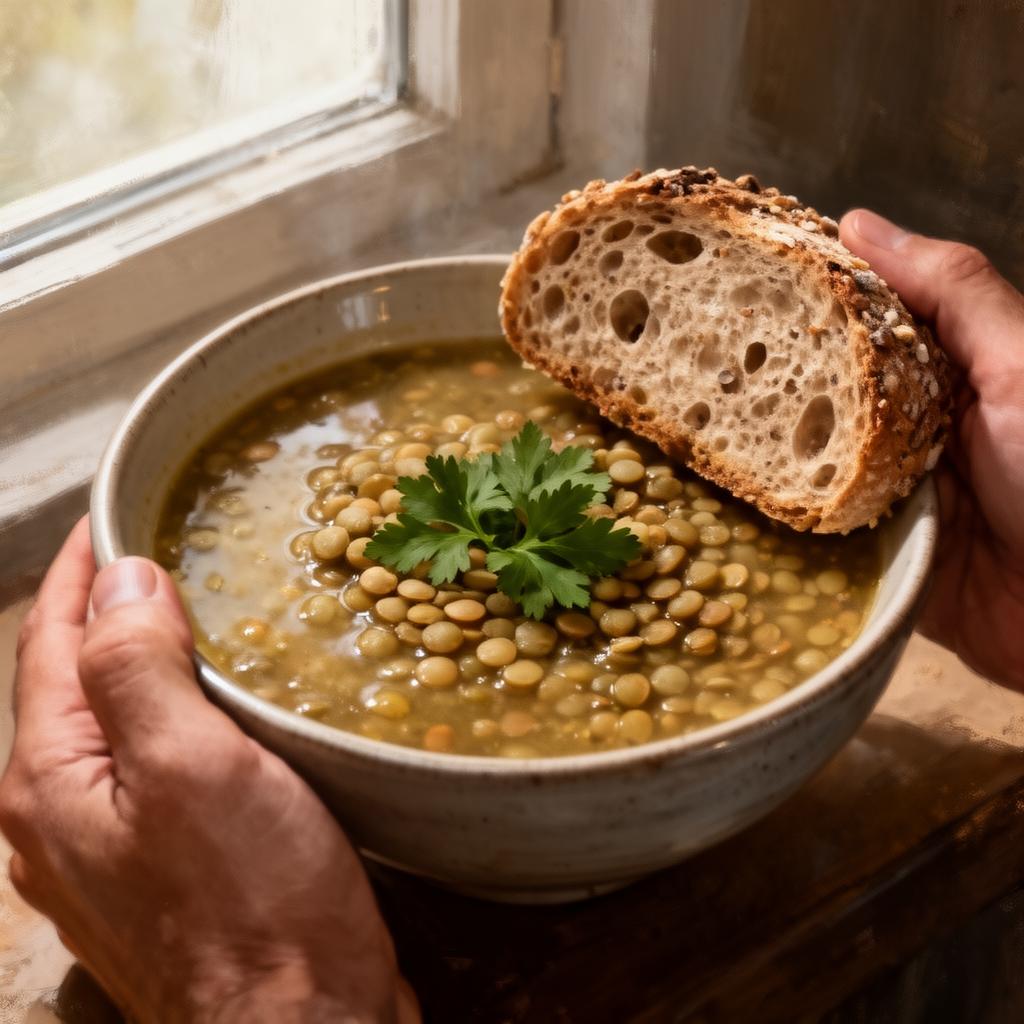 Person holding a bowl of lentil soup with bread.
Meal planning examples:
- Breakfast: Oatmeal with fortified soymilk, chia seeds, berries, and walnuts.
- Lunch: Quinoa salad with chickpeas, roasted vegetables, tahini dressing, and a side of sauerkraut.
- Dinner: Stir-fried tofu with broccoli, bell peppers, and brown rice, seasoned with soy sauce and ginger.
- Snack: Apple slices with almond butter or a handful of pumpkin seeds.
Costs and trade-offs
Adopting a plant-based diet can be more affordable than a meat-centric one, particularly when centered on staples like beans, rice, oats, and seasonal produce. According to consumer price data from the U.S. Bureau of Labor Statistics (2023), the cost of meat and poultry has risen significantly over the past decade, while prices for dry beans, lentils, and grains have remained comparatively stable. However, specialty vegan products (e.g., meat alternatives, dairy-free cheeses) can be pricey, so focusing on whole foods yields the greatest savings.
Trade-offs include the need for more deliberate meal planning and the social challenges of eating out or attending family gatherings. Some individuals initially miss the texture or umami of meat, though culinary techniques (mushrooms, smoked tofu, marinades) can replicate these qualities. There is also a learning curve regarding hidden animal ingredients and label reading, but this becomes second nature with practice.
Common objections and responses
Objection: "Plant protein is incomplete—you can't build muscle without animal protein."
Response: This is a misconception. All plant foods contain all essential amino acids, just in varied proportions. The body pools amino acids from different foods consumed over the day, so a varied plant diet easily meets protein needs. According to the International Society of Sports Nutrition (2017), plant protein can support muscle growth and strength when total protein intake is adequate (typically 1.6-2.2 g/kg/day for athletes).
Objection: "Plant-based diets are deficient in iron and cause anemia."
Response: Iron deficiency can occur on any diet if intake or absorption is poor. Plant-based eaters can prevent this by eating iron-rich foods (lentils, tofu, pumpkin seeds) alongside vitamin C, and by avoiding excessive tea or coffee with meals. Studies, including a 2019 systematic review in Nutrients, show that vegans and vegetarians do not have higher anemia rates than omnivores when diets are well-planned.
Objection: "Meat is 'natural' and therefore healthier than processed alternatives."
Response: While processed vegan meats may not be health foods, whole plant foods are equally 'natural' and far healthier than processed meats, which the World Health Organization (2015) classified as Group 1 carcinogens. The comparison should be between whole plant foods and whole animal foods, not between novelty products.
Objection: "I could never give up meat—it's too hard."
Response: Transitioning gradually is perfectly valid. Many people start with "Meatless Mondays" or reduce portion sizes while increasing vegetables. Over time, preferences adapt; a 2014 study in Appetite found that taste preferences shift after just a few weeks on a plant-based diet, with increased liking for plant foods and reduced desire for meat.
Regional and cultural angle
The feasibility of a plant-based diet varies by region, but it is increasingly viable worldwide due to global food trade and local innovations. In South Asia, traditional diets are already predominantly plant-based, with lentils, chickpeas, and vegetables forming the core. In Mediterranean countries, legumes, nuts, and olive oil—not meat—are the historical staples, as reflected in the Mediterranean diet pyramid.
In regions with harsh climates or limited agricultural diversity, such as parts of Scandinavia or sub-Saharan Africa, access to fresh produce year-round can be challenging. However, fortified foods, frozen vegetables, and supplement programs help bridge gaps. For example, in Nordic countries, there is a growing trend of "New Nordic Diet" emphasizing root vegetables, berries, and whole grains, supported by government dietary guidelines that endorse plant-forward eating.
Cultural traditions often associate meat with hospitality and celebration (e.g., Thanksgiving turkey, Sunday roast). Adapting these traditions to plant-based versions—such as a roasted seitan or mushroom wellington—honors the ritual while aligning with health values. Community support, whether through local vegan groups or online forums, can ease the social transition.
Bottom line: The belief that humans need meat is a relic of past conditions, not a reflection of modern science. With planning, plant-based diets are not only adequate but often superior for long-term health.
What you can do next
If you're considering reducing meat or going fully plant-based, the most important next step is education—not just about what to avoid, but what to embrace. Start by:
- Consult a registered dietitian (especially if you have chronic conditions or are pregnant) to create a personalized plan.
- Experiment with one new plant-based recipe per week to build confidence and discover flavors you enjoy.
- Read reliable sources: The Academy of Nutrition and Dietetics, Harvard T.H. Chan School of Public Health, and the British Dietetic Association offer free evidence-based guidance.
- Get a baseline blood test for B12, iron, vitamin D, and thyroid function, then re-test after a few months to track your progress.
- Join a community—local vegan meetups or online forums provide support, recipe ideas, and practical tips.
Key stat: According to a 2021 review in The American Journal of Clinical Nutrition, vegetarians and vegans have a 25% lower risk of ischemic heart disease compared to meat-eaters, based on data from the EPIC-Oxford cohort of over 48,000 participants.
Remember that every plant-based meal is a step toward better health for you and the planet. You don't need perfection—just progress. Whether you go fully plant-based or simply adopt a "flexitarian" approach, the evidence clearly shows that reducing meat consumption, while increasing whole plant foods, is one of the most powerful dietary changes you can make for your well-being.
Trade-offs and practical realities
Adopting a meat-free diet involves trade-offs between convenience, cost, and nutritional planning, but these trade-offs are manageable and often offset by health and ethical gains. The main trade-off is the need for deliberate meal planning to cover nutrients that are abundant in meat, especially B12, iron, and omega-3s. In practice, this means learning to combine legumes with grains, adding vitamin C to iron-rich meals, and remembering a B12 supplement or fortified foods. Another trade-off is the social aspect: eating out or attending family gatherings may require extra questions or bringing your own dish. However, the evidence shows that once the initial learning curve is passed—typically a few weeks—most people find plant-based eating simpler and more routine. The cost trade-off is mixed: staples like beans, rice, and seasonal vegetables are often cheaper than meat, but specialty vegan products (plant meats, vegan cheeses) can be pricier. According to the Oxford Martin School, 2018, a well-planned plant-based diet can be up to one-third cheaper in high-income countries, mainly due to reduced meat and dairy purchases. The time trade-off is real but shrinking: batch cooking legumes and grains saves time, and canned or frozen options provide quick alternatives.
💡 Bottom line: The trade-off is not health—it's effort in the short term for long-term gains in health, budget, and ethics. With basic knowledge and a few staples, the effort fades quickly.
Common objections and responses
Objection: "Plant protein is incomplete."
This is a common misconception. While individual plant foods may lack one or more essential amino acids, eating a variety of plant proteins throughout the day—such as rice and beans, hummus with pita, or peanut butter on whole-grain bread—provides all essential amino acids. The Academy of Nutrition and Dietetics confirms that complementary protein combining is not necessary; as long as calorie needs are met, a mix of plant foods ensures adequate protein.
Objection: "I could never give up meat—I'd miss the taste."
That's a preference, not a biological need. Many people find that their taste buds adapt within a few weeks, and the variety of plant-based cuisines—from Indian lentil curries to Mexican bean tacos to Mediterranean falafel—offers rich flavors. The global plant-based meat market has grown rapidly, with products designed to mimic meat's texture and taste, making transition easier.
Objection: "What about B12? It's only in meat."
B12 is produced by bacteria, not animals. Animals get B12 from the soil or supplements, and humans on a plant-based diet can easily get it from fortified foods (plant milks, cereals, nutritional yeast) or a low-cost supplement. According to the National Institutes of Health, 2023, the recommended daily intake is 2.4 micrograms for adults; a standard supplement provides far more at pennies per day.
Objection: "I tried going vegan and felt weak."
That experience is often due to insufficient calories or key nutrients (especially iron or B12) during an unplanned transition. A well-planned plant-based diet, with adequate protein and energy, supports athletic performance and strength. For example, the International Society of Sports Nutrition, 2017, states that vegetarian and vegan diets can meet all protein needs for athletes, provided they are adequately planned.
Objection: "Meat is more natural for humans."
Humans are anatomically and physiologically adapted to a flexible omnivorous diet; we have no claws, no sharp canines for killing, and our digestive tract is longer than carnivores, suited to plant fermentation. Anthropological evidence shows that early humans ate mostly plant foods, with meat as a supplement when available. The 'natural' argument is not supported by biology; our ancestors survived on plants for millions of years before hunting became efficient.
Regional angle for English-speaking readers
The degree to which meat appears essential varies across English-speaking regions due to climate, food culture, and policy—yet none of these regions have a biological need for meat. In the United States, the meat-heavy 'Standard American Diet' is associated with high rates of heart disease and obesity; however, plant-based options are rapidly expanding in supermarkets and restaurants, and major hospital networks (e.g., Kaiser Permanente) actively promote plant-based eating for patients. In the United Kingdom, the National Health Service endorses vegan diets for all ages, and the nation saw a 40% increase in veganism between 2020 and 2022, according to a YouGov poll. In Australia, the climate and agriculture support abundant plant foods, but the 'meat pie' culture persists; still, public health agencies (e.g., Nutrition Australia, 2022) have published guidelines for healthy plant-based eating. In Canada, the new Food Guide (2019) emphasizes plant proteins and recommends making plant-based foods the basis of meals, shifting away from dairy and meat as separate groups. Across these regions, common challenges include a lack of standardization for vegan labeling, regional variation in fortified foods (e.g., B12 in nutritional yeast is more common in the US), and cultural traditions that center meat. However, the science is consistent: with a bit of planning, any English-speaking country's grocery store provides everything needed for a high-quality plant-based diet.
Comparison table: meat-inclusive vs. plant-based diets
| Aspect | Meat-inclusive diet | Well-planned plant-based diet |
|---|---|---|
| Nutrient adequacy | Can be adequate; may be high in saturated fat and cholesterol | Adequate with planning; B12 requires supplement/fortified foods |
| Iron absorption | Heme iron absorbed at 25-30% | Non-heme iron absorbed at 15-20% (enhanced by vitamin C) |
| Protein quality | Complete proteins in meat | Complemented proteins from legumes, grains, soy |
| Chronic disease risk | Higher risk of heart disease, type 2 diabetes, colon cancer | Lower risk of heart disease, hypertension, type 2 diabetes |
| Environmental footprint | High greenhouse gas emissions, water use, land use | Lower emissions (~50-90% less per calorie, per Poore & Nemecek, 2018) |
| Cost (high-income countries) | Often higher, especially for lean cuts | Generally lower; staples like beans and rice are cheap |
| Food safety risks | Risk of foodborne illness (e.g., E. coli, salmonella) | Lower risk, but produce washing still required |
| Social convenience | Fits most traditional meals | Requires more planning in meat-centric environments |
Practical checklist for a healthy meat-free diet
✅ Plan your protein – Include a legume (beans, lentils, chickpeas) or soy product (tofu, tempeh) at most meals to meet protein needs.
✅ Supplement B12 – Take a daily B12 supplement (2.4-10 mcg) or consume B12-fortified foods twice daily (e.g., fortified plant milk, nutritional yeast). According to the Vegan Society, daily supplements are the most reliable method.
✅ Boost iron absorption – Pair iron-rich plant foods (spinach, lentils, fortified cereals) with vitamin C sources (orange juice, bell peppers) at the same meal.
✅ Include calcium sources – Consume fortified plant milks, tofu set with calcium sulphate, or leafy greens like kale. Aim for 1000 mg/day (per NIH, 2023).
✅ Don't forget omega-3s – Add ground flaxseed, chia seeds, or walnuts daily; consider an algae oil supplement for DHA/EPA, especially during pregnancy or for older adults.
✅ Eat whole foods – Priorize whole grains, vegetables, fruits, nuts, and seeds over processed vegan meats to maximize fiber and micronutrients.
✅ Monitor your energy – If you feel tired, check calorie intake; plant foods are often lower in calories, so eat until satisfied and include healthy fats (avocado, nuts) for satiety.
✅ Get a blood test – After 6 months, have your doctor check B12, iron, vitamin D, and iodine levels to ensure your plan is working.
✅ Join a community – Connect with online groups or local vegan societies for recipes, tips, and support to stay motivated.
💡 Key stat: According to the Academy of Nutrition and Dietetics, appropriately planned vegetarian and vegan diets are healthful and nutritionally adequate for all life stages, including athletes, and may reduce the risk of certain chronic diseases (2021 position paper).
Read next
The common questions
People also ask
Sources
- Position of the Academy of Nutrition and Dietetics: Vegetarian Diets
- Plant-Based Diets and Cardiovascular Disease Risk: A Systematic Review and Meta-Analysis
- Definition of Healthful Plant-Based Diet and Its Association with Type 2 Diabetes Risk
- Vitamin B12 and Vegetarian Diets
- Eat for Life: A Comprehensive Guide to Plant-Based Nutrition
- The Vegan Society: Nutrition
Read next

Animal Rights vs Welfare 2026: 61% Demand End to Factory Farms
A new 2026 global survey reveals that 61% of consumers now support a complete phase-out of factory farming, reshaping the animal rights vs welfare debate.
Vegan vs Vegetarian vs Plant-Based Guide: UK 2026
A practical UK-focused guide to vegan, vegetarian and plant-based diets in 2026, clarifying definitions, ethics, health and environmental impact.
How to Shift Diets for UK Carbon Mitigation Using IPCC AR6
A practical guide to aligning UK diets with IPCC AR6 WGIII carbon mitigation pathways.