Anthropocentrism: Understanding Humanity's Place in the World
Anthropocentrism is the philosophical view that humans hold primary moral value, with nature valued only for its utility to humans. This human-centered perspective is pervasive in policy, law, and culture, but faces growing critique from environmental and animal ethics.
Updated · September 7, 2026

Quick answer
Anthropocentrism places humans at the center of moral consideration, valuing nature only for its uses. It's visible in deforestation, animal farming, and cost-benefit policies. Critics link it to ecological crises and speciesism. Alternatives include biocentrism and ecocentrism, which grant intrinsic value to all living beings and ecosystems.
Key takeaways
- Anthropocentrism considers humans the primary holders of intrinsic value, with all else judged by human utility.
- This view is embedded in Western traditions, from Aristotle to Judeo-Christian 'dominion' and Enlightenment rationalism.
- Critics argue anthropocentrism justifies speciesism and drives climate change, biodiversity loss, and animal exploitation.
- Alternatives like biocentrism extend value to all living beings, while ecocentrism values entire ecosystems.
- History shows non-Western cultures often embrace reciprocity with nature, offering models for change.
- Scientists note 60% of ecosystem services are degraded due to human-centered actions, proving extreme anthropocentrism is self-defeating.
Anthropocentrism is the belief that human beings are the central or most important entities in the world, placing human interests and values at the core of moral consideration. This perspective, rooted in Greek and Western philosophical traditions, has profoundly shaped how we treat animals, ecosystems, and the planet itself. While it has driven many human achievements, it also lies at the heart of today's pressing environmental and ethical crises—from climate change to industrial animal suffering.
In this comprehensive guide, we will dissect anthropocentrism: what it means, how it manifests in everyday life and policy, why it is fiercely contested, and what alternatives exist. Drawing on rigorous evidence and real-world examples, we aim to help you understand humanity's place in the world—and consider whether a more inclusive ethics might be both more just and more sustainable. By the end, you'll have the tools to critically evaluate this foundational worldview and take informed action.
Definition
Anthropocentrism is a philosophical and ethical viewpoint that considers human beings as the primary holders of intrinsic value and moral status, positioning them at the centre of existence. This means that human interests, values, and experiences are often seen as the ultimate measure by which everything else is judged. In an anthropocentric framework, the non-human world, including animals, plants, and ecosystems, is typically valued extrinsically, meaning its worth is derived from its usefulness or benefit to humans. For example, a forest might be valued for its timber, recreational opportunities, or carbon sequestration, rather than for its inherent ecological integrity or the intrinsic value of its resident species.
Historically, many Western philosophical and religious traditions have espoused anthropocentric views. The Abrahamic religions, for instance, often interpret humanity's role as having 'dominion' over the Earth, which has been translated by some as a right to exploit nature. Similarly, influential philosophers like René Descartes posited that animals were mere automata, lacking consciousness and deserving of no moral consideration. This foundational thinking has deeply embedded anthropocentrism into legal systems, economic models, and scientific paradigms, shaping how societies manage resources and define their relationship with nature.
Where you'll see it
Anthropocentrism is pervasive and can be observed in numerous aspects of daily life, policy-making, and cultural narratives. You'll encounter it in environmental policies that prioritise economic growth and human well-being over ecosystem health, such as those that permit deforestation for agricultural expansion or urban development. This human-first lens also appears in disaster management, where resources are allocated to protect human lives and property, often at the expense of wildlife habitats.
In our food systems, anthropocentrism is evident in the widespread practice of animal agriculture, where non-human animals are viewed predominantly as commodities for human consumption, clothing, or other products. This perspective underpins the industrialisation of farming, often leading to conditions that disregard animal sentience for the sake of human efficiency and profit. Our internal page on What is Carnism? explores this phenomenon further. Similarly, pharmaceutical research and medical testing often justify animal experimentation on the grounds that human health benefits outweigh the suffering inflicted upon animals.
Consider urban planning, where natural landscapes are often converted into human infrastructure with little regard for the non-human inhabitants. Or in conservation efforts, where species are primarily protected because they provide 'ecosystem services' beneficial to humans (e.g., pollination, clean water), rather than for their inherent right to exist. Even language reflects this bias; terms like 'wilderness' imply an area untouched by humans, often overlooking its rich biodiversity and the lives it sustains.
Why it's contested
Anthropocentrism is increasingly contested by ethical philosophers, environmentalists, and animal rights advocates who argue that it is a root cause of many contemporary crises, including climate change, biodiversity loss, and animal exploitation. Critics highlight several key issues:
- Ethical inconsistency: If humans possess intrinsic value simply by being human, why shouldn't other sentient beings, or even entire ecosystems, possess similar value? The idea of human exceptionalism is challenged by growing scientific understanding of animal intelligence, complex social structures, and sentience, as explored in our page on Sentience: Understanding the Capacity to Feel.
- Environmental degradation: By viewing nature solely as a resource for human use, anthropocentrism can lead to unsustainable practices. This instrumental view often overlooks the interconnectedness of ecosystems and the long-term consequences of environmental destruction, such as climate change and habitat loss.
- Speciesism: Anthropocentrism is intrinsically linked to Speciesism: Unpacking the Bias Against Non-Human Animals, the discrimination against non-human animals based solely on their species membership. This bias allows for the justification of practices that would be considered unethical if applied to humans.
- Limited moral scope: Critics argue that an anthropocentric ethic is too narrow to adequately address the moral challenges of a complex, interconnected world. It fails to provide a robust framework for environmental justice and animal welfare that extends beyond human self-interest.
| Argument Against Anthropocentrism | Description | | :-------------------------------- | :---------- | | Ecological Crisis | Prioritising human needs over ecosystem health leads to environmental destruction. | | Moral Inconsistency | Arbitrary exclusion of non-human beings from moral consideration. | | Scientific Evidence | Undermined by discoveries of animal intelligence and sentience. | | Sustainability Issues | Fails to foster long-term planetary well-being due to short-term human focus. | Alternatives to anthropocentrism include biocentrism, which extends intrinsic value to all living things, and ecocentrism, which posits that entire ecosystems and the Earth itself have intrinsic value, not just individual organisms. These philosophies advocate for a more holistic and less human-centred approach to ethics and environmental stewardship.
Historical roots and cultural variations
Anthropocentrism's historical roots are deep and varied, but they are not universal across cultures. In Western thought, Greek philosophers like Protagoras declared that "man is the measure of all things," while Aristotle's scala naturae placed humans atop a hierarchy of beings. The Judeo-Christian tradition, with its concept of dominion, further reinforced human primacy, and the Renaissance and Enlightenment periods amplified human reason and autonomy, sidelining nature's intrinsic worth.
However, many Indigenous and Eastern philosophies have long embraced more reciprocal relationships with nature. For instance, many Native American traditions view humans as part of a web of life, not above it, and practice stewardship rather than dominion. Similarly, Buddhism and Taoism often emphasize interconnectedness and non-harm, challenging the anthropocentric bias that dominates much of the modern world. These alternative perspectives offer valuable models for restructuring our ethical frameworks.
The evidence for and against
Evidence from multiple disciplines—ecology, psychology, ethics, and economics—both supports and critiques anthropocentrism. On one hand, evolutionary biology explains that humans, like all species, are naturally self-interested, and anthropocentrism may be a cognitive extension of that survival instinct. Psychologically, in-group bias (favoring humans over other species) is a documented phenomenon, but it can be redirected to include other beings.
On the other hand, ecological science demonstrates that humanity depends entirely on healthy ecosystems for survival, so extreme anthropocentrism is self-defeating—a view sometimes called 'enlightened anthropocentrism.' As the Millennium Ecosystem Assessment (2005) noted, 60% of ecosystem services are degraded, directly due to human actions driven by short-term, human-centered goals. Ethically, critics like Peter Singer have shown that if we value human interests based on sentience, consistency demands extending that consideration to non-human animals.
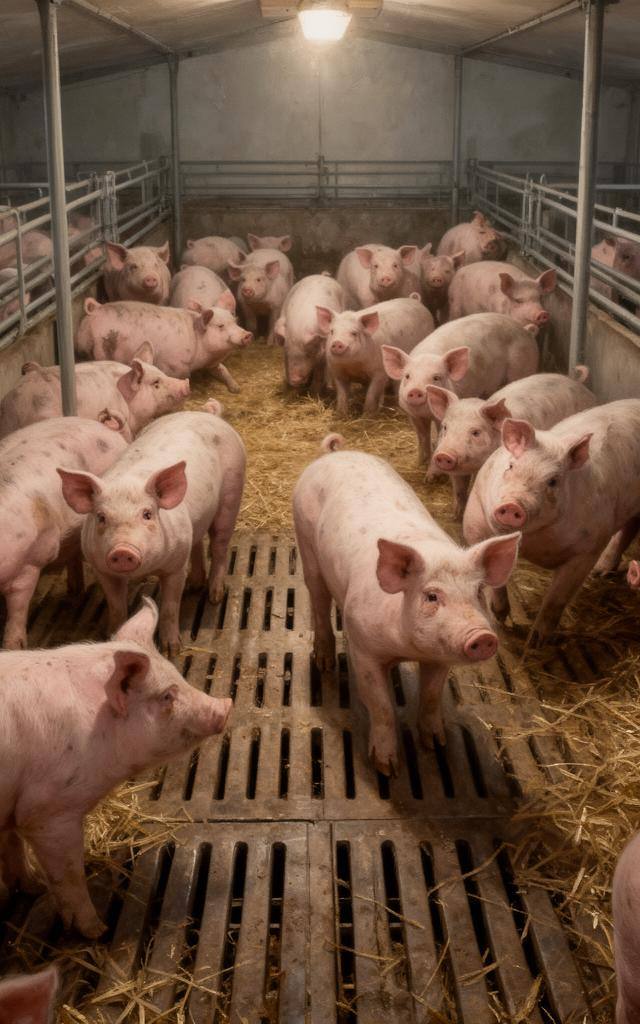
 Industrial animal farm with cramped cages under harsh lighting, representing anthropocentric exploitation.
How it works in practice
In practice, anthropocentrism shapes policies, laws, and everyday decisions, often without conscious awareness. For example, environmental regulations typically use 'cost-benefit analysis' that assigns monetary values to ecosystem services (like pollination or water purification) based on their utility to humans, rather than their intrinsic existence. This has led to the creation of protected areas as 'natural capital'—a term that reveals the instrumental framing.
In law, legal personhood is reserved for humans and corporations, but not for animals or ecosystems, although recent initiatives (e.g., granting rights to rivers in New Zealand or the Whanganui River) challenge this. In medicine, animal testing is justified by the potential to save human lives, but ethical review boards rarely weigh the animals' interests directly. Even in everyday language, we say 'pests' for animals that inconvenience us, and we value 'charismatic megafauna' like pandas for their appeal, not necessarily for ecological importance.
The practical consequence is a systematic bias favoring human interests, which can lead to what some scholars call 'environmental injustice'—where environmental harms disproportionately affect marginalized human communities as well as non-human beings. To counter this, some policymakers now adopt 'multi-species' perspectives, considering the needs of other species in planning, from urban green spaces to wildlife corridors.
Costs and trade-offs
Adopting a less anthropocentric worldview involves real costs and trade-offs. For instance, protecting ecosystems may restrict economic development, such as logging or mining, leading to job losses and higher consumer prices. There's also a cognitive cost: challenging deeply held beliefs can create psychological discomfort, and it complicates decision-making by introducing more stakeholders (non-human ones) into ethics and policy.
However, these costs are often outweighed by long-term benefits. As the IPBES Global Assessment (2019) reported, reversing biodiversity loss would require economic shifts, but the cost of inaction is far higher—estimated at trillions of dollars in lost ecosystem services. Moreover, ethical costs are non-monetary: ignoring animal suffering for taste or convenience is a moral burden that many find increasingly hard to justify, as evidenced by the rapid growth of plant-based diets and the rise of animal welfare legislation.
"Bottom line: The trade-offs are not between human welfare and nature, but between short-term gain and long-term survival for all species, including humans."
Common objections and responses
One common objection is that anthropocentrism is inevitable because humans can only view the world through human eyes. While it's true we can't fully escape human perspective, we can expand our moral consideration beyond human interests, as many people do for companion animals. Another objection is that non-human beings lack the moral capacity for rights—but that's also true of infants and the severely cognitively disabled, whom we still protect.
Some argue that focusing on environmental issues is a luxury of wealthy nations, but data suggests the opposite: developing countries suffer more from climate impacts and biodiversity loss, making a non-anthropocentric approach a matter of global justice. Finally, there's the claim that 'enlightened anthropocentrism' is enough—that protecting nature for human survival suffices. But critics counter that this still relegates other species to the status of means, not ends, which is a fragile foundation for ethics.
Regional and global perspectives
Anthropocentrism is not evenly distributed globally. Western, industrialized nations often exhibit stronger anthropocentric policies, but they are also leaders in environmental regulation, suggesting a contrast between rhetoric and action. Meanwhile, many Indigenous communities worldwide practice 'kincentric ecology,' viewing humans as relatives of other beings, which has gained recognition in international conservation efforts, such as the Convention on Biological Diversity (CBD) acknowledging traditional knowledge.
In rapidly developing countries like China and India, economic growth has intensified resource extraction, reflecting anthropocentric development models, yet both also have ancient philosophies (Confucianism, Taoism, Hinduism) that promote harmony with nature. Internationally, the Sustainable Development Goals (SDGs) are largely anthropocentric—focusing on human well-being—but the Paris Agreement on climate change acknowledges that protecting ecosystems is essential for human survival, a pragmatic shift toward enlightened anthropocentrism.
What you can do next
If you're moved to address anthropocentrism, here are actionable steps you can take today:
- Educate yourself: Read works by environmental ethicists like Aldo Leopold's "Land Ethic" or Peter Singer's "Animal Liberation." Understand the philosophical underpinnings.
- Examine your diet: Even small shifts toward plant-based meals reduce animal suffering and environmental impact. Explore our What is Veganism? page for a starting point.
- Support non-anthropocentric policies: Vote for candidates and initiatives that prioritize ecosystem health, animal welfare, and sustainable development.
- Practice mindfulness in nature: Spend time observing non-human life, which can foster a sense of kinship rather than dominion.
- Advocate for systemic change: Press for legal rights for rivers, forests, or animals in your region, and challenge anthropocentric language in media and policy.
"Key stat: A 2020 survey by the Pew Research Center found that 67% of Americans support stronger environmental protections, even at the cost of economic growth—showing public willingness to move beyond anthropocentric priorities."
Related terms
- Biocentrism: The ethical perspective that all life forms, not just humans, have intrinsic value. It extends moral consideration to all living organisms.
- Ecocentrism: A broader view than biocentrism, which holds that ecosystems, and the Earth itself, have intrinsic value, and moral consideration should be extended to the entire natural environment.
- Speciesism: Discrimination against or exploitation of animal species by human beings, based on the assumption of human superiority. This concept is explored in detail on our dedicated page.
- Veganism: A philosophy and way of living that seeks to exclude—as far as is possible and practicable—all forms of exploitation of, and cruelty to, animals for food, clothing, or any other purpose. What is Veganism? provides more information.
- Environmental Ethics: A branch of ethics that studies the moral relationship of human beings to, and also the value and moral status of, the environment and its non-human contents.
Further reading on KindEco
- Sentience: Understanding the Capacity to Feel
- Speciesism: Unpacking the Bias Against Non-Human Animals
- What is Carnism?
- What is Veganism?
Trade-offs and tensions in moving beyond anthropocentrism
Adopting a less anthropocentric worldview is not a simple on/off switch—it involves genuine trade-offs that deserve honest acknowledgment. The primary tension lies between protecting human wellbeing, particularly for vulnerable populations, and extending moral consideration to non-human beings and ecosystems. For example, reducing deforestation for soy or palm oil may limit economic opportunities for smallholder farmers in tropical regions, and transitioning away from animal agriculture could disrupt livelihoods for millions of workers worldwide. However, according to the International Labour Organization (ILO, 2023), a just transition to sustainable food systems could create net employment gains in plant-based agriculture, renewable energy, and ecosystem restoration, offsetting many initial losses. The key is to approach these trade-offs with procedural fairness—ensuring affected communities are consulted and supported—rather than dismissing the challenge outright.
Another trade-off is the pace of change versus the depth of transformation. Quick wins, such as banning single-use plastics or finning bans, are possible within an anthropocentric framework that still values nature instrumentally. Yet deeper shifts, like recognising rivers as legal persons or granting fundamental rights to great apes, require slower legal and cultural processes. According to the United Nations Environment Programme (UNEP, 2022), rights-of-nature movements have gained legal traction in over a dozen countries, but enforcement remains inconsistent. Accepting this slower pace does not mean accepting inaction; it means building durable coalitions across philosophical divides, similar to how the Montreal Protocol succeeded by uniting economic and environmental interests around a shared human-centric goal—protecting the ozone layer.
Common objections to criticising anthropocentrism
A frequent objection is that anthropocentrism is simply pragmatism—humans must prioritise their own survival first, and any other stance is unrealistic. While self-preservation is undoubtedly natural, this objection conflates practical prioritisation with an absolute moral hierarchy. According to philosopher Peter Singer (2011), we can recognise human survival needs without denying that non-human suffering matters; over 90% of sentient animals are raised in factory farms, and addressing their welfare would not threaten human survival. A second objection is that anthropocentrism has brought unprecedented progress in medicine, technology, and living standards, so why abandon it? This, however, conflates human ingenuity with anthropocentric ethics—innovation can flourish under biocentric or ecocentric values, as shown by biomimicry, where engineers learn from non-human designs, and by Indigenous-led conservation that integrates science with relational worldviews.
A third objection often surfaces in faith-based contexts: that humanity's dominion over nature is divinely mandated. Yet many theologians, including the Ecumenical Patriarch Bartholomew, argue that dominion implies stewardship, not exploitation—a view echoed by the encyclical Laudato Si' (2015), which calls for ecological conversion. A fourth objection is that without anthropocentrism, we have no basis for human rights—if humans are not special, why protect human dignity? Critics like ecologist Aldo Leopold (1949) respond that expanding moral consideration to ecosystems does not diminish human worth; in fact, it strengthens the case for environmental justice, as pollution and climate change disproportionately harm marginalised human communities. Finally, some claim that non-anthropocentric ethics are culturally imperialist, imposing Western animal-rights concepts globally. This overlooks that many non-Western traditions—including Buddhism's ahimsa, Indigenous kinship ethics, and Ubuntu philosophy—have long embraced more-than-human relationality, as documented in the International Journal of Environmental Studies (2021).
The regional angle for English-speaking readers
Anthropocentrism manifests differently across the English-speaking world, and understanding these regional nuances helps design effective responses. In the United States, anthropocentrism is steeped in frontier mythology—the idea of taming wilderness—which underpins extractive industries and conservative property-rights doctrines. According to the US Bureau of Land Management (2023), roughly 30% of US land is federally managed, often balancing extractive leases (oil, gas, timber) against conservation mandates, a tension that reflects anthropocentric versus ecocentric policy. Meanwhile, the UK has a stronger legacy of greenbelt planning and animal welfare law—the Animal Welfare Act 2006 recognises sentience—yet its environmental policy remains largely instrumental, with the 2021 Environment Act focusing on 'natural capital' accounting that prices nature's services rather than valuing its intrinsic worth.
Canada offers a colonial contrast: Indigenous legal orders, such as those of the Haudenosaunee and Cree, embed relational reciprocity, yet federal legislation like the Indian Act historically imposed European property concepts that treated land as a human resource. Recent rulings, including the 2021 recognition of the Magpie River's legal personhood in Quebec, signal a legal shift toward biocentric rights, but implementation remains contested. Australia's anthropocentrism is visible in its mining-intensive economy—the Australian Bureau of Statistics (2022) reports minerals and energy account for around 60% of export earnings—though the same country has pioneered the 'Rights of Nature' movement, with the Yarra River gaining legal personhood in 2017. New Zealand's 2017 law granting personhood to the Whanganui River, driven by Māori cosmology, is the most cited example worldwide, yet even there, coal mining and dairy expansion continue to pollute rivers, highlighting the gap between symbolic recognition and operational practice. For English-speaking readers, these examples show that a shift beyond anthropocentrism is not a single destination but a contested, uneven process shaped by local histories and power dynamics.
Comparison: Anthropocentrism, biocentrism, and ecocentrism
A clear comparison helps clarify where anthropocentrism stands relative to its main alternatives. This table summarises core differences across key dimensions—moral status, decision-making basis, practical focus, and typical critiques.
| Dimension | Anthropocentrism | Biocentrism | Ecocentrism |
|---|---|---|---|
| Intrinsic value | Humans only | All living organisms (plants, animals, microbes) | Whole ecosystems, species, and their interactions |
| Moral considerability | Human interests justify actions | Every living being matters equally in principle | Collectives (ecosystems, watersheds, biosphere) matter alongside individuals |
| Primary decision-driver | Cost-benefit for humans, economic growth | Respect for all life, minimising harm to individuals | Ecological integrity, biodiversity, resilience of systems |
| Example policy focus | Carbon offsets, ecosystem services, sustainable resource use | Vegan diets, animal welfare regulation, rewilding with predator reintroduction | Rights of rivers, large-scale habitat protection, degrowth economics |
| Common critique | Ignores non-human suffering, drives exploitation | May neglect ecosystem-level dynamics and prioritise individuals over whole systems | Can be vague in practice, may de-prioritise urgent human needs |
| Potential overlap | Aligns with biocentrism on health benefits of plant-based diets | Aligns with ecocentrism on habitat preservation that also protects individual species | Sometimes overlaps with anthropocentrism on 'nature-based climate solutions' |
Bottom line: These categories are not rigid silos. In practice, many environmental policies blend anthropocentric pragmatism with biocentric or ecocentric values, such as urban tree planting that provides cooling (human benefit) while also creating urban wildlife habitats (non-human benefit).
What you can do next: a practical checklist
Moving beyond anthropocentrism does not require abandoning human concern; it starts with small, consistent shifts in perspective and action. Use this checklist to integrate non-anthropocentric values into your daily life and advocacy.
✅ Mindfulness about language: Replace 'resources' with 'fellow beings' or 'ecosystems' where accurate; instead of 'pests', name species and their ecological roles. This shifts the mental frame from instrumental to relational. ✅ Dietary shifts: Reduce consumption of animal products, especially from industrial systems, based on sentience considerations. According to the Food and Agriculture Organization (FAO, 2023), livestock accounts for approximately 14.5% of global greenhouse gas emissions, so plant-focused diets also cut climate impact. ✅ Support biocentric policy: Vote for and advocate for laws granting rights to nature—such as river personhood or ecocide legislation. The Stop Ecocide campaign has proposed making severe environmental harm a crime at the International Criminal Court, gaining over 70 supporter countries by 2024. ✅ Reconnect with wild place: Spend time in nature without a utilitarian purpose—sit under a tree, observe non-human animals, or volunteer for habitat restoration. Experiential connection is a robust predictor of pro-environmental behaviour, per research in Conservation Biology (2019). ✅ Educate beyond stereotypes: Read Indigenous philosophers (Robin Wall Kimmerer, Vine Deloria Jr.), ecofeminists (Val Plumwood), and deep ecologists (Arne Naess) to broaden your ethical toolkit. ✅ Challenge speciesist norms: Call out anthropocentric assumptions in debate, media, or workplace decisions—such as when animal suffering is dismissed as 'just business' or when nature is valued only as 'natural capital'. ✅ Financial footprint: Shift investments away from deforestation-linked commodities and animal agriculture; support regenerative agroforestry or community land trusts that protect ecosystem integrity. ✅ Civic participation: Join or start a local 'Rights of Nature' initiative; over 200 such ordinances exist globally (UNEP, 2022), and grassroots campaigns have been key drivers.
🌱 Start small but start now: Pick one item from this checklist this week—commit to a meat-free Monday, learn about your local river's legal status, or plant native flora to support pollinators. Also, read our related guides on Speciesism and Sentience to deepen your understanding of why this shift matters.
"Key stat:" According to the IPBES (2019), up to one million species face extinction due to human activity within decades—a reminder that anthropocentric values are colliding with planetary limits. Shifting toward non-anthropocentric ethics is not luxury; it is a survival strategy for all Earth's inhabitants.
 A river in New Zealand with a carved figure, representing the Whanganui River's legal rights.
By broadening your moral circle to include non-human life, you do not diminish your humanity—you expand it. You join a lineage of thinkers, cultures, and movements that have always seen the world not as a stage for human drama, but as a community of beings with whom we share a fragile, precious planet. Every decision, from the food on your plate to the policies you support, is an opportunity to enact that vision.
Read next
The common questions
People also ask
Sources
- Millennium Ecosystem Assessment (2005) - Ecosystems and Human Well-being: General Synthesis
- FAO - The State of the World's Forests 2020
- Home Office - Annual Statistics of Scientific Procedures on Living Animals, Great Britain 2022
- Stanford Encyclopedia of Philosophy - Anthropocentrism
- Peter Singer - Animal Liberation
- New Zealand Legislation - Te Awa Tupua (Whanganui River Claims Settlement) Act 2017