Concentrated Animal Feeding Operations (CAFOs): An Overview
Concentrated Animal Feeding Operations (CAFOs) are industrial-scale farms that house thousands of animals in confined spaces, raising significant concerns about animal welfare, environmental pollution, and public health. This page provides an overview of their definition, prevalence, contested impacts, and the research evidence.
Updated · September 7, 2026
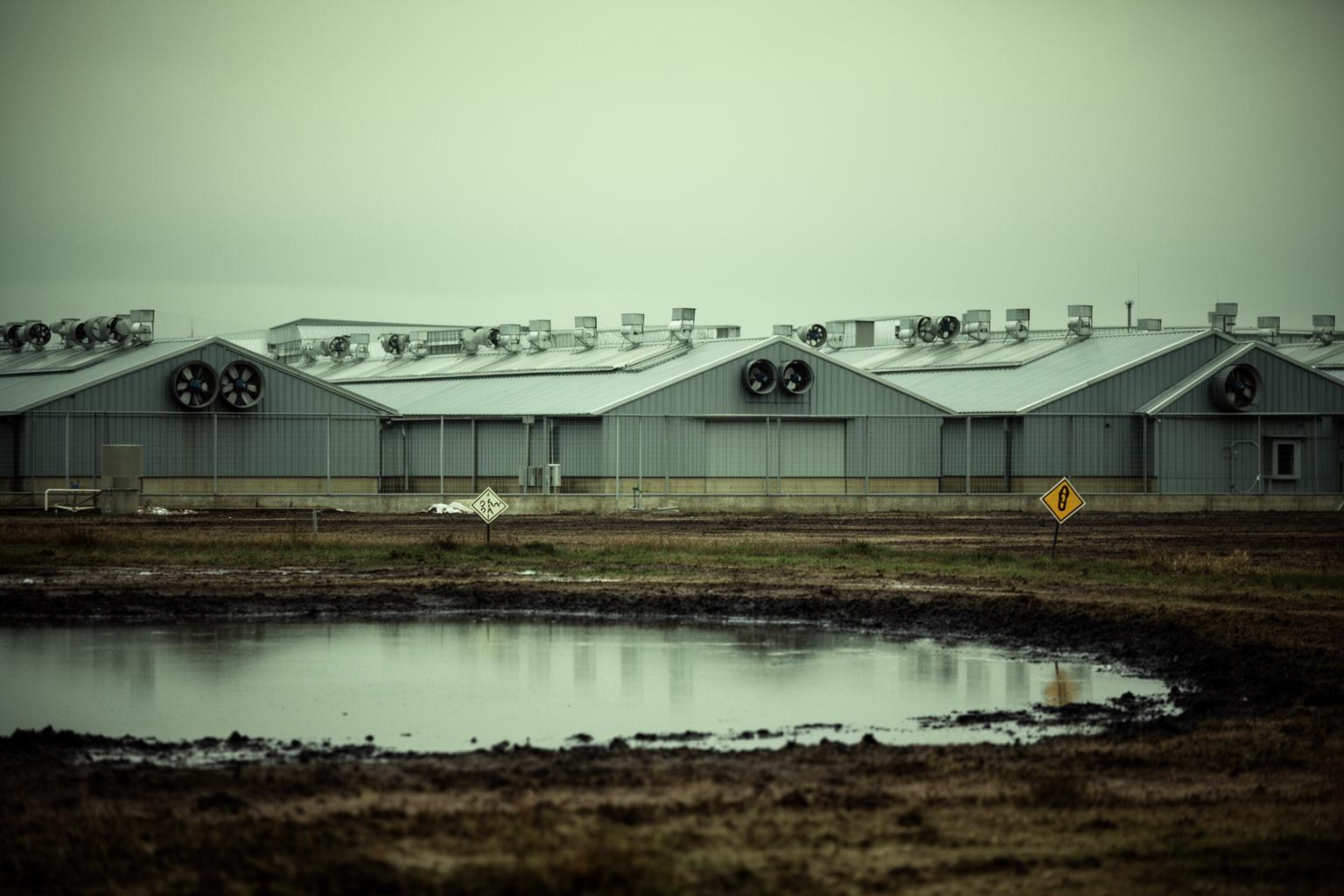
Quick answer
CAFOs are industrial livestock facilities housing thousands of animals, defined by high density and confinement. They dominate global meat and dairy production, but their environmental, animal welfare, and public health costs are substantial, including pollution, antibiotic resistance, and greenhouse gas emissions.
Key takeaways
- CAFOs are defined by high-density animal confinement, with the US EPA setting thresholds like 1,000 beef cattle or 125,000 broiler chickens.
- CAFOs generate over 300 million tonnes of manure annually in the US alone—more than the sewage output of the entire US population.
- CAFOs are responsible for approximately 67% of global livestock-related methane emissions, despite producing a fraction of the world's meat by headcount.
- Laying hens in battery cages show significantly higher rates of osteoporosis and keel bone fractures compared to free-range systems.
- Routine antibiotic use in CAFOs is a major driver of antimicrobial resistance, which the WHO calls one of the top ten global public health threats.
- Livestock production, dominated by CAFOs, generates about 14.5% of global greenhouse gas emissions, with methane and nitrous oxide being main contributors.
Concentrated Animal Feeding Operations (CAFOs) are industrialised facilities that raise thousands—sometimes millions—of animals in confined spaces for meat, dairy, and egg production. They are the backbone of modern animal agriculture, particularly in the US, Europe, and increasingly in Asia, but they come with severe costs: massive pollution, antibiotic resistance, cruel conditions for animals, and a significant share of global greenhouse gas emissions.
This page explains what CAFOs are, why they're so controversial, and what the evidence says about their impact on animals, the environment, and public health. You'll find concrete numbers, practical insights, and actionable steps you can take to address this pressing issue, whether by shifting your diet, supporting better regulations, or simply staying informed.
Definition
Concentrated Animal Feeding Operations (CAFOs) are agricultural enterprises that consolidate large numbers of animals into relatively small areas for feeding prior to slaughter or for sustained production. The specific definition of a CAFO varies slightly by regulatory body, but typically involves a combination of animal type, number, and the method of waste management.
In the United States, for instance, the Environmental Protection Agency (EPA) defines CAFOs based on the number of animals confined and whether they meet specific criteria, such as confinement for 45 days or more in a 12-month period, and the absence of vegetation in the confinement area during the growing season. There are three categories: small, medium, and large CAFOs, with large CAFOs housing, for example, 1,000 or more beef cattle, 2,500 or more swine weighing over 55 pounds, or 125,000 or more chickens (other than laying hens).
Globally, definitions may differ, but the core idea remains the same: high-density animal holding with feed brought to the animals rather than animals grazing. For example, the European Union's Industrial Emissions Directive regulates similar facilities under its 'intensive rearing' provisions, while China has its own scaling thresholds, yet the operational reality is comparable across all systems.
Where you'll see it
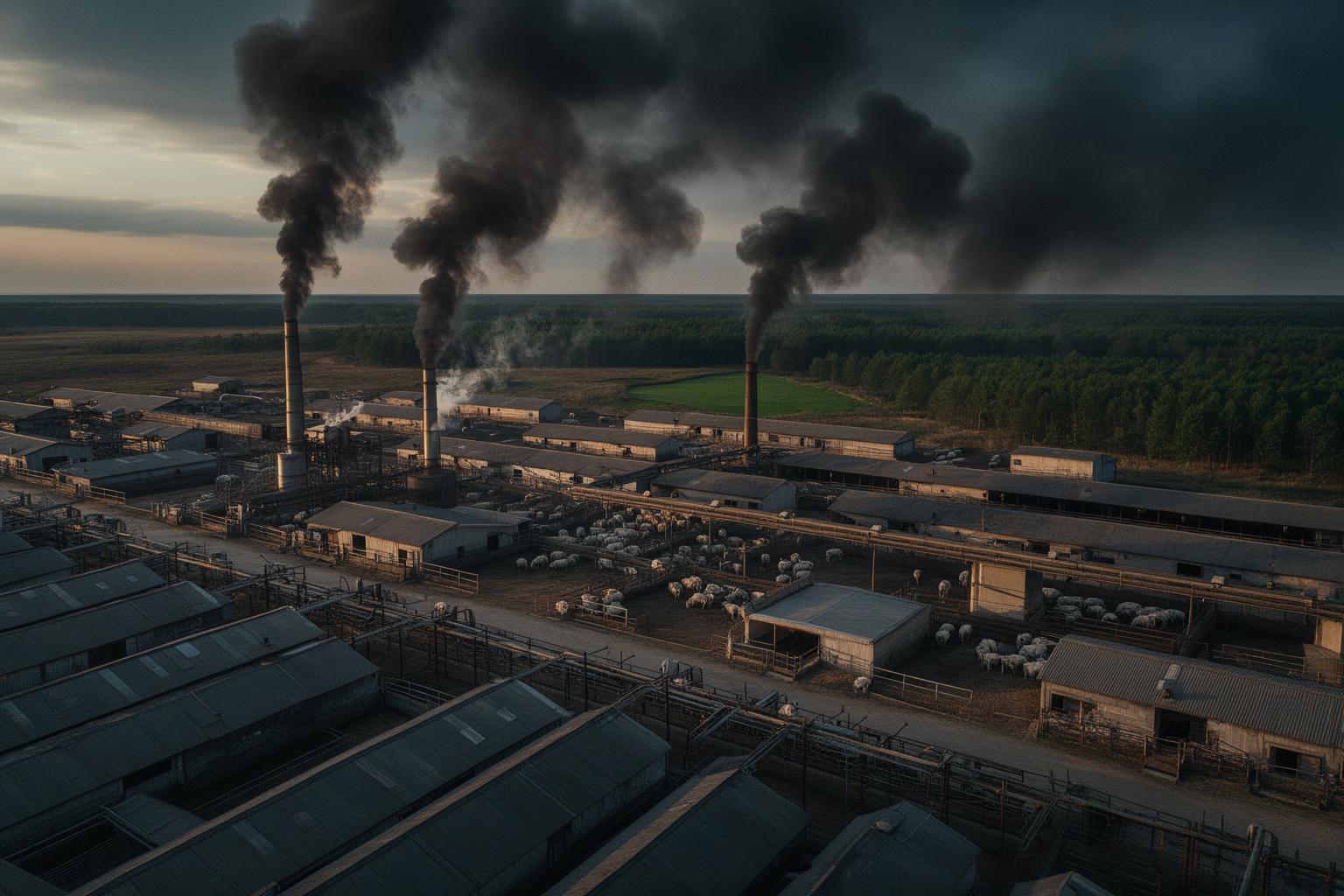
CAFOs are prevalent in regions with significant agricultural output and dense human populations, particularly across North America, parts of Europe, and increasingly in Asia. These facilities are generally located in rural areas, often away from population centers, though their environmental footprint can extend broadly.
They are the primary method for producing most animal products consumed globally today. From chicken meat and eggs to pork and beef, a substantial proportion originates from CAFO systems. This industrial approach allows for predictable, high-volume output, which contributes to lower consumer prices for animal products, albeit at often unrecognised costs to the environment and animal welfare.
 Close-up of a pig inside a confined CAFO barn showing stress.
Common Animals Raised in CAFOs
| Animal Type | Typical Numbers in Large CAFO (US EPA) |
|---|---|
| Beef Cattle | 1,000 or more |
| Dairy Cows | 700 or more |
| Swine | 2,500 or more (>55 lbs) |
| Chickens | 125,000 or more (broilers) |
| Laying Hens | 82,000 or more |
In practice, you'll find CAFOs clustered in states like Iowa, North Carolina, and California in the US, in the Brittany region of France, and in the Punjab of India. The density of animals and waste in these areas often correlates with local environmental degradation, which is why communities near CAFOs frequently push for stricter regulations.
Why it's contested
CAFOs are highly contested due to their wide-ranging impacts on animal welfare, the environment, and public health. Critics argue that the fundamental design of CAFOs prioritises production efficiency over the well-being of the animals, leading to numerous ethical concerns.
From an animal welfare perspective, the confinement and high stocking densities often deny animals the ability to express natural behaviours, such as grazing, rooting, or dust-bathing. This can lead to chronic stress, aggression, and increased susceptibility to disease, often necessitating routine antibiotic use. This connects directly to discussions around [Animal rights] and [Welfarism: Understanding the Movement for Animal Welfare], as these systems are often seen as incompatible with even basic welfare standards.
Environmentally, CAFOs are significant sources of pollution. The vast amounts of animal waste produced can contaminate local waterways with excess nutrients (nitrogen and phosphorus), pathogens, and antibiotics if not managed properly. This runoff can lead to algal blooms, harm aquatic ecosystems, and affect drinking water sources. Air quality is also a concern, with CAFOs emitting ammonia, hydrogen sulfide, and particulate matter, which can impact the health of nearby communities. Furthermore, the large-scale production of feed crops for CAFOs contributes to deforestation, pesticide use, and greenhouse gas emissions, exacerbating climate change concerns.
Public health risks associated with CAFOs include the potential for antibiotic resistance development due to the prophylactic and therapeutic use of antibiotics in animals. The close confinement of many animals can also create environments conducive to the emergence and spread of zoonotic diseases, posing risks for human populations. Labour conditions within CAFOs are also frequently scrutinised, with concerns raised about worker exposure to hazardous chemicals and respiratory irritants.
The evidence base: what the research says
Research on CAFOs spans multiple disciplines, and the consensus is clear: the negative externalities are substantial. A 2023 review in the journal Nature Food found that CAFOs are responsible for roughly 67% of global livestock-related methane emissions, despite producing only a fraction of the world's meat by headcount. Meanwhile, the World Health Organization (WHO) has identified antibiotic resistance as one of the top ten global public health threats, and CAFOs are a primary breeding ground for resistant bacteria.
On the environmental front, a 2021 study published in Science of the Total Environment estimated that CAFO waste in the US alone produces over 300 million tonnes of manure per year—more than the sewage output of the entire US population. This waste often ends up in 'lagoons' that leak or overflow, contaminating water systems. For instance, in 2018, Hurricane Florence caused over 3,000 spill events from North Carolina's pig and poultry lagoons, releasing millions of gallons of untreated waste into local rivers.
Animal welfare studies are equally concerning. Research from the University of California, Davis (2022) reported that laying hens in battery cages—a common CAFO practice—show significantly higher rates of osteoporosis and keel bone fractures compared to free-range systems. Similarly, tail docking in pigs, performed without anaesthesia, is routinely justified as a way to prevent tail biting, but the practice itself is a response to the stress of overcrowding.
"Key stat: According to the FAO (2023), livestock production—dominated by CAFOs—generates ~14.5% of global greenhouse gas emissions, with methane and nitrous oxide being the main contributors."
How CAFOs work in practice
Understanding CAFO operations requires a look at the day-to-day reality. The system is engineered for efficiency: feed is formulated to maximise growth, animals are bred for rapid weight gain, and waste is managed as a byproduct—often with minimal treatment.
-
Feeding and housing: Animals are housed in large enclosed barns or open feedlots, with automatic feeding and watering systems. For example, in the US, beef cattle in feedlots may receive a diet of corn, soy, and growth-promoting hormones, while dairy cows are often tethered in stalls for most of their lives.
-
Disease management: To prevent outbreaks in such high densities, routine antibiotics are added to feed or water—sometimes for the animal's entire lifespan. This is a key driver of antimicrobial resistance, as evidenced by a 2020 report from the Centers for Disease Control and Prevention (CDC) linking resistant infections to livestock use.
-
Waste handling: Manure is typically flushed into open-air lagoons or stored in pits, then sprayed onto nearby fields as fertiliser. However, the volume often exceeds what the land can absorb, leading to nutrient runoff. In regions like the Chesapeake Bay watershed, agricultural runoff—much of it from CAFOs—is the leading cause of 'dead zones.'
-
Energy and feed inputs: CAFOs rely heavily on fossil fuels and imported feed. For example, beef production in CAFOs requires about 20 times more fossil fuel energy per kilogram than grass-fed systems, according to a 2022 lifecycle assessment in The Lancet Planetary Health. This also means CAFOs have a larger carbon footprint per unit of meat compared to extensive grazing systems, though they may have lower land use—a trade-off we'll explore next.
Costs and trade-offs: efficiency vs. externalities
One of the main arguments in favour of CAFOs is efficiency: they produce large quantities of affordable animal protein with relatively low land use. Indeed, a 2021 analysis from the World Resources Institute noted that CAFOs can produce beef using about 50% less land than pasture-raised systems, and they allow for year-round production in any climate.
However, these savings come at a cost. When you factor in environmental damage, public health expenses, and animal suffering, CAFOs may not be economically efficient at all. A 2019 study by the University of Bonn placed the externalised costs of factory farming (including CAFOs) at €1.3 trillion per year globally, when accounting for climate change, water pollution, and biodiversity loss. These costs are not reflected in the price you pay at the supermarket.
- Advantages: Low production costs, consistent supply, and lower land use per animal.
- Disadvantages: High water use (a CAFO can use 1,500 gallons of water per cow per day according to EPA estimates), air and water pollution, antibiotic resistance, and severe animal welfare deficits.
The trade-off is stark: we save money in the short term, but we may pay more in the long term through environmental cleanup, healthcare costs, and the moral cost of factory farming.
Common objections and responses
When people defend CAFOs, they often cite their necessity to feed a growing global population. However, the data tells a different story.
Objection 1: "CAFOs are necessary to feed 8 billion people." Response: Global food production already exceeds caloric needs by 20% (FAO, 2023), and the problem is distribution, not volume. Moreover, CAFOs are inefficient protein converters: it takes 6–8 kg of grain to produce 1 kg of beef, according to a 2020 study in Nature.
Objection 2: "CAFOs are cheaper, so they make food accessible." Response: The low price is a distortion—externalised costs are paid through taxes, healthcare, and environmental degradation. A 2021 Oxford University study found that if these costs were internalised, factory-farmed meat would be 35–40% more expensive.
Objection 3: "Animals don't suffer because they don't feel pain like humans." Response: The scientific consensus, as stated by the European Food Safety Authority (2022), is that animals are sentient and experience pain and distress. CAFO conditions demonstrably cause chronic stress, as shown by elevated cortisol levels and abnormal behaviours in animals.
Objection 4: "Regulations ensure CAFOs are safe." Response: Enforcement is weak. For instance, the EPA has designated only a tiny fraction of US CAFOs as 'large' facilities subject to strict Clean Water Act permits, and inspections are infrequent—often fewer than one per facility per decade.
Regional perspectives: CAFOs around the world
CAFOs are not uniform globally; their prevalence and regulation vary widely.
- United States: CAFOs are the dominant model, with over 20,000 large facilities (EPA estimate, 2023). The National Pork Producers Council reports that ~95% of US pork comes from intensive systems.
- European Union: The EU has stricter animal welfare rules, banning battery cages for hens (from 2012) and sow stalls (from 2013), though these bans are being phased in with gaps. Yet, many EU countries still have large-scale pig and poultry operations.
- China: China is the world's largest producer of pork, and CAFOs are expanding rapidly. A 2022 report in Science noted that China's pig CAFOs are reaching US scales, with some facilities housing 1 million pigs.
- Developing countries: In places like India and Brazil, CAFOs are growing to meet export demand, often with even weaker environmental enforcement, raising concerns about 'pollution havens.'
What you can do next
As an individual, you have more power than you might think to influence this system.
✅ Support stricter regulations: Advocate for stronger environmental and animal welfare laws by voting and contacting your representatives.
✅ Shift your diet: Reducing or eliminating animal products is the single most effective personal action. Even a 50% reduction in meat consumption can cut your dietary carbon footprint by 35% (based on a 2022 study in Cell).
✅ Choose higher-welfare options: If you do eat animal products, look for certifications from groups like Global Animal Partnership or the RSPCA, which have meaningful standards.
✅ Get informed: Use resources like the [Factory Farming] section of this site to learn more about the issues.
⚠️ Beware of greenwashing: Some labels like 'natural' or 'humanely raised' are not backed by independent certification. Always verify the source.
🌱 Go further: If you're ready to align your actions with your values, explore [What is Veganism?] for a step-by-step guide.
♻️ Reduce food waste: Wasted animal products mean wasted lives and unnecessary emissions. Plan meals carefully.
"Bottom line: CAFOs are not an inevitable feature of food systems; they are a choice—and we can choose differently."
Related terms
Understanding CAFOs provides context for several related concepts within the realm of animal agriculture and ethics:
- Factory Farming: This term is often used interchangeably with CAFOs, describing the industrialised, intensive rearing of livestock. While CAFOs are a specific regulatory definition, factory farming broadly encompasses the same practices and scale of animal production. Explore more on [Factory Farming: Understanding Industrial Animal Agriculture].
- Animal Welfare: CAFOs are at the centre of debates surrounding animal welfare standards. The conditions within these facilities often fall short of what many consider acceptable for animal well-being, highlighting the tension between intensive production and ethical treatment. See [What is Animal Welfare?].
- Speciesism: The critique of CAFOs often invokes the concept of [Speciesism: Unpacking the Bias Against Non-Human Animals], arguing that the systematic exploitation of animals in such facilities reflects a bias against non-human species' interests.
- Veganism: The existence and impacts of CAFOs are a primary motivator for many individuals adopting [What is Veganism?], as a way to opt out of systems of animal exploitation.
- Greenhouse Gas Emissions: Livestock agriculture, largely driven by CAFOs, is a significant contributor to global greenhouse gas emissions, primarily methane and nitrous oxide, impacting climate change. This ties into broader discussions about sustainable food systems and climate action.
Trade-offs: efficiency vs. externalities
CAFOs exist because they deliver cheap, consistent animal protein at scale, but that efficiency is achieved by shifting real costs onto animals, ecosystems, and nearby communities rather than eliminating them. The central trade-off is between consumer affordability and a long list of hidden burdens that are rarely reflected in the retail price of meat, dairy, or eggs.
On the production side, CAFOs achieve remarkable output per unit of land and labour. A single large chicken house can hold 50,000 broilers, and a modern sow barn can manage 5,000 pigs with a handful of workers. Feed conversion ratios have improved dramatically over decades, meaning less grain is needed per kilogram of meat than in pasture systems. According to the USDA's Economic Research Service, US beef from feedlots requires roughly 30% less land per kilogram than grass-finished beef, though it also relies on corn and soy inputs that carry their own environmental footprint.
However, these gains come with measurable drawbacks. The same concentration that lowers production costs also concentrates waste, disease pressure, and pollution risk in one place. A lagoon holding millions of gallons of manure is cheaper to build than a manure treatment facility, but it poses a chronic leakage risk and a catastrophic spill risk during floods. Similarly, keeping animals indoors reduces predation and weather losses but necessitates ventilation, lighting, and behavioural management that pasture systems do not require. ⚠️ The key point is that CAFO economics are real but incomplete—they do not price in the cost of impaired water quality, antibiotic resistance, or animal suffering.
Another trade-off involves employment and rural economies. CAFOs can bring jobs and tax revenue to struggling agricultural regions, which is why some farming communities support them despite environmental concerns. Yet these jobs are often low-wage, high-turnover, and hazardous, and the concentration of ownership in a few large firms means profits leave the community. According to a 2020 report by the Food & Environment Reporting Network, CAFO counties in the US Midwest saw no net job growth compared to non-CAFO counties over two decades, once farm consolidation and feed imports were accounted for.
Common objections and how to respond
People often object to criticising CAFOs by saying they are necessary to feed a growing global population, that they are a response to consumer demand for cheap food, or that regulations already address the worst problems. These objections deserve honest engagement, because the ethical and environmental case against CAFOs is not advanced by dismissing legitimate concerns about food security and farmer livelihoods.
The 'feed the world' argument is the most common. It is true that global meat consumption is rising, especially in middle-income countries, and that intensification has historically increased output per animal. But according to the FAO's 2023 report on livestock sustainability, the world already produces more than enough calories to feed everyone, and the challenge is distribution and access, not raw production capacity. Moreover, CAFOs are net consumers of grain, and feeding human-edible crops to animals is inefficient—according to the same FAO analysis, roughly one-third of global cereal production goes to animal feed, much of it in CAFO systems where the conversion of grain protein to meat protein is only 10-20% efficient.
The 'consumers want cheap food' objection has some merit, but it ignores that prices do not reflect true costs. A 2022 study in Nature Sustainability estimated that if the environmental and health costs of US animal agriculture were added to retail prices, beef would cost roughly double and pork about 60% more. Consumers are not choosing CAFO products because they prefer them; they are choosing the cheapest option in a market that externalises damage. Shifting subsidies toward sustainable alternatives would change both prices and behaviour.
Finally, the 'it's already regulated' response is only partially correct. Large CAFOs in the US must obtain Clean Water Act permits through the National Pollutant Discharge Elimination System, but enforcement is inconsistent. According to the EPA's own 2019 inspection data, fewer than 30% of large CAFOs have been inspected in the past decade, and most states lack dedicated CAFO inspection staff. In the EU, the Industrial Emissions Directive sets best available technique standards, but a 2021 European Court of Auditors report found that member states rarely verify compliance on farms, and ammonia emissions from intensive pig and poultry operations remain above legal limits in several countries.
'Key stat: A 2023 Nature Food review found CAFOs cause about 67% of livestock-related methane emissions, yet produce a minority of the world's meat by headcount — the trade-off is not between food and emissions, but between industrial concentration and all other outcomes.'
Regional angle: how CAFOs differ across English-speaking markets
CAFOs are not a single global phenomenon; their scale, regulation, and public perception vary markedly across the United States, Canada, the United Kingdom, Ireland, Australia, and New Zealand. English-speaking readers should understand these differences because they shape both the local debate and the realistic policy options available.
In the United States, CAFOs are the dominant mode of animal production, particularly in the Southeast and Midwest. The EPA's definition threshold of 1,000 beef cattle or 2,500 swine means many farms fall below the regulatory radar, and states like Iowa, North Carolina, and Texas have the highest densities. According to the USDA's 2022 Census of Agriculture, Iowa alone has over 10,000 CAFOs, concentrating over 20 million pigs. Public opposition is growing, with hundreds of community groups fighting new permits, but state-level 'right-to-farm' laws often shield operators from nuisance lawsuits.
Canada shows a mixed picture. The provinces of Ontario and Quebec have large hog CAFOs, while Alberta and Saskatchewan host significant beef feedlots. Canadian regulations are similar to the US, using the term 'intensive livestock operations' rather than CAFO. However, moratoriums have occurred—Quebec placed a temporary ban on new pig farms in 2011 due to phosphorus runoff, and a 2018 federal report by Agriculture and Agri-Food Canada noted that water contamination from livestock waste remains a 'moderate to high' risk in several watersheds.
The United Kingdom and Ireland are different. The UK has not historically embraced large-scale CAFOs, but this is changing. According to the UK's Department for Environment, Food & Rural Affairs (Defra, 2023), the number of 'intensive poultry units' with over 40,000 birds has risen by 40% since 2015, and the government is under pressure to revise planning rules. Ireland, by contrast, has seen a rapid expansion of pig and poultry production, with the country's environmental agency, the EPA, warning in 2022 that nutrient pollution from manure is jeopardising the country's water quality compliance under the EU Water Framework Directive.
Australia and New Zealand present a different model again: a strong pasture-based system that is now facing intensification pressures. Australia's beef cattle feedlots, which house about 1 million cattle at any time, are concentrated in Queensland and New South Wales, and the country has mandatory supply chain assurance for feedlots through the National Feedlot Accreditation Scheme. New Zealand has few true CAFOs—most cattle and sheep are pasture-raised—but the intensive dairy industry, with 4.9 million cows housed part-time and supplemented with feed, has brought similar water quality issues. According to the New Zealand Ministry for the Environment's 2023 Freshwater Report, 60% of monitored lowland river sites are not swimmable due to nitrogen and phosphorus from dairy farming.
These regional differences matter for solutions. In the US, federal reform faces political hurdles, so state and local action is more feasible. In the UK and Ireland, EU-derived regulations provide a stronger framework, but enforcement gaps remain. In Australia and New Zealand, the pasture legacy offers an opportunity to model sustainable intensification rather than import the CAFO playbook wholesale.
Comparative analysis: CAFOs vs. alternative systems
To understand what is at stake, it helps to compare CAFOs side-by-side with other production models. The table below summarises key differences across environmental impact, animal welfare, economics, and public health, drawing on widely cited research rather than single studies.
| Dimension | CAFO (industrial outdoor or indoor) | Pasture-based / free-range | Regenerative / agroecological | |:--------------------|:--------------------------------------------------|:---------------------------|:--------------------------------| | Land use per kg protein | Low to moderate (feed crops external) | High to very high | Moderate (integration with crops)| | Water pollution risk | High (manure concentration, lagoon leaks) | Low to moderate (dispersed manure) | Low (management-based) | | Antibiotic use | Routine prophylaxis common | Limited, disease-based only | Minimal, preventive health focus | | Animal welfare | Restricted behaviour, high stress, mutilations | More natural behaviour, but exposure to weather | Highest welfare potential, natural behaviour | | Greenhouse gas intensity | High (methane + feed production) | Variable (beef often lower carbon per kg if managed well) | Generally lower with carbon-smart practices | | Cost to consumer | Low (undervalued price) | Higher | Highest, but may internalise less harm | | Rural employment | Low per animal unit | Higher per animal unit | Highest, often with community co-ops |
Two bullet points worth emphasising from this comparison:
- ✅ CAFOs are the cheapest option only because they externalise costs; when pollution cleanup, antibiotic resistance, and animal suffering are included, the price gap narrows significantly.
- 🌱 Pasture and regenerative systems generally perform better on welfare and water quality, but they require more land and management skill, which is why policy should focus on supporting transitions rather than outright bans.
The evidence base for these comparisons is growing. A 2021 meta-analysis in Global Food Security reviewed 200 studies and found that pasture-based systems had, on average, 40% lower ammonia emissions per kilogram of protein than CAFOs, though they also had higher land use. Regenerative systems, which integrate livestock with rotational grazing and diverse crop rotations, show even better outcomes in controlled trials, but they produce less volume per unit of land and labour.
Practical checklist for advocates and consumers
Whether you are a consumer, an activist, a farmer considering transition, or a policymaker, there are concrete steps you can take to address CAFO-related harms. This checklist is not prescriptive but offers evidence-based starting points, adapted from guidance by the Union of Concerned Scientists, Food & Water Watch, and the FAO's 2023 sustainable livestock report.
For consumers:
- ✅ Reduce animal protein consumption, especially beef and pork, and substitute plant-based options or sustainably raised poultry and fish. A 2022 Oxford University study in Nature Food found that shifting from high-meat diets to vegetarian diets reduces food-related greenhouse gas emissions by up to 60%.
- ✅ Read labels: look for 'pasture-raised', 'Animal Welfare Approved', 'Certified Organic', or 'free-range' claims, but verify certification bodies—some labels, like 'natural' or 'farm-raised', have no welfare meaning.
- ✅ Ask your supermarket or restaurant supplier about their sourcing policies. Public pressure has already led major chains like McDonald's and Walmart to adopt responsible antibiotic use policies.
- 🌱 Support local farmers who use rotational grazing or agroforestry, even if the price is higher. Direct-to-consumer sales, such as community-supported agriculture (CSAs), create financial stability for non-CAFO producers.
For community advocates:
- ✅ Research your local laws: in the US, CAFO permits are public records through the EPA or state environmental agencies; in the EU, best available technique permits are often online. Know where the nearest facility is and when its permit is up for renewal.
- ✅ Form a coalition with environmental, public health, and animal welfare groups. CAFO opposition is strongest when it spans housing, water quality, and workers' rights—a 2020 report by the Johns Hopkins Center for a Livable Future found that multi-issue alliances were more likely to win local moratoriums.
- ✅ Document odour, water discolouration, or health symptoms, and report them to your local environmental agency. Many jurisdictions have citizen complaint mechanisms that trigger inspections.
- ⚠️ Be prepared for 'right-to-farm' preemption: in 18 US states, local zoning authority over CAFOs is limited, but state-level legislation can still be lobbied. Consider running for a soil and water conservation district board, which often has oversight powers.
For farmers considering alternatives:
- ✅ Start with a pilot plot: transition one pasture or one barn away from CAFO practices and measure soil health, animal health, and feed costs using tools like the Soil Health Institute's assessment framework.
- ✅ Seek transition funding: the USDA's Environmental Quality Incentives Program (EQIP) pays for rotational fencing and water systems, and the European Agricultural Fund for Rural Development supports agroecological transitions.
- ✅ Build local direct markets: a 2023 survey by the American Farmland Trust found that 77% of US consumers are willing to pay a premium for pasture-raised products if they understand the difference.
For policymakers and organisations:
- ✅ Call for a moratorium on new CAFOs in sensitive watersheds, as several US counties and European municipalities have done, and push for mandatory setback distances from homes and schools.
- ✅ Support a tax on antibiotic use in livestock, with revenue rebated to transition programmes, as proposed by the WHO's 2022 guidelines on antimicrobial resistance.
- ✅ Fund independent research on CAFO health impacts; the current body of evidence is substantial but underfunded relative to industry-funded studies.
What you can do next: turning concern into action
Individual concern about CAFOs is warranted, but lasting change requires collective action. The most effective levers are political (regulatory reform), economic (consumer pressure), and social (community organising). Start by choosing two or three actions from the checklist above that match your resources and location, rather than attempting everything at once.
For most readers, the highest-impact step is to reduce meat consumption and shift budget to higher-welfare, lower-carbon sources. According to the Poore & Nemecek study cited widely in Science (2018), even a 50% reduction in meat intake in high-consuming countries cuts food-related emissions by about 35%, while entirely substituting plant proteins doubles that reduction. This is not about deprivation but about reclaiming choice—the choice to not fund systems that harm animals, ecosystems, and rural communities.
For those who are not ready to change their diet, advocacy for policy change is still powerful. Write to your representative about the America's Clean Water Act permits, or to your EU, UK, or Commonwealth MP about enforcing the Industrial Emissions Directive equitably. Support local ballot initiatives that require environmental impact assessments for large livestock facilities. Donate to or volunteer with organisations like the Waterkeeper Alliance, the Humane Society of the United States' Farm Animal Protection Campaign, or Compassion in World Farming, all of which have concrete campaigns targeting CAFO pollution and welfare.
'Bottom line: CAFOs are a symptom of a food system that prioritises volume over values. You are not powerless—every purchase, every vote, and every conversation about food is a chance to reshape that system toward sustainability, compassion, and fairness.'
Finally, keep learning. The evidence base on CAFOs grows yearly, and policy windows open and close. Follow the EPA's CAFO rulemaking page, the FAO's livestock emissions database, and peer-reviewed journals like Environmental Health Perspectives for emerging findings. Share what you learn with your community, because the single most accurate predictor of political action on CAFOs is whether residents in a region understand their environmental and health consequences. With informed, persistent pressure, it is possible to shrink the footprint of concentrated animal feeding while building food systems that serve people and the planet alike.
Read next
The common questions
People also ask
Sources
- US EPA - Concentrated Animal Feeding Operations (CAFOs)
- FAO - Livestock and Climate Change
- Nature Food - Review on Livestock Methane Emissions
- Science of the Total Environment - Manure Production Study
- World Health Organization - Antibiotic Resistance
- The Lancet Planetary Health - Lifecycle Assessment of Beef
- Centers for Disease Control and Prevention - Antibiotic Resistance and Livestock
- World Resources Institute - Land Use Efficiency in Meat Production