Cultivated Meat vs. Conventional Meat: A Comprehensive Comparison
Cultivated meat, grown from animal cells, offers significant potential environmental and ethical benefits over conventional meat, but faces challenges in cost and availability. Conventional meat remains widespread but carries substantial environmental and welfare concerns.
Updated · September 7, 2026
Quick answer
Cultivated meat and conventional meat differ fundamentally in production, environmental impact, and ethics. Cultivated meat uses cell culture to avoid slaughter and reduce land, water, and emissions, potentially by up to 96% GHG reduction. However, it is costly and limited in availability, while conventional meat is established, cheaper, but has higher environmental and welfare costs.
Key takeaways
- Cultivated meat is produced from animal cells in bioreactors, avoiding traditional farming and slaughter.
- According to a 2021 study, cultured meat could cut greenhouse gas emissions by up to 96% compared to conventional meat.
- Cultivated meat uses considerably less land and water than conventional livestock farming.
- Cultivated meat offers customizable nutrition, such as lower saturated fat and higher omega-3s, but conventional meat has established nutritional value.
- The high cost of cultivated meat remains a barrier; it needs to achieve price parity with conventional meat.
- Cultivated meat is currently available only in limited markets like Singapore and parts of the US, pending further regulatory approvals.
As global demand for meat surges, so does scrutiny over the environmental and ethical impacts of conventional animal agriculture. Enter cultivated meat, produced by growing animal cells in a lab, offering a potential solution. This comparison delves into the environmental, animal welfare, nutritional, and economic aspects of cultivated and conventional meat, helping you make informed decisions about your food choices.
Cultivated Meat vs. Conventional Meat: A Comprehensive Comparison
Answering the Core Question
Cultivated meat and conventional meat differ fundamentally in production methods, environmental impact, animal welfare, nutrition, and cost. Cultivated meat, grown from animal cells, offers potential benefits in sustainability and ethics but faces hurdles in cost and availability. Conventional meat, raised through livestock farming, is established but has significant environmental and ethical concerns.
Key Stat:
According to a 2021 study published in the journal 'Frontiers in Nutrition,' cultured meat could reduce greenhouse gas emissions by up to 96% compared to conventional meat.
**How They Compare
**Cultivated meat and conventional meat provide distinct advantages and challenges across various domains. Here's a comprehensive comparison:
**Production Method
**
- Cultivated Meat: Produced through cell culture from animal cells, bypassing traditional farming and slaughter.
- Conventional Meat: Derived from animals raised and processed through established agricultural practices.
**Animal Welfare
**
- Cultivated Meat: No animal slaughter or factory farming, addressing ethical concerns.
- Conventional Meat: Involves animal rearing, potential suffering, and slaughter.
**Environmental Impact
**
- Cultivated Meat: Lower land use, water use, and greenhouse gas (GHG) emissions (potential), depending on energy source and production efficiency.
- Conventional Meat: Higher land use, water use, and GHG emissions, contributing to deforestation and pollution.
**Scalability
**
- Cultivated Meat: Industrial bioreactors, with potential for rapid, controlled scaling.
- Conventional Meat: Farm expansion and land conversion, subject to geographical and environmental constraints.
**Nutritional Control
**
- Cultivated Meat: Customizable nutritional profiles, offering potential health benefits.
- Conventional Meat: Varies based on animal diet and breed.
**Current Cost
**
- Cultivated Meat: High (early stage), due to research and development costs.
- Conventional Meat: Relatively lower (established industry), benefiting from optimized practices and supply chains.
**Availability
**
- Cultivated Meat: Limited (Singapore, US regulatory approval in some states), awaiting further regulatory approvals.
- Conventional Meat: Widespread, backed by a global infrastructure supporting livestock farming.
**Climate and Land
Conventional meat production's environmental footprint is substantial, contributing to greenhouse gas emissions, land degradation, and water pollution. Cultivated meat offers significant potential reductions in these impacts, particularly with the transition to renewable energy sources.
**Key Differences in Environmental Impact
**
- Land Use: Cultivated meat requires considerably less land, as it doesn't involve raising livestock or growing feed crops.
- Water Use: Cultivated meat uses less water, given that it doesn't rely on agricultural irrigation.
- Greenhouse Gas Emissions: Cultivated meat's emissions depend on the energy source used in bioreactors; potential reductions are substantial with renewables.
**Animal Welfare: The Ethics of Food Production
Cultivated meat's primary advantage is its elimination of animal slaughter and the associated welfare concerns of industrial animal agriculture. Here's how they stack up:
**Conventional Meat's Welfare Challenges
**
- Confinement: Intensive farming methods often involve overcrowding, leading to stress and aggression among animals.
- Routine Mutilations: To prevent harm to conspecifics or equipment, certain practices like beak trimming, tail docking, and castration may be performed without anesthesia.
- Transportation and Slaughter: The stress of transportation and the killing process pose significant welfare concerns. Organizations like the RSPCA highlight these issues in their welfare standards.
**Exemplary Quotation
**
'In considering the type of meat we should eat, whether it be livestock meat, cultured meat, or plant-based alternatives, the overriding consideration should be the minimization of suffering,' - Peter Singer, renowned ethicist and utilitarian philosopher.
**Nutritional Content: Fueling Our Bodies
Nutritionally, conventional meat offers a rich source of protein, essential amino acids, and various vitamins and minerals. However, its saturated fat and cholesterol content can pose health risks when consumed excessively. Cultivated meat offers the promise of precise nutritional control, enabling the production of healthier, customizable products.
**Nutritional Customization
**
- Reducing Saturated Fat: Cultured meat can be grown with lower saturated fat content, making it a healthier option.
- Increasing Beneficial Fats: Producers can boost omega-3 fatty acid content, which supports heart health and brain function.
- Vitamin and Mineral Fortification: Cultivated meat's controlled growth environment enables fortification with vitamins and minerals to address dietary deficiencies.
**Cost and Availability: Overcoming Barriers
Cultivated meat faces significant hurdles in cost and widespread availability, requiring further research, development, and regulatory approvals to reach price parity and market penetration comparable to conventional meat.
**Economies of Scale
**
- Research and Development: The high cost of cultivating meat is due to the substantial investment required to advance lab-scale production to industrial bioreactors.
- Regulatory Approvals: Widespread availability requires approval in more countries, which is a complex and time-consuming process.
- Consumer Adoption: Cultivated meat must prove its value to consumers, who may be cautious about adopting new technologies.
**Bottom Line:
Cultivated meat represents a promising alternative to conventional meat, offering substantial environmental and ethical benefits. However, it faces significant challenges in cost and availability, which must be overcome through research, investment, and consumer acceptance. In the meantime, plant-based alternatives offer an immediately accessible option for those seeking to reduce their impact.
**What You Can Do Next
If you're eager to make a difference now, consider the following steps:
- Try Plant-Based Alternatives: Expand your culinary horizons and explore plant-based meat and dairy products. They offer a sustainable and widely available alternative.
- Support Further Research: Back organizations and initiatives dedicated to advancing cultivated meat technology.
- Stay Informed: Keep up-to-date with the latest developments in meat production, technology, and food policy.
- Encourage Regulatory Support: Advocate for policies that support the development and adoption of sustainable food technologies.
- Educate Others: Share your knowledge and enthusiasm about sustainable, ethical food choices with friends, family, and your community.
**🌱 NEWIMAGE_1
-- A plant-based alternative, available now and environmentally friendly.
Trade-Offs: Choosing Between Cultivated and Conventional Meat
Choosing between cultivated and conventional meat involves weighing ethical, environmental, and practical trade-offs, with no universally superior option. Cultivated meat promises reduced animal suffering and a lower land footprint, but it currently lags in cost, consumer acceptance, and regulatory approvals. Conventional meat is affordable and culturally entrenched, yet its environmental toll and ethical compromises are well documented according to the FAO, 2023. Understanding these trade-offs helps consumers align their choices with personal values and practical constraints.
- Environmental trade-offs: Cultivated meat’s climate impact hinges on the energy mix of production facilities; with renewable energy, life-cycle assessments suggest significant greenhouse gas (GHG) reductions of 80–96%, but fossil-fuel-powered bioreactors could erase those gains. Conventional beef, by contrast, emits about 60 kg of CO2-equivalent per kilogram of meat, according to Our World in Data, 2020, making it the most carbon-intensive food.
- Ethical trade-offs: Cultivated meat avoids slaughter and factory-farm conditions, which is a core ethical win, but it still requires a one-time cell biopsy from a living animal, a minor but existent welfare consideration. Conventional meat supports livelihoods of livestock farmers, many in rural communities, which is a social trade-off often overlooked.
- Nutritional trade-offs: Conventional meat naturally contains heme iron, vitamin B12, and taurine, which are bioavailable and needed for human health; cultivated meat can be fortified to match or exceed these, but early products may lack them until formulations mature.
"Key stat:" A 2023 FAO report notes that livestock supply chains contribute 14.5% of human-caused GHG emissions, whereas a 2021 Frontiers in Nutrition study showed cultivated meat could cut emissions by up to 96%, if renewable energy powers fermentation and cell culture.
Common Objections to Cultivated Meat
Common objections to cultivated meat range from taste and safety to cultural identity and corporate control, each of which can be addressed with evidence but still shapes public perception. Critics argue that cultivated meat is "unnatural," but all food production is industrialized to some degree; the question is whether the trade-offs justify the change. Others worry about the lack of long-term safety data, yet regulatory bodies like the FDA and EFSA require rigorous testing before approval, according to a 2022 review in the journal Trends in Biotechnology.
- Taste and texture: Skeptics question whether cell-cultured muscle can mimic the sensory experience of conventional meat. Early taste tests by companies like Upside Foods and Eat Just report favorable feedback, often with blind panels unable to distinguish cultivated chicken from conventional, though public trials are limited.
- Consumer acceptance: A 2020 survey by the University of Queensland found that about 40% of consumers are willing to try cultivated meat, but the "yuck factor" persists. Education on the sterile, controlled process can shift perception, as seen with plant-based burgers in the past decade.
- Economic and corporate concerns: Critics fear that cultivated meat could centralize food production in the hands of a few biotech companies, harming small farmers. However, the industry includes startups and public partnerships, and policy can be designed to ensure equitable access and farmer participation.
"Bottom line:" Objections are real but not unbeatable; transparency about production, safety data, and taste testing can build trust, while cultural and economic anxiety requires sensitive engagement.
The Regional Angle for English-Speaking Readers
The regional perspective varies markedly across English-speaking countries, influenced by agriculture scale, regulation, and consumer attitudes, shaping how cultivated meat is received and developed. In the United States, the FDA and USDA jointly regulate cultivated meat, with approval granted to Eat Just and Upside Foods in 2023, but state-level bans in Florida and Alabama in 2024 create a patchwork of legality, reflecting political opposition and agricultural lobbying.
- United States: The US is a major producer of conventional meat, especially beef and poultry, giving meatpacking states and farm lobbies significant political power. Cultivated meat is available in select restaurants, but high prices (around $17 per patty, according to Upside Foods, 2023) limit mainstream penetration.
- United Kingdom: The UK Food Standards Agency (FSA) has yet to approve any cultivated meat product, but it is actively developing a regulatory framework as of 2024. Consumer interest is moderate, with a 2023 YouGov poll showing 38% support, while environmental groups like the RSPCA advocate for animal welfare benefits.
- Australia and New Zealand: These countries have a strong livestock export market, with a 2023 report from the Australia Institute highlighting a significant climate impact of beef. Food Standards Australia New Zealand (FSANZ) is reviewing cultured meat applications, and trials are underway, but consumer acceptance may be lower due to cultural ties to farming, as seen in a 2022 survey where only 27% were willing to try.
- Canada: Health Canada approved cultivated meat in 2023, becoming the second country after Singapore, but the market is nascent. Canadian beef farmers have expressed concerns, but environmentally-conscious consumers in urban centers like Toronto and Vancouver show interest, mirroring US trends.
To navigate regional differences, readers should advocate for transparent labeling and local production standards, while recognizing that global supply chains and climate targets make this a worldwide transition.
Comparison Table: Cultivated vs. Conventional Meat at a Glance
Below is a summary table that distills the key dimensions into a quick reference for decision-making, balancing environmental, ethical, and practical factors.
| Dimension | Cultivated Meat | Conventional Meat |
|---|---|---|
| Production method | Cell culture in bioreactors, no slaughter | Livestock farming, slaughter |
| Animal welfare | Minimal; one biopsy per batch | Variable; intensive farming can cause suffering |
| Land use | Up to 90% less land needed | High; vast tracts for grazing and feed |
| Water use | Up to 90% less water, per 2021 study | High; feed irrigation and drinking water |
| Greenhouse gas emissions | Potential 80–96% reduction with renewables | 14.5% of global GHG, as per FAO, 2018 |
| Scalability | Lab-controlled, but needs commercial-scale reactors | Established, but land-limited |
| Nutritional control | Customizable fat, vitamins, and amino acids | Natural but variable, higher saturated fat |
| Price per kilogram | ~$100 in 2023, falling; target $5-10 | $10-15 average, varies by cut and country |
| Regulatory status (US) | FDA/USDA approved, state bans in 2024 | Fully approved, universal |
| Consumer acceptance | ~40% willing to try (Queensland, 2020) | High, culturally embedded |
"Key stat:" The table shows that while cultivated meat leads in environmental and animal welfare metrics, conventional meat remains superior in price and accessibility, but the gap is narrowing as production scales.
Practical Checklist for Consumers and Policymakers
This checklist helps readers make informed choices or advocate for policy changes, breaking down actionable steps that acknowledge the complexity of sustainable food systems.
For consumers:
- ✅ Try cultivated meat if available, but budget for premium pricing; taste test to form your own opinion.
- ✅ Educate yourself on production methods from credible sources like the FAO, Good Food Institute, or academic studies.
- ✅ Reduce conventional meat consumption moderately (e.g., "Meatless Mondays") to lessen environmental impact while supporting gradual transition.
- ⚠️ Be wary of greenwashing; look for third-party certifications like the Certified Humane label or environmental impact labels when available.
For policymakers and investors:
- 🌱 Fund open-access research to reduce production costs, as the current cost is a major barrier to mass adoption.
- 📉 Implement carbon pricing on conventional meat to reflect environmental externalities, making cultivated meat more competitive.
- ♻️ Support diverse production models, including small-scale bioreactors, to avoid corporate monopolies and promote local resilience.
- 📢 Encourage public dialogue about food ethics and animal welfare, using frameworks like the Five Freedoms to set standards.
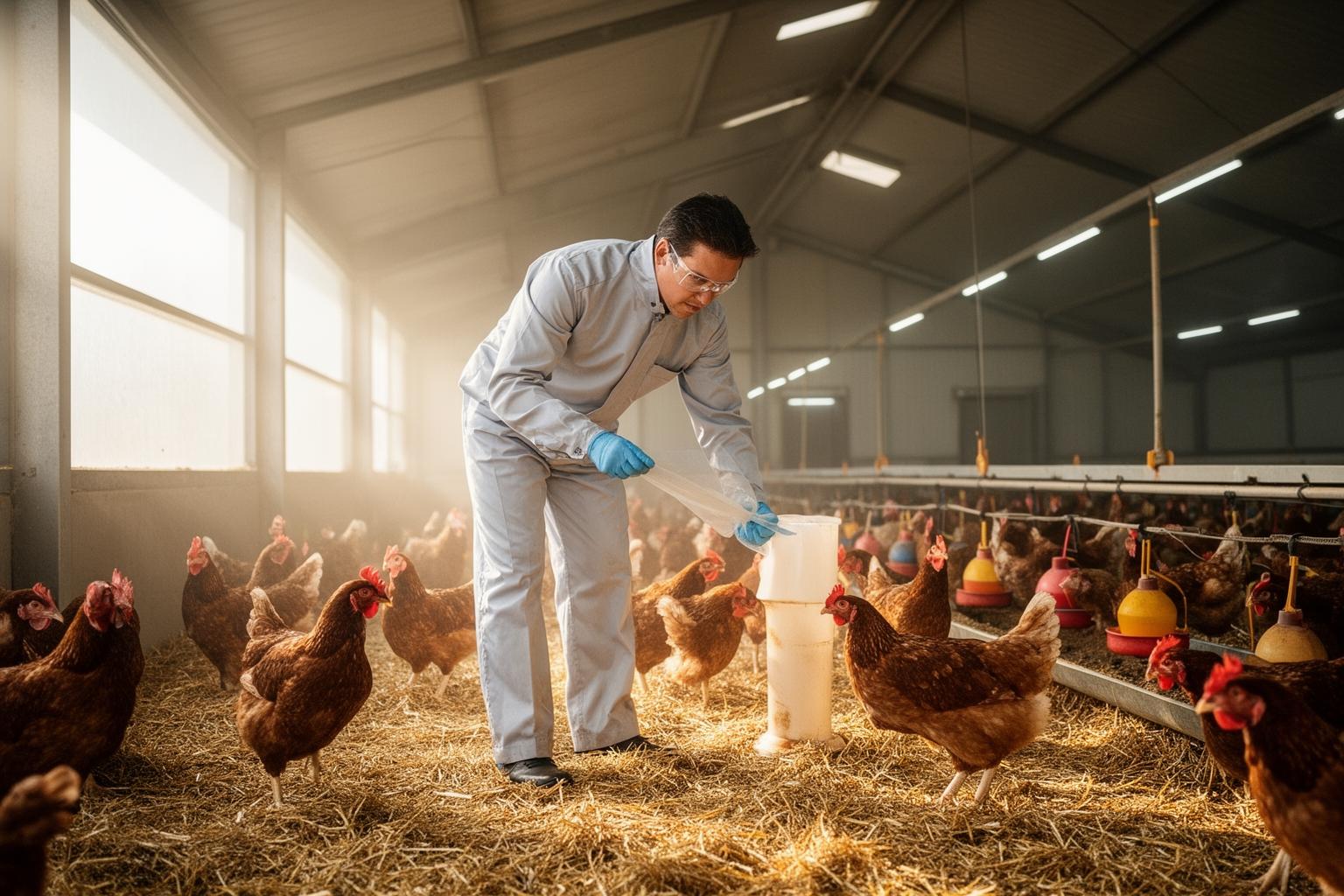 Farmer holding a container of cultivated meat in front of a farm.
"Bottom line:" Every choice matters; whether eating conventional or cultivated meat, the key is to make it consciously and support systems that prioritize sustainability and compassion.
What You Can Do Next
You can become an informed advocate for a more sustainable and ethical meat future by staying curious and engaged with ongoing research and regulatory developments. Start by reading recent peer-reviewed studies on cultivated meat’s life-cycle assessment, such as those by Tuomisto et al. (2022), and follow reputable organizations like the Good Food Institute for industry updates. Support transparent labeling and fair trade practices, and consider reducing meat consumption overall, as even a 20% reduction in beef intake can significantly lower your carbon footprint, according to a 2023 University of Oxford study. Engage in respectful conversations with farmers, butchers, and food scientists, understanding that diverse perspectives are vital to crafting a workable transition. Finally, revisit this page as the landscape evolves—cultivated meat is not a silver bullet, but it is part of a broad movement toward food that aligns with planetary boundaries and ethical care for animals.
Read next
Side by side
| Cultivated Meat | Conventional Meat | |
|---|---|---|
| Greenhouse Gas Emissions | 78-96% lower (potential) | High contributor to global GHG (14.5% of anthropogenic) |
| Land Use | Up to 95% less | Significant (grazing, feed crops, deforestation) |
| Water Use | 78-96% less | High (drinking, feed, processing) |
| Animal Welfare | No animal slaughter or factory farming | Involves animal raising, potential suffering, and slaughter |
| Nutrition | Customizable (e.g., lower saturated fat, added nutrients) | Good source of protein, iron; some high in saturated fat |
| Price (per kg) | Very high (early stage, declining) | Relatively lower (established industry) |
| Availability | Extremely limited (Singapore, some US states) | Widespread globally |
| Antibiotic Use | Generally antibiotic-free | Commonly used for disease prevention/treatment |
The verdict
Cultivated meat offers significant advantages in environmental impact and animal welfare, representing a promising future for sustainable protein. However, conventional meat currently dominates due to its widespread availability, established production methods, and significantly lower cost, which will remain true for the foreseeable future.
The common questions
People also ask
Sources
Related hubs
Almond Milk vs. Soy Milk: A Comprehensive Comparison
Read moreComparisonsCoconut Milk vs. Oat Milk: A Comprehensive Comparison
Read moreComparisonsFlexitarian vs. Vegetarian: Understanding the Dietary Differences
Read moreComparisonsOat Milk vs. Almond Milk: A Comprehensive Comparison
Read moreComparisonsPlant-based Burger vs. Beef Burger: A Comprehensive Comparison
Read moreComparisonsVegan vs. Plant-Based: Understanding the Differences
Read moreRead next
Vegan vs Vegetarian vs Plant-Based Guide: UK 2026
A practical UK-focused guide to vegan, vegetarian and plant-based diets in 2026, clarifying definitions, ethics, health and environmental impact.
NYC Health + Hospitals Plant-Based Meals FAQ: August 2026 Results & Impact
Get the latest August 2026 data on NYC Health + Hospitals' plant-based default meals, patient satisfaction, and environmental savings.